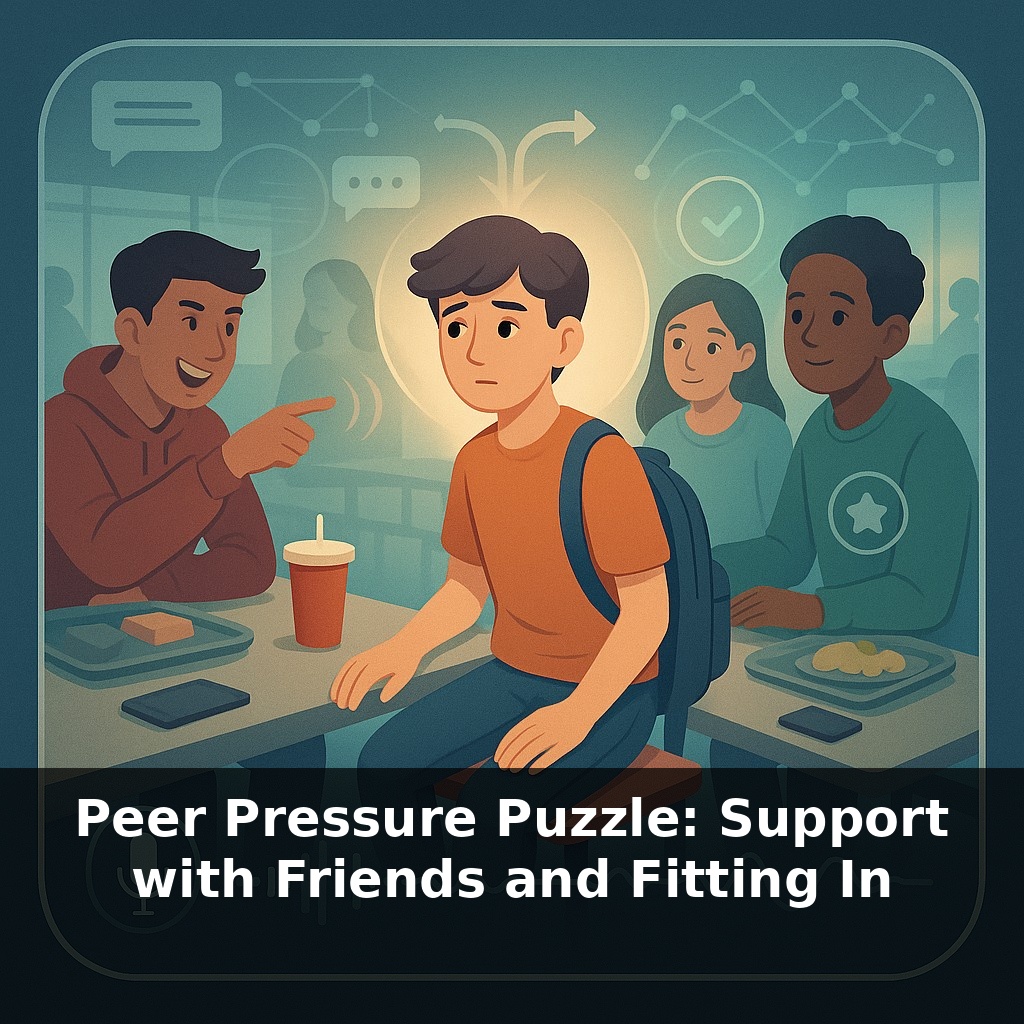
Your teen is more likely to try alcohol because a friend urged them to than because of any ad or movie they see. Now zoom in: a group at lunch, one kid cracks a risky joke, everyone watches your child. In a split second, they’re deciding—do I laugh, speak up, or quietly disappear?
71% of teens say friends—not ads, not celebrities—are the main source of pressure to try alcohol. Yet the same “friend power” that can nudge them toward bad choices can just as easily pull them toward better ones: joining a club instead of skipping class, backing up a classmate instead of piling on.
In the last episodes, we dug into how your teen’s inner world works; now we zoom out to the crowd they move through every day. Think of those moments between classes, the group text that blows up at 11 p.m., the shared joke on a team bus. These aren’t background noise; they’re shaping who your teen thinks they are, and what feels “normal.”
This episode is about turning that social current to your teen’s advantage—building a friend ecosystem where support, not sabotage, feels like the default.
Your teen isn’t just responding to friends in the moment; they’re quietly collecting data all day: *What gets laughed at? Who gets ignored? What earns respect—or ridicule?* Their brain is tracking these patterns the way an app tracks usage, constantly updating what feels safe or risky socially. This is why a single lunch table can matter as much as a whole health curriculum. The good news: you’re not locked out of this system. You can help your teen “recode” what counts as normal by how you respond to stories, who you invite into their orbit, and the kinds of risks you quietly praise—or quietly let pass.
Think about three layers around your teen: the inner circle (close friends), the regulars (classmates, teammates), and the “audience” (social media, school reputation). Each layer carries a different weight—and you have more influence on all three than it might feel from the outside.
Start with the inner circle. Research shows that *one* solid friend can cut bullying risk in half and makes it easier to push back on junk ideas (“let’s vape in the bathroom”) because they don’t have to stand alone. This is where quality matters more than quantity. A teen with two grounded, kind friends is often far safer than the super‑social kid with twenty chaotic acquaintances. Your job isn’t to hand‑pick friends, but to quietly tilt the odds: what activities you support, which hangouts you green‑light, how you talk about other kids.
The second layer—the regulars—is where subtle pressure lives. That’s the group that decides what’s “cringe,” what’s “extra,” and what’s “normal.” Here, teens need specific, rehearsed micro‑moves: changing the subject without looking scared, turning a risky dare into a joke, backing up a quieter kid with one simple “I’m with her.” Many parents say “just say no,” but freezing in the moment is human. Practiced scripts turn that freeze into something closer to muscle memory.
Then there’s the audience layer. Phones mean your teen’s choices can be screenshotted, rated, and replayed. The twist: the audience can be harnessed. When kids see popular peers posting about studying together, volunteering, or being sober at a party, those behaviors quietly gain status. Programs like the Icelandic Prevention Model work partly because they flood this “audience” space with stories where staying out of trouble looks normal, not nerdy.
This is where you come in as a quiet strategist rather than a cop. You can help your teen spot which peers bring out their best, and which ones leave a “hangover” feeling—guilty, drained, or anxious. You can also normalize practice: role‑playing a comeback, rehearsing how to leave a situation, or even drafting a “blame my parent” text they can use as an exit ramp.
Navigating all this is less about shielding your teen from pressure and more about training them to work with it—choosing which voices get turned up, and which get quietly dialed down.
Think of your teen’s week like a series of “micro‑markets” where different “currencies” matter. At lunch, humor might be the currency; in group projects, competence; in DMs, speed of response. Your teen is constantly guessing: *What’s valuable here—and what’s it going to cost me?* You can help them notice these trades without judging them.
Ask about times they “paid” too much—laughed along, stayed silent, or agreed to something that felt off—and what a smaller “price” could’ve been: a shrug instead of a pile‑on, a late reply instead of an anxious instant one, an eye‑roll emoji instead of a risky joke.
You can also point out where their value is actually *higher* than they think. Maybe a coach trusts their judgment, or a friend always comes to them for advice. Those are signs they already hold social “shares” in being steady or kind. When teens see they’re not broke in the status economy, they’re less likely to grab every sketchy “deal” that peers offer.
Algorithms are quietly becoming part of your teen’s “friend group,” shaping what looks normal or desirable. The next step isn’t unplugging; it’s teaming up with your teen to question: *Who benefits if I click this? Who set this trend?* Treat feeds like a constantly shifting weather report—useful, but not a boss. Help them create tiny “anchors”: a group chat where honesty is valued, a creator who models real struggle, a shared family rule for pausing before joining viral challenges.
So the real work now is staying curious with your teen about *what kind of friend* they want to be—not just which crowd they orbit. Ask where they feel most like themselves, and where they feel edited. Notice when their eyes light up after a hangout versus dim down, like a battery icon slipping into red. Those tiny signals are your best map for the next small adjustment.
Try this experiment: This week, pick one situation where you usually feel pressured to “go along” with your friends—like when everyone wants to skip homework, gossip about someone, or join in on a risky dare—and quietly test a different response. Before you’re with them, plan a single “scripted line” you’ll actually use, like “I’m gonna sit this one out, but I’ll still hang with you,” or “That’s not really my thing—let’s do ___ instead.” During the moment, pay attention to what actually happens: Do they tease you, respect it, ignore it, or follow your lead? Later that day, rate (1–10) how anxious you felt before, during, and after, and notice whether the outcome was as bad as you imagined—this is your real-life data on how much power peer pressure really has over you.