Some employers decide if you’re “interesting” in less than a heartbeat—long before they’ve read your résumé. A stranger scrolls past your profile, pauses for a second, and moves on. Why do they stop on one person and skip another, when their skills look almost the same on paper?
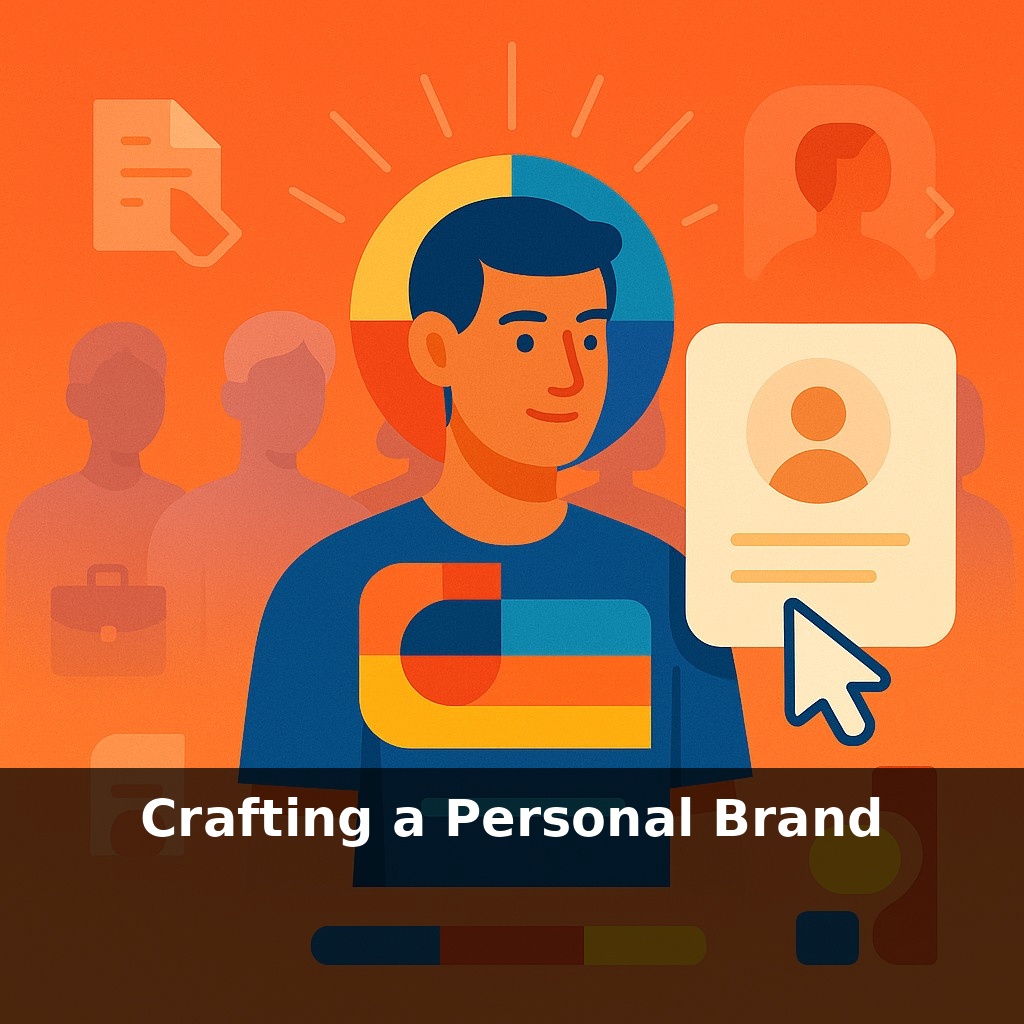
A lot of people think, “I’ll build a personal brand once I’ve figured everything out.” But the market rarely rewards the most qualified person—it rewards the most *legible* one. Someone with average skills but a sharp, consistent story often gets picked over a silent expert whose online presence is a patchwork of old bios, random posts, and half-finished profiles. That “story” isn’t about pretending to be bigger than you are; it’s about making it ridiculously easy for the right people to understand where you’re going and how you work. Employers, clients, and collaborators are all scanning for the same signals: clarity, relevance, and reliability. Your brand is how you direct that scan. When you craft it deliberately, you stop looking like “one of many” and start showing up as “the obvious fit” for specific kinds of roles, projects, and problems.
Here’s the twist: you already *have* a brand, whether you like it or not. It leaks out through the way you introduce yourself in meetings, the topics you comment on, the side projects you quietly maintain, and even the hours you’re most responsive. Colleagues have a “mental shortcut” version of you: “the fixer,” “the ideas person,” “the calm one under pressure,” “the spreadsheet wizard.” None of this is formally documented, but it shapes who thinks of you for what opportunities. The work now isn’t inventing something new; it’s noticing these patterns, tightening them, and then deciding what to amplify—or quietly retire.
Here’s where things get practical: before you design anything, you need to reverse‑engineer what you want to be *known for*. Not a job title—those change—but a cluster of problems, methods, and values that people can reliably associate with you.
Start with problems: when someone is stuck, what do you want them to say where your name naturally completes the sentence? “We should ask ____ about…” “…launching something fast without breaking everything.” “…turning messy data into decisions.” “…getting a chaotic team aligned.”
Then methods: *how* do you tend to work when you’re at your best? Fast experiments? Deep research? Facilitation? Clear documentation? People remember distinctive ways of working long after they forget bullet points from your résumé.
Finally, values: what lines won’t you cross? Are you the “ship it even if it’s imperfect” person, or the “we don’t go live until we trust the numbers” person? Neither is universally right; what matters is that people can predict your stance.
At the intersection of those three—problems, methods, values—you start to see a theme emerge. That theme should quietly govern dozens of small decisions: which stories you tell in interviews, which metrics you highlight on your CV, what you post about, and even which skills you double down on learning next.
Think of yourself less like a static profile and more like a product in continuous development: every project, post, and introduction is another “release note” that either tightens your narrative or scatters it. When you say yes to random, misaligned things just because they’re available, you’re effectively shipping features to an audience you don’t actually want.
This doesn’t mean shrinking yourself into a slogan. It means choosing a clear *center of gravity* so people can mentally file new information about you in the right folder. You can still have range—you just connect that range back to a coherent through‑line.
The research on consistency across channels matters here: when your LinkedIn, portfolio, and conversations all point in roughly the same direction, people unconsciously upgrade their estimate of your seriousness. They’re not thinking, “Ah, a consistent personal brand”; they’re thinking, “This person seems intentional and dependable.” And that’s what makes decision‑makers willing to take bets on you for bigger, stranger, more interesting roles.
Notice who already “stands out” in your world. On LinkedIn, there’s probably someone mid‑career who isn’t the most senior or decorated, but you can instantly answer: “What are they about?” Maybe it’s the operations lead who keeps posting concise breakdowns of how they rescued failing projects, always with a before/after metric. Or the junior engineer whose GitHub, portfolio, and posts all orbit around accessibility in front‑end design. Their power isn’t volume; it’s pattern.
A practical way to test your own pattern: pick three people who know different versions of you—a colleague, a former manager, a friend outside your field. Ask each to send a short voice note answering, “When you think of work I’m great at, what specific situations come to mind?” Don’t correct them; just collect. You’re listening for concrete scenes: “When the team’s overwhelmed,” “when a client is angry,” “when no one knows where to start.” Those scenes are raw material for your brand narrative. They show where your default strengths actually show up under pressure, not just where you *wish* they did.
In a few years, your “professional self” may feel less like a static profile and more like a living system. AI tools will quietly suggest which skills to foreground for a specific role, draft variations of your bio for different audiences, and flag when your signals drift off-theme. Verified credentials could act like a reputation “ledger,” while 3‑D avatars and XR meetings add voice, movement, and presence to what others infer about you. The opportunity—and risk—is that amplification happens faster, in both directions.
Treat this less like carving a slogan in stone and more like tuning an instrument before each performance. As your work, interests, and context shift, small adjustments keep you in key with the rooms you care about. Over time, those tiny, quiet choices compound—so the roles you attract feel less random, and more like a conversation you started on purpose.
Before next week, ask yourself: “If someone watched me work for a full day, what three words would honestly describe my ‘brand’ right now—and do those match the three words I *want* to be known for?” Then, look at your LinkedIn headline, email signature, and last three social posts and ask: “Would a stranger clearly see my core message, niche, and value here, or would they walk away confused or uninterested?” Finally, think of a person you admire in your field and ask: “What is one visible, repeatable behavior they’re known for (publishing a weekly insight, showing their process, speaking on a specific topic), and how could I start my own simple version of that this week so people begin to recognize me for something specific?”