About eight out of ten jobs never hit a job board. They travel quietly, from one conversation to another. A designer stuck in support, a teacher eyeing tech, a manager craving purpose—each one either drifts alone or taps into a web of people that quietly changes everything.
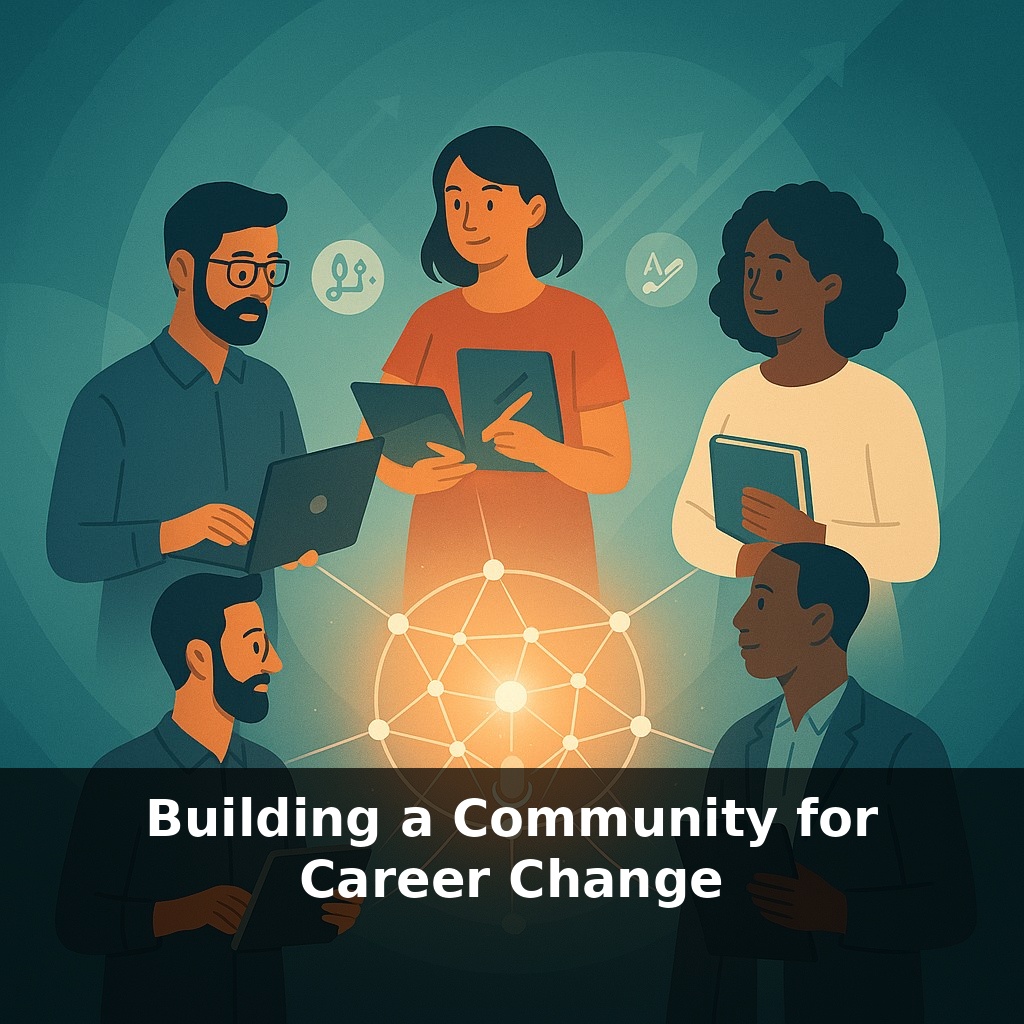
LinkedIn once reported that 85% of roles are filled through networking—still debated, but here’s what’s clear in 2024: people with *deliberately built* career communities move faster and land better than equally skilled solo operators. Not because they “know the right people,” but because they’ve designed three specific layers around themselves: a core of 5–10 trusted allies for honest feedback, a circle of 30–50 peers and mentors who share live information and referrals, and a broader cloud of 150+ loose connections who surface unexpected options. When you’re changing careers, each layer serves a different purpose: testing your new story, spotting realistic paths, and catching opportunities early. In this episode, you’ll map your current community, identify the missing layers, and start building the relationships your future role will depend on.
Most people treat “networking” as occasional outreach; you’re going to treat your community like core infrastructure for your career change. Research on social networks shows that weak ties supply most fresh leads, while strong ties help you avoid bad fits by offering honest context about roles, managers, and cultures. For a practical target, aim over time for about 5–7 strong supporters in your new field, 25–40 active peers across 3–5 companies or sectors you’re curious about, and at least 75–100 light-touch contacts. Each group gives you different data points you cannot get from postings or company websites.
Strong communities don’t appear by luck; they’re architected. To make this usable, break your “future-field community” into three practical build-out projects: people who know you, people who know the path, and people who know the market.
First, people who know you: identify 3–5 current colleagues, friends, or managers who can vouch for how you work, even if they’re outside your target field. Your goal over the next month is to re-engage each with one concrete update and one specific ask. For example: “I’m exploring product marketing roles at B2B SaaS companies under 500 people. If you meet anyone in that world, I’d love an intro.” You’re training your strong ties to spot relevant doors for you, instead of vaguely “keeping an eye out.”
Second, people who know the path: these are the insiders already doing what you want. Set a quarterly target: 8–12 new conversations with people 1–3 steps ahead of you. Use public signals to find them: speakers at niche meetups, authors of blog posts on exactly your topic, people who just changed into your target role on LinkedIn. When you reach out, anchor each message in something *specific* they’ve done (“I read your post on moving from sales to CS; I’m two steps earlier in that path and have a question about…”) and ask for 15–20 minutes. Track your hit rate; if fewer than 20% respond, tighten your message or niche.
Third, people who know the market: your weak-tie layer. This is where volume and diversity matter. Instead of randomly adding connections, choose 2–3 “community hubs” where your future peers actually talk: a Slack group with 1,000+ members in your field, a Meetup that has at least 30 RSVPs per event, or a focused online circle (for instance, a career-change cohort or a professional association chapter with regular calls). Commit to visible participation: answer one question per week, share one small win or resource, and join one group event per month. In most professional communities, showing up consistently for 60–90 days moves you from invisible to “familiar name,” and that’s when people start tagging you in opportunities.
A practical way to see this in action: take someone moving from healthcare to UX design. In month one, they join a 3,000-person UX Slack, a local meetup with ~40 attendees per event, and a niche “Career Switchers to UX” circle capped at 50 people. They commit to a simple rule: post one thoughtful comment per week in Slack, ask one question per meetup, and share one concrete learning per month in the circle. Within 6 weeks, three different people DM them: one about a volunteer redesign for a nonprofit, one about a paid usability-study gig, and one about a junior role that isn’t yet public. None of these come from close friends. Think of yourself like a product entering a new market: you want at least 30–50 people to have a clear mental label for you (“operations pro pivoting into data analytics”), so when a vaguely relevant need pops up, your name is the obvious one to mention.
In the next decade, treating your community as a “learning lab” will matter more than treating it as a contact list. Expect AI tools to map which 50–100 people most accelerate your growth, then suggest who to update monthly, who to help weekly, and which 3–5 niche groups to double down on. Start now: segment your existing contacts into three buckets—insight, opportunity, and feedback—and set a recurring 30‑minute block to deliberately grow each segment.
Treat this like skill-building, not social luck. Set one numeric target for the next 30 days: 5 new “people who know the path,” 10 re-engaged “people who know you,” and visible activity in 2 “people who know the market” hubs. At 25–30 total touchpoints, you’ll have enough signal to see which relationships actually move your transition forward.
Try this experiment: Over the next 7 days, invite 3 people who are also exploring career change (a coworker who’s restless, a friend in a bootcamp, someone from LinkedIn who posts about pivoting) to a 30‑minute “Career Experiments Huddle” on Zoom. In the huddle, each person must share one tiny experiment they’ll run in the next week (e.g., shadowing someone for an hour, doing a freelance trial project, or test‑driving a new role via volunteering) and commit to reporting back. Create a simple shared doc or WhatsApp group where everyone posts what experiment they chose and what they learned by the end of the week. Notice who shows up with energy, who follows through, and how your own motivation changes when you’re doing this inside a small, committed community instead of alone.