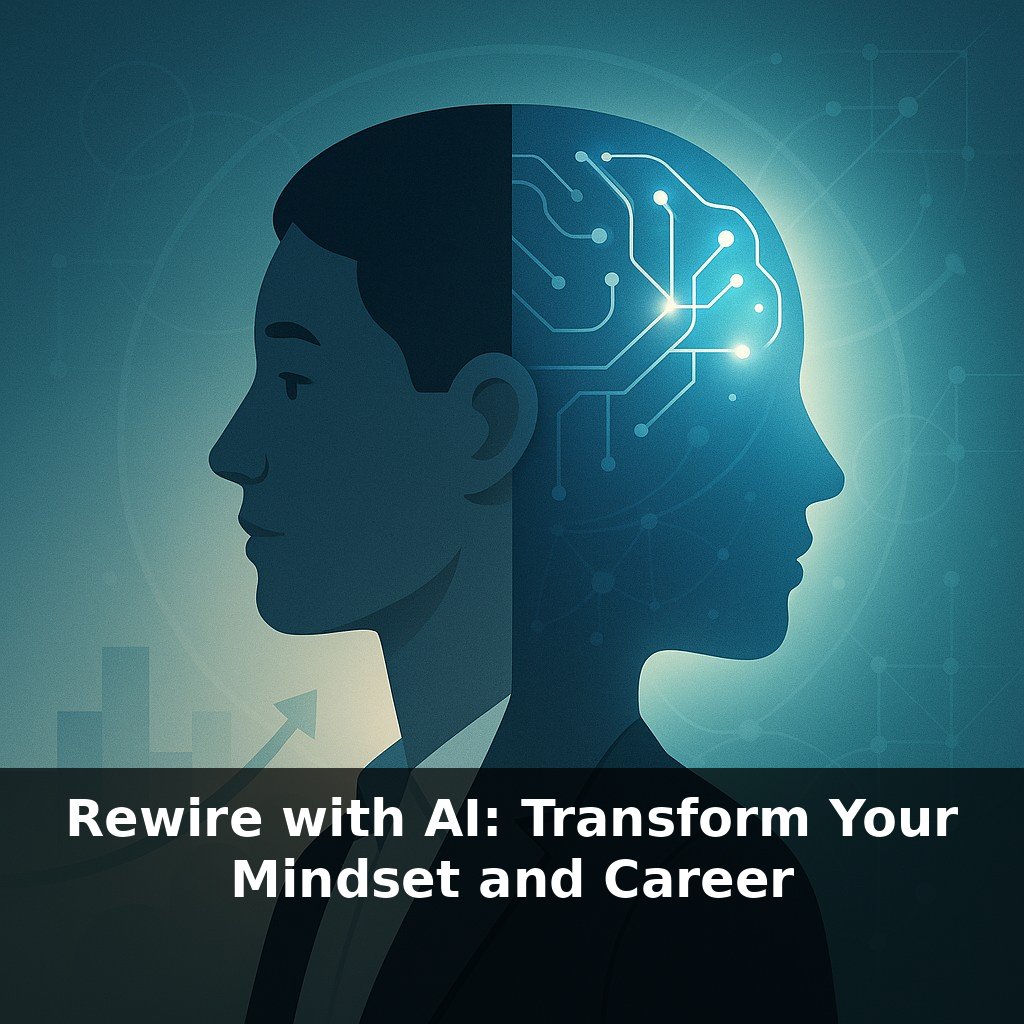
You apply for a new role—and lose to someone with half your experience. Not because they’re smarter, but because they speak “AI” just well enough to multiply their impact. In this episode, we’ll explore how small AI skills can quietly tilt big career decisions.
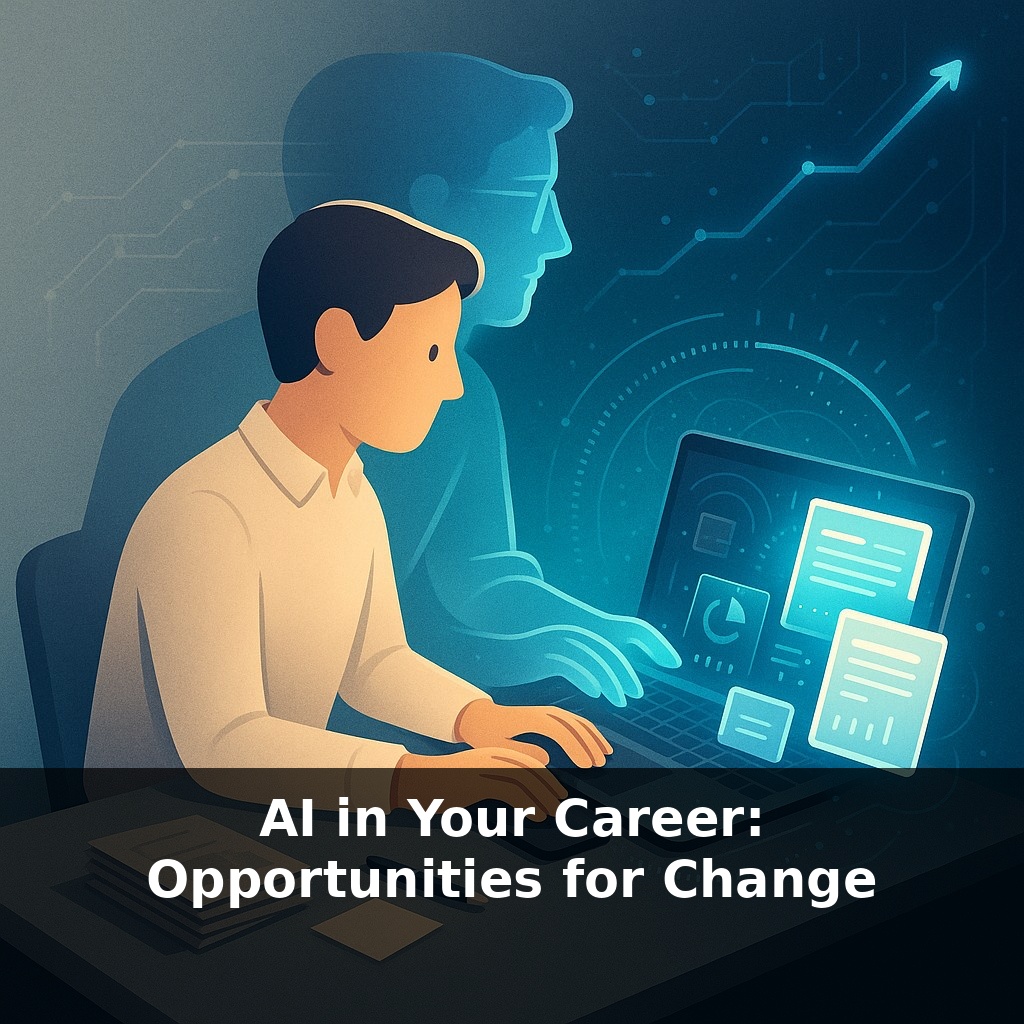
That quiet advantage shows up long before the job offer. It’s in the person who drafts a client proposal in 30 minutes instead of three hours, because they offload the first messy version to an AI tool—then spend their energy sharpening the insights. It’s in the marketer who tests five campaign angles before lunch, while everyone else is still debating the first one. And it’s in the project manager who turns scattered meeting notes into a clear roadmap while others are still formatting bullet points. These aren’t “AI jobs”; they’re familiar roles, played at a different tempo. The real shift isn’t that your profession is disappearing overnight—it’s that the baseline for “good” is quietly moving upward, and those who can orchestrate both their own skills and AI’s capabilities are setting that new standard. In the next few minutes, we’ll trace where that bar is moving in practical, concrete ways.
But here’s the twist: the biggest career gains aren’t going to the deepest technical experts—they’re going to the sharp generalists who learn to “aim” AI at the right problems. Across industries, the pattern is the same: lawyers who use AI to pressure-test arguments, sales leaders who simulate objections before a pitch, designers who use it to explore dozens of variations before committing to one. AI becomes less a gadget and more a quiet background system for exploring options, spotting patterns, and pressure-testing ideas before they hit the real world, shifting where you spend your best attention.
Here’s where the numbers start to matter. When AI-augmented employees are averaging a 40% productivity boost, that doesn’t just mean “working faster”; it means the nature of what counts as your core value starts to shift. The hours you used to spend on formatting, first drafts, basic research, or status reports are becoming optional—if you know how to hand that work off to a system and then refine what comes back.
That’s why the biggest career upside is showing up in hybrid roles. You see it in prompt engineers who marry clear communication with model intuition and command salaries from $175k to over $300k. You see it in product managers who can speak fluently with data scientists one moment and business stakeholders the next, shaping how AI actually gets deployed. You see it in “AI ops” and enablement roles inside companies like IBM, where initiatives such as AI SkillsBuild don’t just teach tools—they rewire who can credibly move into data-adjacent positions, speeding up internal hiring by 70%.
Notice the pattern: the winners aren’t just those who know the tools; they’re the ones who can see where a workflow quietly fractures into repeatable tasks and judgment calls—and route each part to the right “worker,” human or machine. In practice, that might look like a recruiter who uses AI to scan thousands of resumes but still owns the final shortlist, or a healthcare analyst who lets AI clean and summarize datasets while they interpret trends and risks.
This is where the job market split the World Economic Forum points to becomes real. The projection of 69 million new roles alongside 83 million displaced isn’t a distant forecast; it’s a signal that descriptions on job boards are already mutating. Phrases like “experience collaborating with AI tools,” “ability to operationalize machine learning insights,” or “comfort working with large language models” are quietly becoming prerequisites rather than nice-to-haves.
Think of this shift less as a single career pivot and more as renovating a house while you’re still living in it: you don’t demolish everything; you reinforce foundations, open new rooms, and rewire the electricity so more powerful systems can run through the same walls.
You’ll see this most clearly in the tiny, invisible choices inside a normal workday. A consultant facing a messy, 80-slide deck can now ask a system to surface three non-obvious storylines, then spend their energy deciding which one fits the client’s politics and timing. A salesperson can feed in transcripts from the last ten lost deals and have patterns surfaced—not as truth, but as hypotheses to test on the next call. A teacher can turn last semester’s quizzes into a bank of adaptive practice questions, then watch where students actually struggle and redesign the next lesson.
In creative roles, the shift is even more subtle. A copywriter can generate twenty rough taglines in minutes, but their real value shows up in knowing which two are on-brand, legally safe, and emotionally resonant. A product manager can explore alternate roadmap scenarios conditioned on different constraints—tight budget, aggressive growth, limited engineering—and walk into leadership meetings negotiating tradeoffs, not defending guesses. These are still recognizably the same jobs, but with a different center of gravity: less grinding, more deciding.
Careers may start looking less like fixed ladders and more like evolving playlists. Instead of climbing one narrow path, you’ll remix short, AI-enabled projects across teams, companies, even industries. Your “future you” is less a job title and more a portfolio of problems you’re trusted to solve. That means experiments—side gigs, stretch assignments, cross-functional collabs—aren’t optional extras; they’re how you discover which combinations of your skills and emerging tools compound fastest.
Your next move isn’t to “become an AI person,” but to treat your career like a living prototype: tinker, test, iterate. Try pairing your existing strengths with one small AI experiment each week—drafts, analyses, role-plays—and notice where work starts to feel more like strategy than slog. That’s your signal: you’ve found a seam worth deliberately expanding.
To go deeper, here are 3 next steps: (1) Block 45 minutes to complete the free “AI Career Essentials” course on Coursera or DeepLearning.AI’s “AI for Everyone,” taking notes specifically on roles that overlap with your current job title. (2) Open ChatGPT or Claude and run a targeted prompt like: “Rewrite my current job description for 2026 in an AI-augmented world; then list 5 skills I need to stay relevant,” and use the output to pick your first upskilling focus. (3) Join one AI-in-careers–focused community today—either on LinkedIn (search and follow “AI + [your profession]” groups) or the “r/Artificial” or “r/ChatGPT” subreddits—and commit to asking one concrete question this week about how people in your role are already using AI.