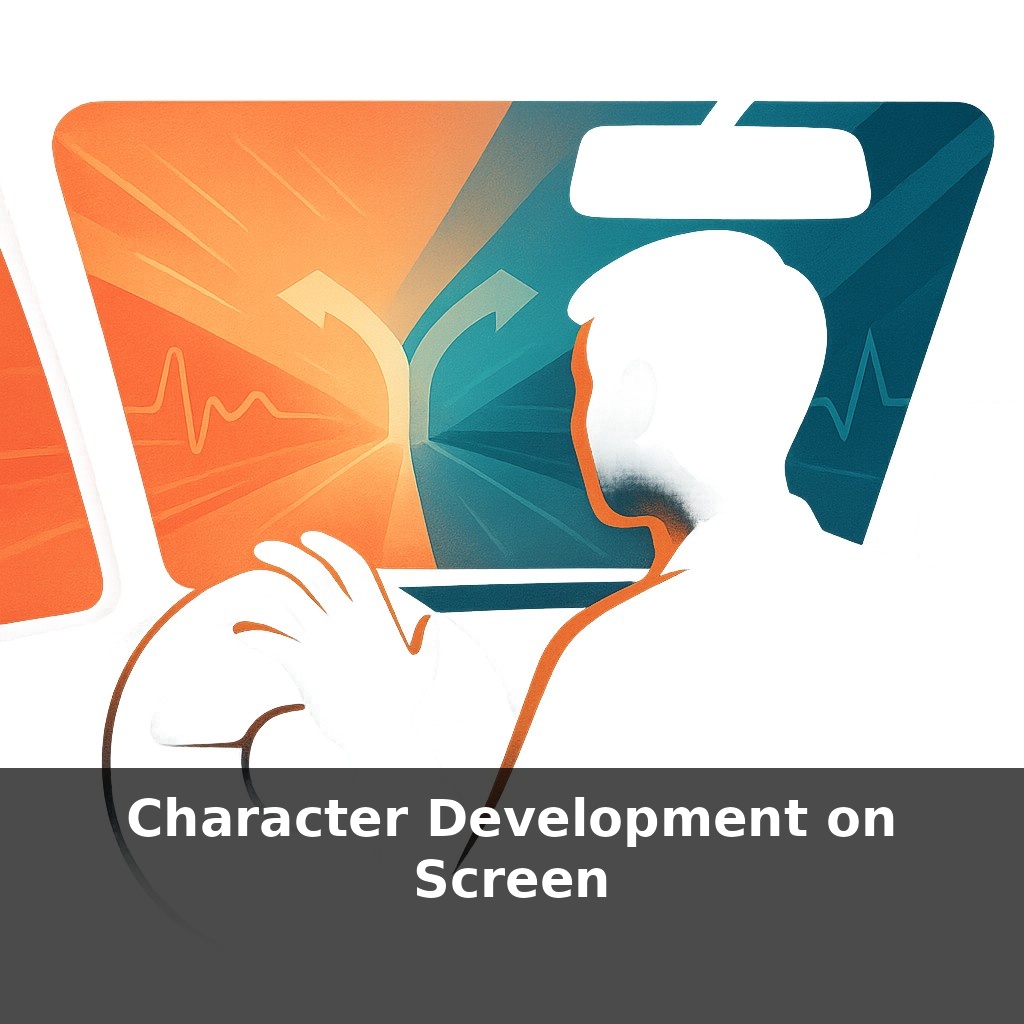
“Robert McKee says most of a film’s emotional punch comes from what characters choose, not what happens to them. So picture this: two scenes, same car crash. In one, you feel nothing. In the other, you’re on the edge of your seat. The difference? Who’s behind the wheel—and why.”
The strange truth about great screen characters is this: they can be doing almost nothing, and you still can’t look away. A hero folding laundry can be more compelling than an army charging into battle—if we understand what that laundry means to them, what it costs them, and what they’re hiding while they do it.
Today we’re zooming in on that “why” beneath the action: wants, needs, fears, and the tension between who your character is and who they could become. This is where protagonists and antagonists quietly trade places, where a “villain” might be the only one brave enough to say what the story really thinks.
We’ll look at how small, specific details—what they avoid, what they overcompensate for, what they joke about too quickly—signal deeper wounds and desires, and how those signals can guide your plot instead of the other way around.
So how do you turn all that inner chaos into someone the audience will follow for two hours? Start by treating your character like a contradiction on legs. They say they don’t care about money, but they never pick up the bill. They claim they’re over their ex, yet they still drive past their old apartment. Those tiny fractures between statement and behaviour are gold. Layer in clear wants and buried needs, then stress-test them with escalating pressure: social risk, moral risk, physical risk. As the stakes climb, so should the cost of staying the same—and the danger of actually changing.
Here’s where psychology, structure, and audience empathy stop being theory and start becoming tools.
Begin with three simple columns: WANT, FEAR, LINE THEY WON’T CROSS. Not theme, not backstory—behaviour. “Wants promotion, fears being exposed as a fraud, won’t betray a friend.” Or: “Wants custody, fears becoming their own parent, won’t admit they’re wrong in court.” These three levers will quietly generate more scenes than any plot outline.
Now wire those levers into choice points. McKee notes how much power sits in decisions; you can design those decisions on purpose. Each act should contain at least one moment where your character must:
1) Risk their want to protect their fear 2) Risk their fear to pursue their want 3) Violate or defend their “line they won’t cross”
That’s how you get Walter White–style cumulative shifts. It’s not about “episode where he turns bad”; it’s about stacking small, traceable pivots until the person in the finale could never fit back into the pilot.
Next layer: internal conflict the audience can feel without anyone giving a speech. Use three kinds of friction:
- VALUE vs VALUE: Love vs ambition, loyalty vs justice. - SELF-IMAGE vs REALITY: “I’m a protector” vs evidence they keep causing harm. - DESIRE vs PATTERN: They want closeness, but every habit they have pushes people away.
Let antagonists play on the opposite side of these same fault lines. If your hero craves control, give them an antagonist who thrives in chaos. Not cartoon chaos—specific habits that keep forcing your protagonist into the very situations they least tolerate. Remember Pixar’s note: throw the polar opposite at them.
Think of it like designing a piece of software under heavy load: you don’t know where it breaks until you stress the exact subroutine that was sloppily written. Every compelling scene “DDOS-attacks” a different part of your character’s operating system—ego, loyalty, courage, shame—and shows us what crashes.
Diversity deepens this, not decorates it. Background shapes which lines feel unbreakable, which fears are reasonable, which wants are radical. A queer teen in a conservative town choosing to hold a partner’s hand in public is facing a different moral weather system than a CEO choosing whether to whistleblow. Both can be riveting if the cost is precise.
Your job isn’t to make them nice or tragic. It’s to make their choices impossible to look away from.
Handy test: if your character walked into a room with your favourite three film characters, what unique kind of trouble would they cause? Maybe your people-pleasing nurse stalls every decision until the room turns on itself. Maybe your swaggering thief can’t help poking at everyone’s sore spots, just to see what breaks. Think in terms of how they *change the temperature* wherever they go—colder, sharper, riskier, suddenly hopeful.
Use small, concrete behaviours: the cop who never sits with their back to the door, the influencer who always crops themselves slightly thinner, the father who overpraises strangers’ kids. Each of these hints at a pressure point you can later corner them into confronting.
Track who notices these tells. A love interest who quietly adjusts their own chair so the cop can see the exit is different from a boss who orders them to “stop being paranoid.” Empathy often lives in those micro-responses.
Your challenge this week: write three micro-scenes (no more than half a page each) where your protagonist enters an ordinary space—a coffee shop, a rideshare, a family dinner—and subtly rearranges the dynamics just by *being* who they are.
Scene 1: Their flaw is in charge. Let them overcompensate, avoid, deflect. Give the room a small consequence: a barista quits mid-shift, a sibling leaves the table, a driver turns off the music in awkward silence.
Scene 2: Their strength is in charge. The same kind of space, but this time they improve something without trying. A tense line softens, a stranger feels seen, a plan finally moves forward.
Scene 3: Put both in collision. Start it like Scene 2 and, halfway through, trigger the exact stimulus that usually activates their flaw—a careless remark, a whiff of rejection, a reminder of an old loss. Let the atmosphere flip and resist fixing it neatly.
When you’re done, compare: which version of your character generates the richest ripple effect? The answer will tell you which traits your story should lean on, and where the most potent future choice points are hiding.
Interactive formats will push you to design characters less like statues and more like musical instruments: they must sound true no matter which notes players hit. In branching stories, every path should expose a different facet instead of a different personality. That means tracking how culture, class, and neurotype shape what “risk” looks like, then letting players tug on those edges. As AI tools suggest choices, your job shifts from inventing options to curating which ones feel ethically and psychologically honest.
Let your next draft be a lab, not a verdict. Try giving a side character one sharp desire and one private superstition, then track how scenes subtly bend around them—like traffic navigating a stalled car. You’ll start spotting hidden arcs everywhere, and your leads will feel less “designed” and more discovered on the page.
Here’s your challenge this week: Pick one character from a show or film you love and rewrite a single scene from their story so that their choice clearly reveals a deeper flaw, fear, or desire (instead of just moving the plot). Then, grab your own work-in-progress script and choose ONE key scene to revise in the same way: change a line of dialogue, a reaction, or a decision so it exposes what your character most wants or is terrified to lose. Finally, read both scenes out loud—original and revised—and circle the specific moments where the character feels more three-dimensional, then lock those changes into your current draft.