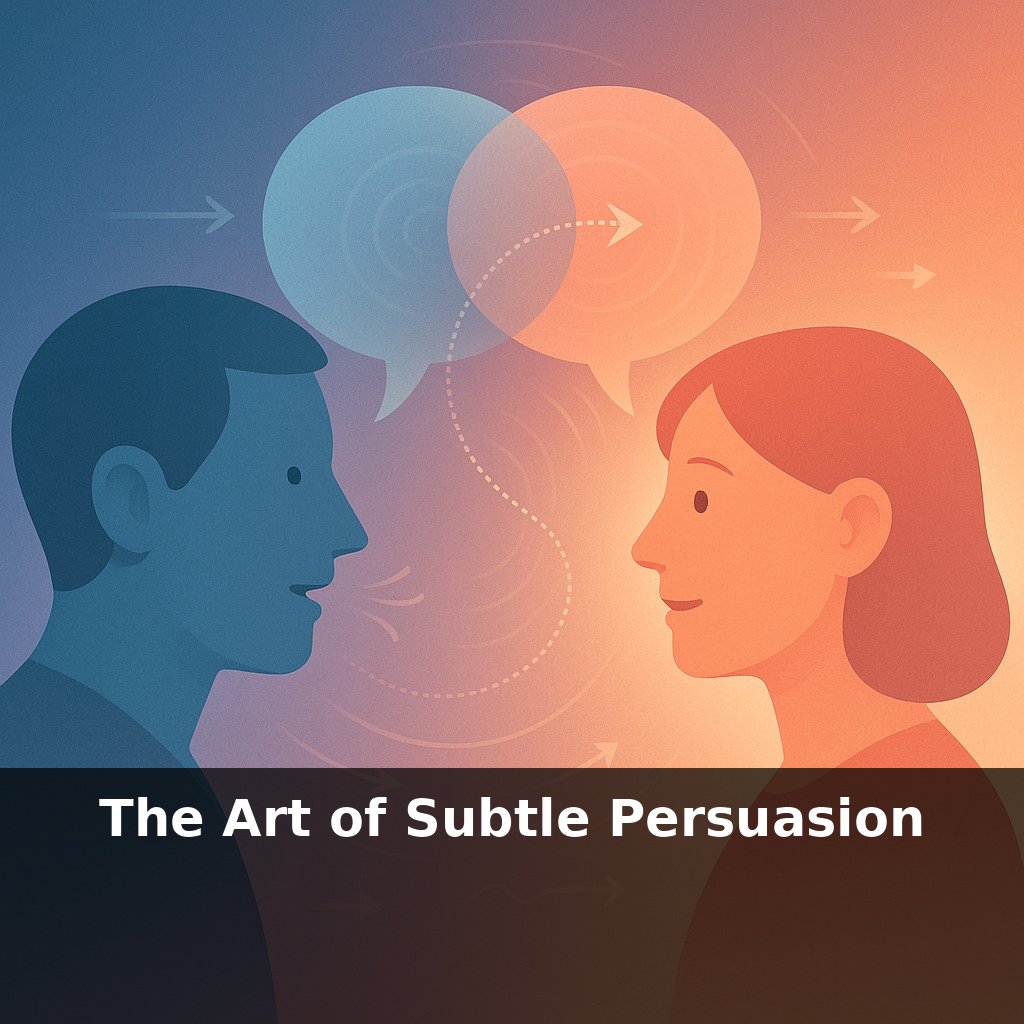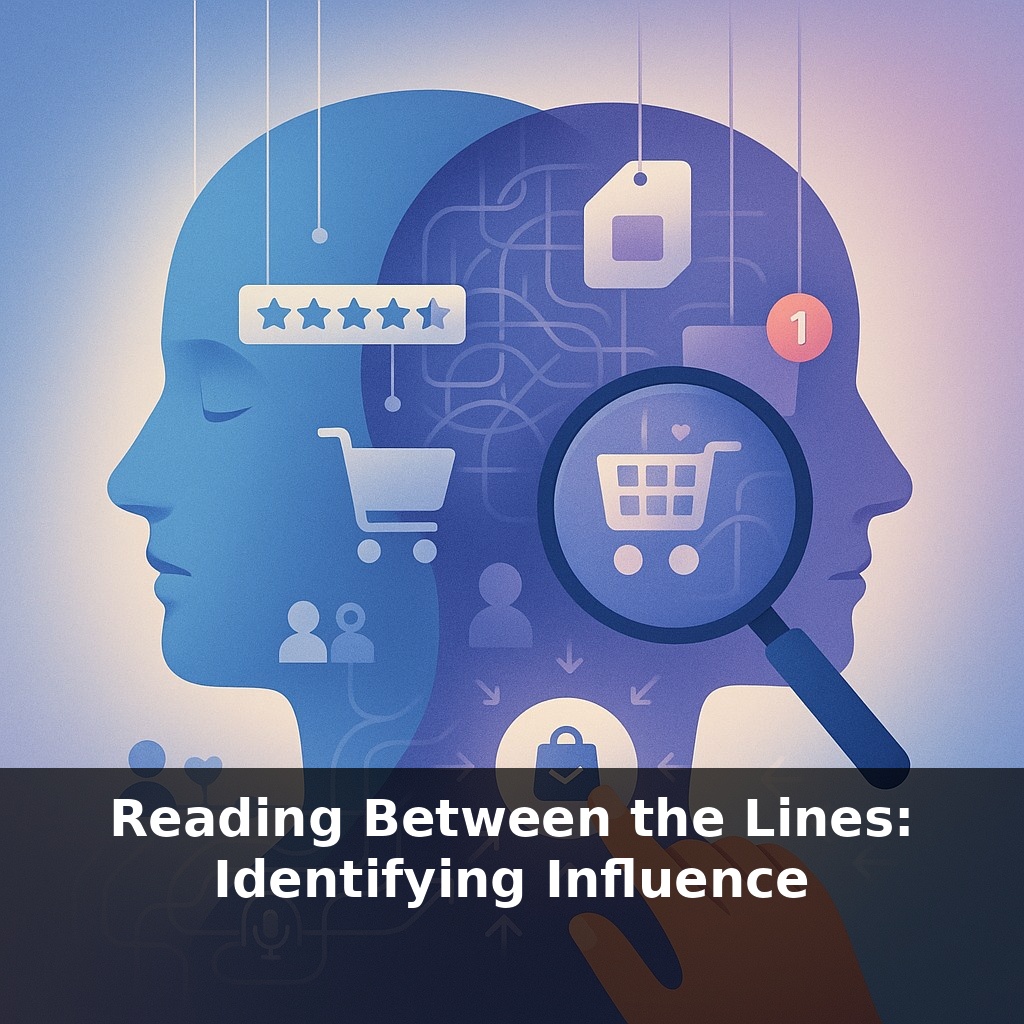
Despite the confidence most of us have in our autonomy, studies reveal a surprising fact: while nearly everyone believes they are immune to media influence, their purchasing habits tell a different story. Consider the influence of the “only 3 left” alert, the five-star reviews, the friendly influencer. In this episode, we’ll slow these moments down and ask: who’s really deciding?
That “others are influenced, not me” blind spot doesn’t just show up with ads or media—it shows up in our closest relationships too. A friend “casually” mentions how everyone is using a new app. A coworker sighs just loudly enough about staying late. A partner says, “It’s fine, do what you want,” with a tone that says the opposite. None of these feel like classic persuasion, yet each gently nudges your next move.
In this episode, we’ll zoom in on those nudges: the phrases, patterns, and tiny timing tricks that quietly steer what you agree to, postpone, or avoid. Not to accuse people of manipulation, but to notice the mechanics: appeals to belonging, urgency, gratitude, or expertise that slip under the radar. Once you can spot those “invisible hands,” you can decide when to follow them—and when to firmly keep your own course.
Think of today’s goal as learning to read the “ingredients list” of a message instead of just reacting to its flavor. Psychologists talk about shortcuts our brains rely on—like trusting what feels familiar, or going along with the first confident voice in the room. These shortcuts aren’t bad; they’re how you get through a day without analyzing every sentence. The risk is when the same patterns—emotional stories, “limited spots,” namedropping experts—keep showing up and quietly stack in one direction. Our task is to notice those repeats without becoming cynical or paranoid.
If you zoom in on moments when your opinion shifts, you’ll usually find one of a few “influence footprints” underneath. They tend to cluster into patterns you can learn to recognize.
First, emotion-forward messages. These don’t just try to make you feel something; they quietly link that feeling to a choice. A friend tells a painful story right before asking you to take their side in a conflict. A coworker shares a big win, then slides in a suggestion that you back their proposal. The feeling isn’t the issue—it’s the timing and direction: “feel this → do that.” When you notice strong emotion plus a clear next step, that’s a footprint.
Second, authority cues. Watch how often people borrow status rather than argue on merit. “The VP loved this direction,” “Therapists say…,” “Everyone in our field knows….” The content might be solid, but the structure is: don’t think too hard—someone important already decided. A quick internal question helps: “If that title or expert name vanished, what would be left of this argument?”
Third, scarcity and social proof working together. “Spots are going fast; all the top performers already signed up.” One trigger says “you’ll miss out,” the other says “you’ll be left out.” When they stack, your brain tends to speed up instead of ask questions. Notice if you feel rushed and simultaneously worried about how you’ll look to others—that combo is rarely accidental.
Underneath these footprints are the mental shortcuts psychologists call heuristics. The Elaboration Likelihood Model adds another layer: when something feels unimportant, confusing, or you’re tired, you slide onto a “peripheral route”—you lean more on emotion, authority, and social cues than on the details. Influence thrives there.
So a practical move isn’t to distrust every message; it’s to notice your own processing mode. Are you giving this issue your “central route” attention—actually weighing reasons—or are you coasting on vibe, status, and stories because it feels easier?
One helpful habit is structured reflection in real time: pause, name the footprint (“This is mainly using X”), and then verify. What happens if you strip away the story, the title, the countdown, and look only at the core claim? What’s left is a clearer view of whether the choice is truly yours—or mostly engineered by the framing around it.
You’re scrolling and a creator says, “This isn’t sponsored, I just *love* it,” while unboxing a product. Within minutes, you’ve opened three tabs to compare prices. Pause there. The claim of “no sponsorship” is a subtle cue: it borrows authenticity instead of authority. Your mind tags it as “just a personal share,” so your guard drops—even though the behavioral effect looks a lot like an ad.
At work, a colleague starts with, “You’re the only one I trust to handle this,” before asking you to take an extra task. That’s not just flattery; it leans on your identity as reliable. When agreement feels tied to “who I am” rather than “what I think,” influence is operating on a quieter channel.
Spotting these moments is less about suspicion and more about curiosity. A bit like checking a stock’s fundamentals beneath a hype-filled headline, you’re asking: “What exactly is being ‘spent’ here—emotion, identity, or borrowed credibility—and is the return worth it for me?”
Influence will soon feel less like isolated ads and more like background music that adapts to your mood. As AI tailors wording, tone, and timing to your data, two people may see the “same” post but receive versions tuned to their insecurities or hopes. Think of your feeds as a personalized menu whose chef learns from every click. That makes your habits—who you follow, what you pause on—part of the recipe that shapes how others try to steer you tomorrow.
Noticing influence doesn’t mean you must resist it; it means you regain the option. Like adjusting a recipe, you can keep some “flavors” and dial others down. You might still follow a friend’s lead or a creator’s tip—but now as a collaborator, not cargo. Over time, that small shift—from being carried to choosing where you sail—quietly reshapes who you become.
Before next week, ask yourself: 1. “Whose voice is actually underneath my ‘instinct’ on big decisions—can I trace it back to a specific person, podcast, book, or feed I consume regularly?” 2. “If I muted three of the loudest influences in my life for 48 hours (a certain friend, a favorite creator, a news source), what choices would I feel pulled toward differently—and what does that reveal about what I really want?” 3. “Where did I recently say ‘I just know this is true’—and if I had to build that belief only from my own experiences in the last year, would it still stand up?”