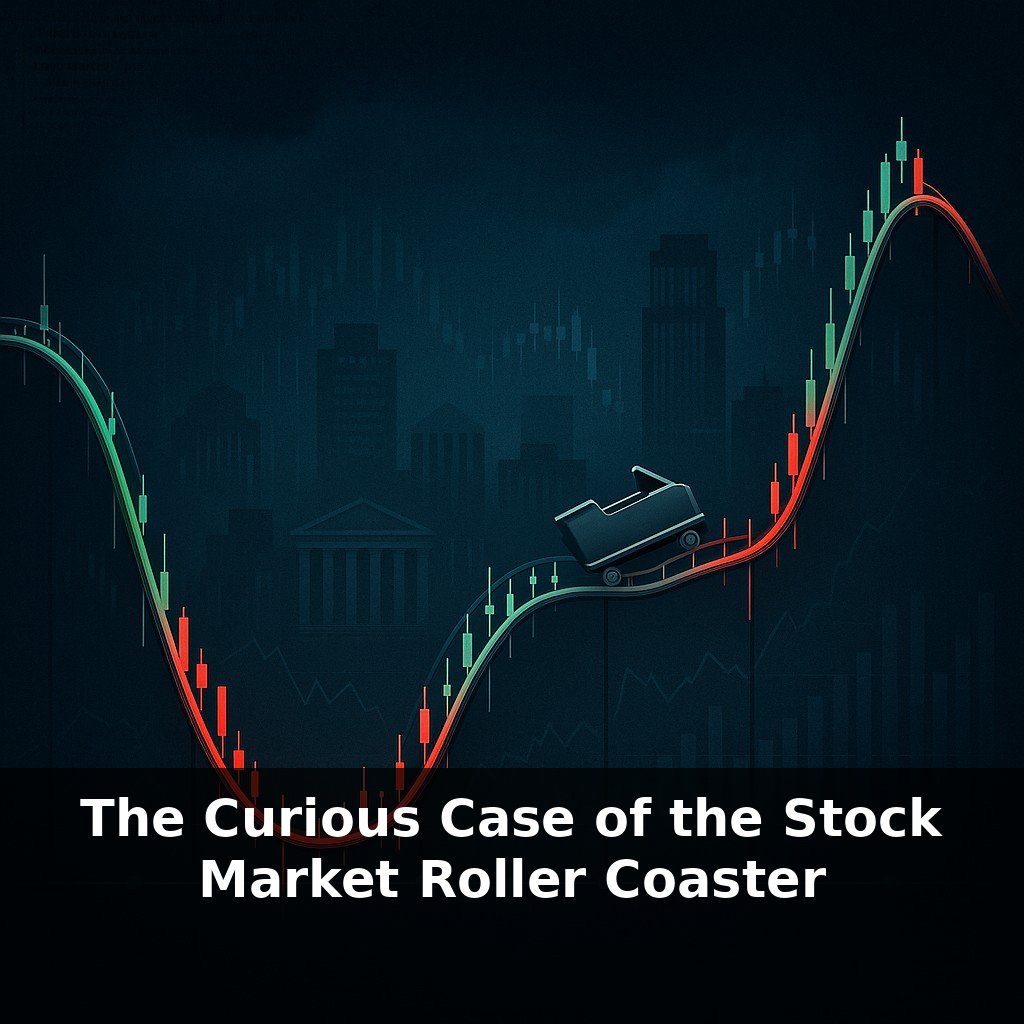
“Markets have crashed by almost ninety percent and still come back stronger. An investor in 1932, another in the dot‑com bust, and one staring at their screen in 2020 all faced the same question: is this the end—or just another verse in a very old song?”
History won’t give you a cheat code for the next crash, but it does hand you a pattern book. Look closely and you’ll notice how the same emotional currents—excitement, denial, panic, regret—keep washing through different decades, just with new headlines and new technology on top. One generation was mesmerized by radio stocks, another by dot‑coms, another by meme names lighting up their phones. The costumes change; the script barely does. That’s where the opportunity lies. If you can recognize when enthusiasm is spilling over or when despair is blinding people to long‑term value, you stop playing today’s market as a one‑off drama and start seeing it as a rerun with small plot twists. In this episode, we’ll connect those recurring patterns to practical moves: how to build a portfolio that respects history without trying to perfectly predict it.
Here’s where it gets tricky: knowing that markets move in familiar cycles doesn’t tell you *when* the next turn happens. History is less a stopwatch and more a weather report—useful, but never precise. The Dow’s 89% collapse, the dot‑com wipeout, and the 2020 plunge all looked different up close, yet they pushed people toward the same extremes of confidence and despair. So instead of asking “what’s the next 1929?”, a better question is “what tends to happen *around* extremes?” That shift turns history from a scary story into a toolkit for managing risk and opportunity.
Look closely at the big drawdowns and something uncomfortable appears: the numbers are brutal, but the *behavior* is familiar. The Dow’s 89% slide in the early 1930s, the NASDAQ’s 78% fall after 2000, the S&P’s sudden 34% drop in 2020—different eras, different triggers, same basic script. Prices race ahead of reality, something breaks, then everyone tries to squeeze through the same exit.
What history really gives you is a sense of *scale* and *tempo*. An 89% collapse is possible. A 95% fall, like Amazon in the dot‑com bust, is survivable for a strong business. A –22.6% day like Black Monday can recover in under two years, but a 1929‑style peak can take a quarter century to reclaim. Those facts don’t predict the next move; they tighten the range of things you should be prepared for.
That’s where averages help—and mislead. Since 1945, the average bull market lasted 4.4 years with gains around 152%. Helpful context, but no bull market arrives with an expiration date stamped on it. Some charge ahead for a decade; others barely get going. If you treat “average” as “typical,” you risk assuming the next downturn will be gentle and short just because the 2020 rebound was fast.
History also humbles the idea that you can sidestep every major loss. System‑wide stress—wars, credit freezes, policy shocks—can drag almost everything down at once. Diversification doesn’t vanish, but its job shifts: from preventing losses to preventing *ruin*. It’s the difference between a portfolio that hurts and one that can’t recover.
The patterns that repeat most reliably live on the human side. Near peaks, stories become more important than earnings. Near bottoms, even solid balance sheets get ignored. Liquidity—how easily money can move—acts like volume on those emotions, amplifying moves in both directions.
That’s why studying past booms and busts isn’t nostalgia; it’s rehearsal. You’re not trying to guess the next headline. You’re training yourself to recognize when conditions rhyme with past extremes so you can decide, in advance, what you’re willing to endure and what you’ll refuse to risk.
Think of an investor in 2002 quietly buying shares of bruised‑but‑viable tech companies while headlines screamed “Internet is dead.” They weren’t guessing the exact bottom; they were comparing prices to cash flows, users, infrastructure—concrete pieces that didn’t vanish with sentiment. That’s history in action: letting prior episodes of overreaction nudge you toward checking *business reality* instead of today’s mood.
You can do something similar with your own portfolio. Map a past episode—say, the 2000s bust or 2008—to a few current holdings. In that earlier period, which types of businesses actually made it through, raised capital, kept customers? Which ones only had a story? The survivors usually shared boring traits: strong balance sheets, recurring revenue, flexibility on costs.
One analogy: a seasoned software engineer doesn’t assume code will never fail; they design with backups, tests, and monitoring. You’re doing the same when you accept that wild swings will come and then deliberately wire in safeguards, so “unexpected” doesn’t automatically mean “unprepared.”
A curious twist: the more history rhymes, the more your edge shifts from prediction to preparedness. Future shocks—AI trading loops, climate rules, aging populations—may *compress* reactions into days instead of years. Your real lever becomes process: rebalancing rules, cash buffers, how you’ll respond when prices gap overnight. Your challenge this week: draft a one‑page “playbook” for how you’ll act in the *next* chaos, before the script starts.
History doesn’t hand you certainty; it hands you a menu of *possible futures*. The real skill is treating each new swing less like a verdict and more like a data point—another clue about how crowds react when the stakes feel high. Over time, that shift turns you from reacting to every headline into quietly refining a personal strategy that can outlast any single storm.
Before next week, ask yourself: Where in my life right now am I ignoring “early warning signs” the way past societies ignored small economic or political shifts—what are those signs, concretely? When I think about a past mistake I keep repeating (in work, finances, or relationships), what’s the historical pattern it resembles from the episode (e.g., overconfidence after success, concentrating too much power or responsibility in one place, assuming “this time is different”), and what would be my equivalent of a reform or “course correction” starting this week? Looking at one current issue I care about—like climate, technology, or polarization—how might future people judge the choices I’m making today, and what’s one decision I can change now so I’d be proud of that historical “verdict”?