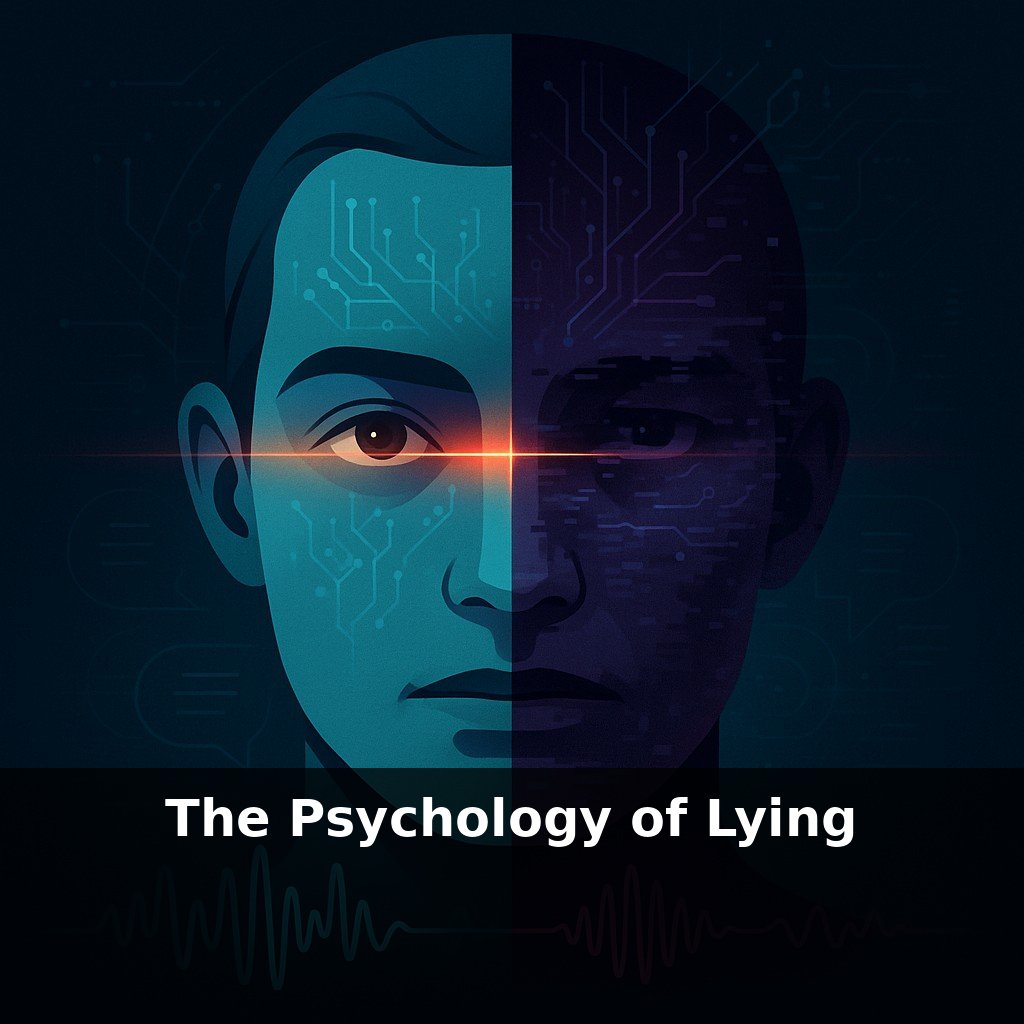
About one person in your life lies far more than everyone else—and they’re probably the one you’d vote “most trustworthy.” At a dinner party, they’re charming, attentive, funny. Here’s the twist: the very traits that make you feel safe may be the same tools they use to deceive.
About one percent of people account for the majority of lies told each day—and they rarely match the “shifty-eyed con artist” in your mind. They’re more likely to be the colleague who navigates office politics with ease, the friend who always knows what to say, the partner who reads your moods before you speak.
What sets them apart isn’t just how often they bend reality, but how smoothly they move between versions of it. They track what they told you, what they told others, and what you’re likely to believe, the way a skilled DJ juggles multiple tracks without missing a beat. Research suggests these “super-liars” combine sharp social perception with strong mental brakes: they can construct a false story and suppress the truth at the same time.
In this episode, we’ll unpack how that skill set develops—and why our intuition is so bad at spotting it.
Many of these patterns start surprisingly early. Studies with children show that kids who tell more convincing lies also tend to score higher on tasks that test planning, impulse control, and reading other minds. By adulthood, some people have practiced this so often—in families, schools, or high-pressure jobs—that slipping between versions of reality feels routine. But frequency isn’t the whole story. Context matters: the same skills can power white lies that smooth a difficult conversation or elaborate fabrications that prop up fraud. That ambiguity is what makes detection so difficult in real time.
Here’s where the paradox gets uncomfortable: when you look at the data, the “best” liars often resemble the people we reward most in modern life.
They’re usually talkative and quick on their feet. They slide in and out of conversations smoothly, adjust their tone to different audiences, and rarely seem rattled. Studies find they report fewer symptoms of anxiety or depression than you might expect. On paper, they look like psychologically healthy high-performers, not villains in waiting.
What really distinguishes them isn’t a single trait, but a tight coordination of several abilities. First, they lean heavily on advanced theory of mind: they don’t just guess what you know—they track what you *think* they know, and what you expect to hear next. They anticipate suspicions before you voice them and preemptively smooth them over with just enough detail to feel solid, but not so much that it invites checking.
Second, their executive control lets them keep multiple “versions” of events active without tripping over contradictions. That means fewer visible pauses, fewer self-corrections, and a story that sounds practiced even when it’s improvised. To you, that fluency reads as confidence.
Social settings reward this blend. In sales, politics, negotiations, even dating, we prize people who can stay composed under pressure, manage impressions, and keep messages consistent across audiences. The line between “polished communicator” and “practiced deceiver” can be uncomfortably thin.
High-stakes fraud exploits this overlap. Bernie Madoff’s investors described him as reassuring, generous with his time, almost paternal. The charm wasn’t a disguise pasted on top of the deception; it was part of the mechanism that kept questions at bay. In organizational scandals, whistleblowers often report that the central figure was the *last* person anyone suspected.
Now add technology. The same interpersonal skills that work in a boardroom carry into email, video calls, and social media, where cues are thinner and records are easier to curate or erase. When AI tools can generate plausible text, voices, and faces, the advantage shifts even more toward people who already excel at reading others and staying three moves ahead. The paradox deepens: the more “together” someone seems, the less we think to look behind the curtain.
At a startup, the “fixer” employee always knows whose ego needs soothing, which metrics to spotlight, when to volunteer for the late-night call. When a product delay hits, they don’t just tweak the numbers; they recalibrate everyone’s expectations in real time—investors hear “strategic pivot,” engineers hear “temporary bottleneck,” customers see a polished roadmap. No one spot-checks the story, because each audience feels specially understood.
Online, the same profile might run a thriving creator account. When a sponsored post underperforms, they don’t admit it; they retroactively frame it as a “test,” edit captions, quietly delete negative comments, and post a confident “win” thread. Followers see consistency, not revision.
A skilled liar is like a touring musician who subtly changes the setlist each night but keeps the show feeling identical; regulars swear they’ve heard the same hits, even as the order—and meaning—shifts just enough to fit the room.
When machines can mimic any face or voice on demand, “seeming real” stops being a shortcut for “being true.” In that world, credibility starts to look more like a bank account: built slowly through verifiable receipts—timestamps, corroborating records, transparent edits—rather than smooth performances. Expect careers that hinge on public judgment (leaders, creators, journalists) to compete not on polish, but on how easily their claims can be independently checked.
As tools blur fact and fiction, the real skill may shift from “spot the liar” to “map the incentives.” Ask: Who gains if this version sticks? What would it cost them to be wrong? Let signals—risk taken, openness to scrutiny, willingness to revise—count more than charisma. Like checking a restaurant’s kitchen, quietly verifying the back room tells you more than the menu.
Before next week, ask yourself: 1) “In the last few days, when have I used ‘prosocial lying’ (like softening bad news or exaggerating support) and, if I replay that moment, what exact words could I have used to stay honest *and* kind?” 2) “Who in my life do I instinctively trust as a ‘good judge of character,’ and if I quietly tracked their last 3 big trust calls (who they hired, confided in, or vouched for), how accurate have they actually been?” 3) “If someone secretly monitored my micro-lies this week—‘I’m almost there,’ ‘I’m fine,’ ‘I read the whole thing’—what pattern would they see about what I’m afraid of (conflict, disapproval, seeming incompetent), and what’s one specific situation coming up where I’m willing to risk a more honest answer instead?”