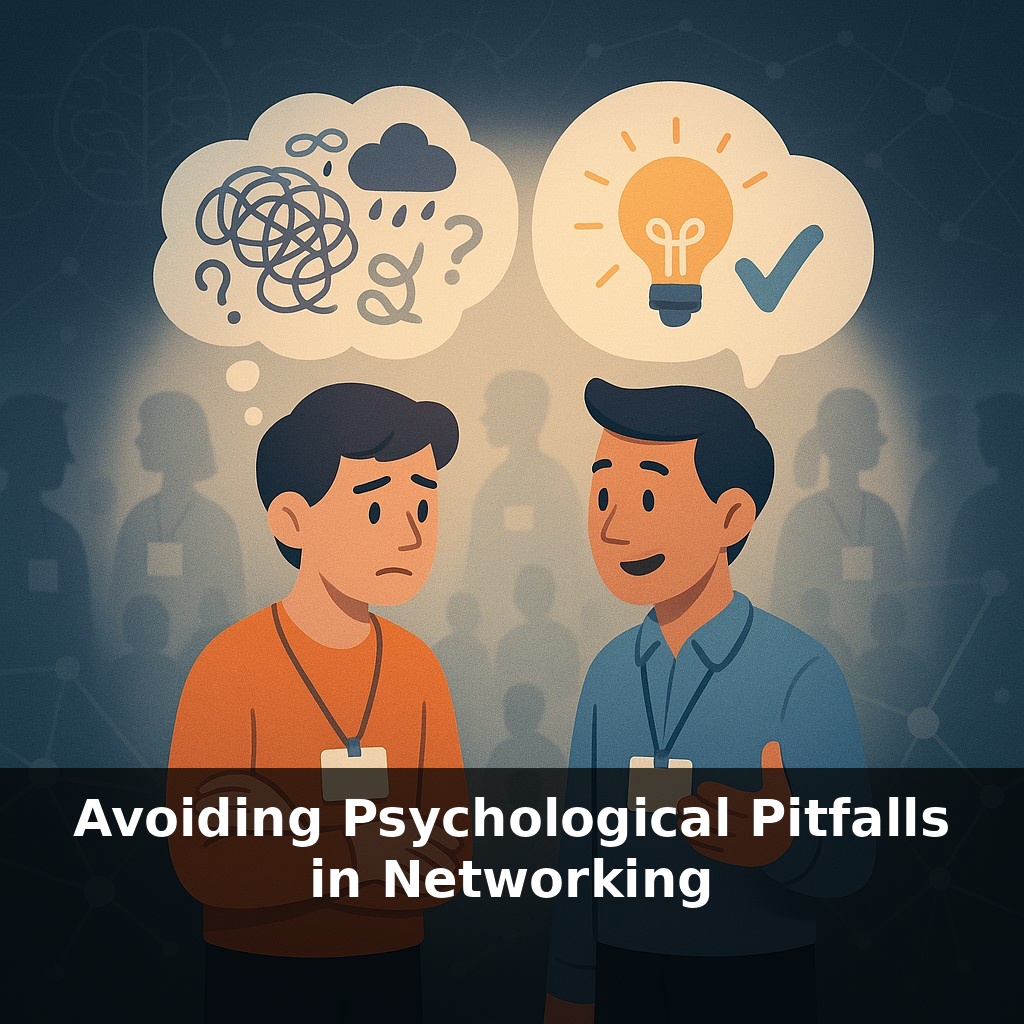
Most careers quietly hinge on one thing we’re terrible at: reading social situations accurately. You’re at an event, replaying every word you just said, convinced you sounded awkward—while the person you spoke to is thinking, “They seem sharp. I should follow up.”
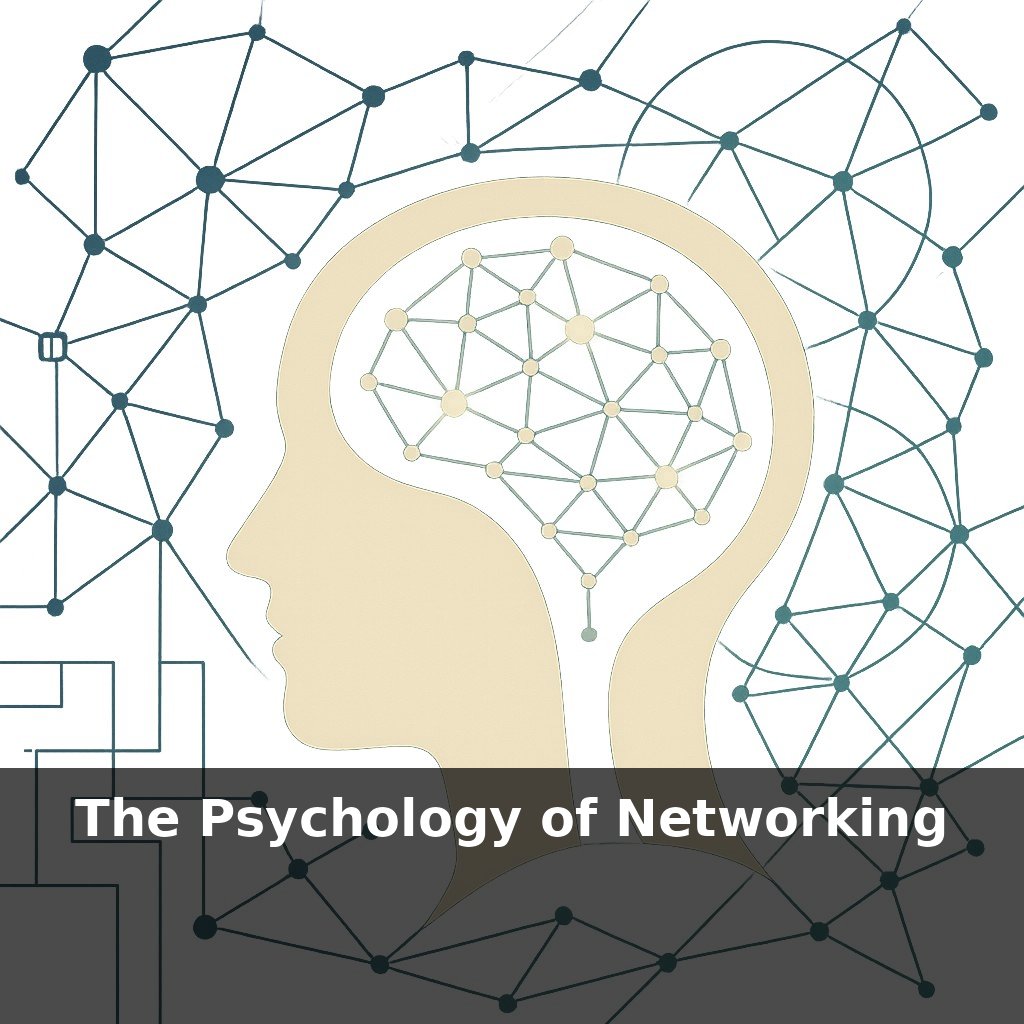
Roughly 70–85% of jobs come through referrals—yet many capable people still treat networking like a mysterious talent they simply “don’t have.” Often, the real problem isn’t a lack of charm or strategy; it’s the invisible mental shortcuts and emotional alarms that quietly steer who we talk to, how long we follow up, and when we give up. We assume others aren’t interested, default to people who feel familiar, or wait to reach out until we “deserve” the connection. These patterns feel rational in the moment, but over time they narrow our opportunities like a hallway that keeps getting smaller. In this episode, we’ll zoom in on those internal traps: the biases, fears, and stories that silently shrink your network—and how small, structured habits can start widening that hallway again.
Here’s the twist: those internal patterns don’t just shape *who* you talk to; they quietly edit the entire map of what you think is possible. You might scroll past a conference invite because “no one there will care what I do,” or skip messaging someone in another industry because “we don’t have enough in common.” Over time, your calendar becomes an echo of your existing comfort zone. This isn’t about forcing yourself to be outgoing; it’s about noticing where your mind automatically draws borders—and testing whether those borders are real or inherited from old experiences, workplaces, or assumptions about your own value.
A lot of those “borders” show up as quick, quiet thoughts that feel like common sense. Three in particular do the most damage to your relationships over time.
First, **confirmation bias** in conversations. Once you’ve decided “This person is out of my league” or “They’re not interested,” your brain starts scanning for proof: the one delayed email, the slightly short reply, the distracted glance at their phone. Meanwhile, you ignore all the neutral or positive signals. Over a year, this doesn’t just end a few threads early; it convinces you that “people like that never want to talk to me,” which silently reshapes who you even attempt to approach.
Second, the **homophily pull**. You meet someone who went to your school, shares your background, or uses familiar jargon, and everything feels easy. The interaction flows, so you label it “good chemistry” and keep repeating that pattern. But convenience isn’t the same as value. Homogenous networks feel comfortable while quietly limiting your access to new information, industries, and sponsors who see the world differently enough to open unexpected doors.
Third, there’s **reciprocity anxiety**—the nagging sense that you must have something impressive to “trade” before you’re allowed to reach out. You hold off contacting a senior person because your current title, portfolio, or idea doesn’t feel worthy yet. Ironically, this often blocks the very learning and visibility that would create the value you think you’re missing.
A useful way to work with these is to shift from “Is this person worth my time?” or “Am *I* worth theirs?” to a more neutral question: **“What kind of experiment would this connection be?”** Maybe it’s an information experiment (Can I learn how their world works?), a creativity experiment (What happens if our perspectives collide?), or an influence experiment (Who do *they* tend to help, and why?).
Think of each new contact less like a high-stakes audition and more like adding a trail to a hiking map you’re steadily exploring: some paths loop back quickly, others lead to whole new terrain, but you only discover which is which by putting your feet on the ground at least once.
A practical way to see these patterns is to notice when they show up in small, low‑stakes moments. Say you’re in a group call and someone you don’t know well makes an interesting comment. One route is to stay silent, replaying reasons they wouldn’t want to hear from you. Another is to send a short message afterward: “Your point about X really stuck with me—curious how you’ve seen that play out in Y.” Now you’re running an information experiment with a clear, honest signal of interest.
Or consider reaching across roles. You might assume the senior engineer, the recruiter, or the product marketer sits on a different island. But pinging them with a specific, contained ask—“Can I steal 15 minutes to learn how you approached Z?”—often reveals overlapping incentives. They may be looking for collaborators, beta testers, or simply smart people to recommend later.
Over time, those tiny experiments compound into a map of who tends to respond, what they care about, and where unexpected bridges appear.
Algorithms are already quietly editing your contact list—suggesting “People You May Know,” promoting some posts, burying others. As they learn your clicks, they can amplify your blind spots, like a playlist that keeps serving one genre until you forget what else exists. The opportunity now is to treat both your mind and your feed as settings you can tune: deliberately adding dissonant voices, rotating who you interact with, and testing small risks that stretch your future options.
Your future relationships will be shaped less by grand gestures and more by dozens of tiny, intentional nudges. Think of each message, comment, or intro as a brushstroke adding depth to a canvas: some fade, some define the picture. As you notice where you hesitate, you’re not fixing yourself—you’re refining how you show up, one small experiment at a time.
Start with this tiny habit: When you open LinkedIn, pause for 10 seconds and say (out loud or in your head), “I’m here to build relationships, not prove my worth.” Then, instead of scrolling, send just ONE person a 1–2 sentence message that reacts to something specific they posted (like “I liked how you broke down X in your post yesterday—especially your point about Y”). If you catch yourself comparing your profile to theirs, add one more sentence that asks a simple, curious question (e.g., “What helped you get started with speaking at events?”).