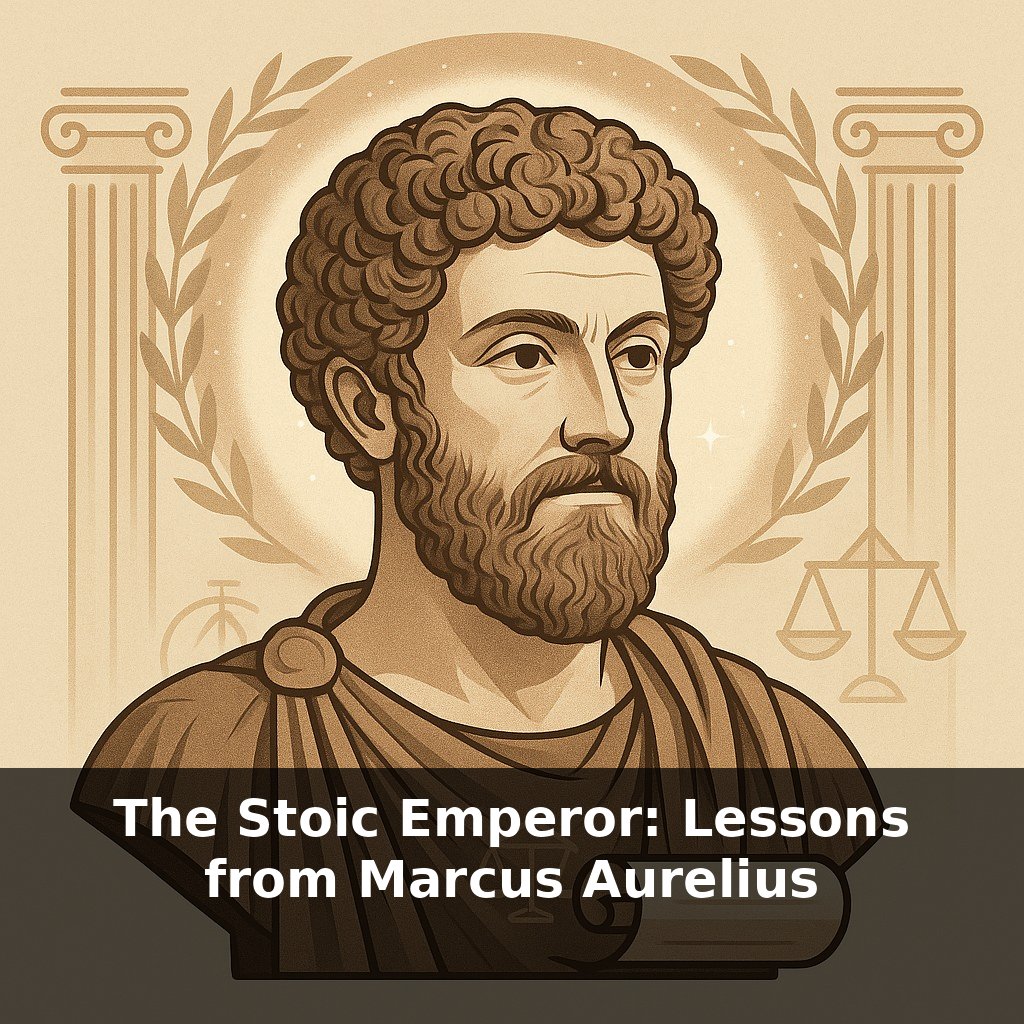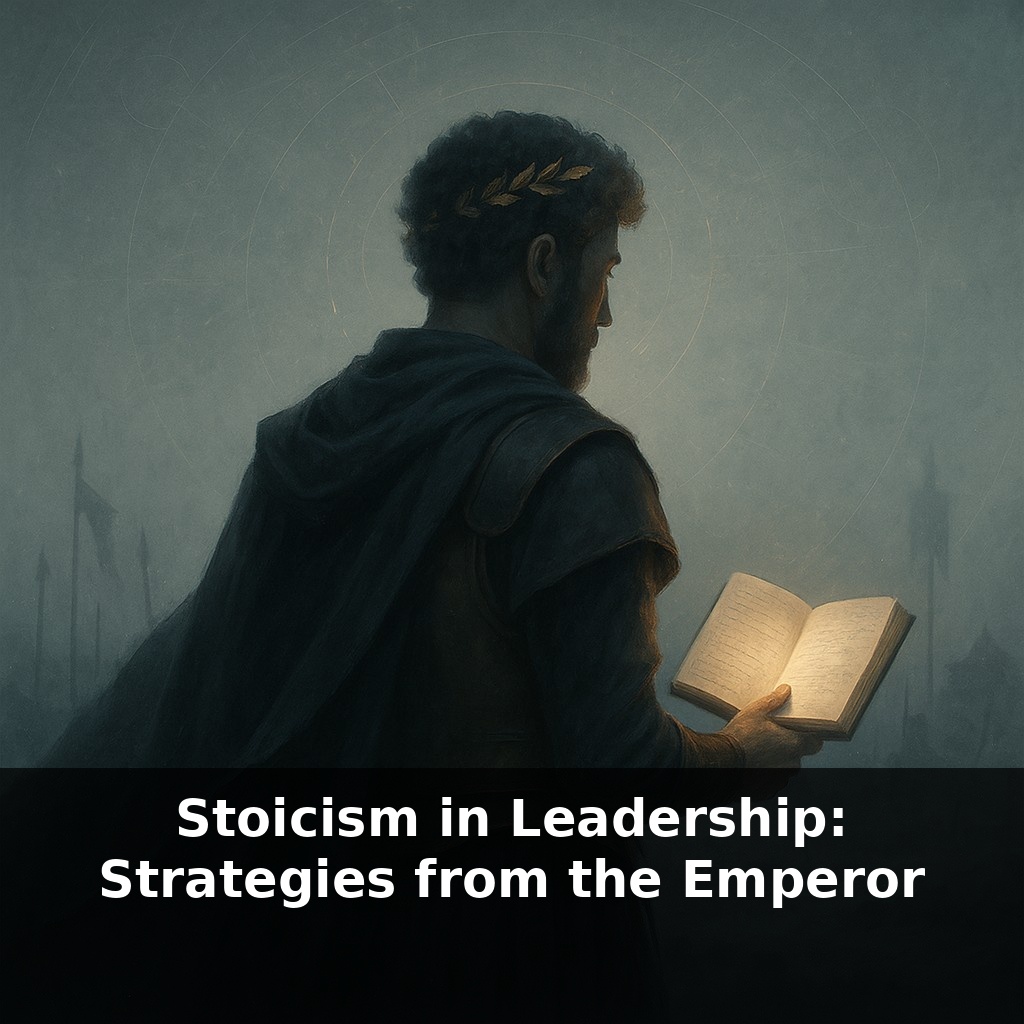
On a freezing battlefield, an emperor opens his journal—not to plan troop movements, but to question his own anger. Two thousand years later, CEOs still read his private notes. Why are leaders obsessed with the self-doubt of a man who held absolute power?
Most leadership advice today promises confidence, speed and “decisive action.” Marcus Aurelius’ notebook offers something far less glamorous and far more demanding: ruthless honesty about your own mind. He didn’t write battle speeches; he wrote reminders to notice when he was irritated, flattered, or tempted to cut ethical corners for convenience.
Think of a modern board meeting: numbers miss the forecast, a partner backs out, someone challenges your plan. The instinct is to defend, deflect, or dominate the room. Marcus trains a different reflex: pause, examine the judgment beneath the emotion, then respond from principle rather than pride.
This is the core of Stoic leadership: treat your inner dialogue like a daily performance review, where character is the KPI and every setback is data, not a verdict.
Instead of branding himself a visionary, Marcus called himself a “student of the art of living.” That distinction matters. Most leaders obsess over outcomes; he obsessed over the mental habits that quietly produce them. Modern research backs this: executives who practice structured reflection make measurably better decisions under pressure. ‘Meditations’ wasn’t theory—it was a working notebook drafted between supply shortages, plagues and political crises. Each entry is less a sermon than a prototype: testing how to stay fair in negotiations, clear-headed in conflict, and anchored when everyone else is panicking.
Leadership, for Marcus, began with a brutal constraint: you do not control outcomes, only inputs. Plague, war, famine, political intrigue—none bent to his will. What did? The quality of his judgment, the fairness of his orders, the steadiness of his responses. That’s why one thread runs through ‘Meditations’ like a steel wire: distinguish what is “up to you” from what is not, and commit to the former with almost obsessive care.
Notice what’s missing in his notes: there are no fantasies about legacy, no predictions about how history will praise him. Instead, he drills three practical disciplines.
First, control of attention. Marcus repeatedly drags his focus back to the present task: the letter in front of him, the person he’s speaking to, the decision on today’s agenda. For a modern leader drowning in notifications and crises, this is not abstract spirituality; it’s cognitive triage. When everything feels urgent, Stoicism asks: “What, right now, actually requires my judgment? What can I let be?”
Second, emotional literacy in the service of justice. He doesn’t deny frustration with incompetent generals or corrupt officials; he dissects it. Is this anger about genuine harm to the community, or about wounded ego? The distinction is everything. One leads to clear correction and better systems; the other to blame, theatrics, and quiet retaliation. Ethical decision-making, in this frame, is less about heroic moments and more about thousands of tiny course corrections away from vanity and toward the common good.
Third, deliberate rehearsal. Marcus stages mental “fire drills” for adversity: slander, betrayal, sudden loss. Not to wallow in worst-case scenarios, but to pre-commit to responses aligned with his principles. Modern crisis leaders do the same with simulations and red-team exercises; he did it with sentences and scrutiny.
Underneath all this is a stubborn refusal to outsource responsibility to luck, enemies or subordinates. Fortune might ruin your plans, but it can’t force you to abandon your standards. Stoic leadership is not about feeling less; it’s about being less negotiable on what you will do when it’s hardest to do it.
A tech founder facing a product failure can use Marcus’ method almost verbatim. Instead of launching into a postmortem to assign blame, they start by listing what was and wasn’t in the team’s control: customer behavior, no; clarity of assumptions, yes. Then they review each major choice: Was this driven by data or by the excitement of chasing a competitor? The goal isn’t self-criticism; it’s pattern recognition in their own judgment.
In government, a minister handling a scandal can pause before the press conference and ask: “What story does my anger want me to tell? What story would serve citizens instead?” One might protect image, the other might admit error and fix the underlying system.
Think of this as debugging leadership code: every strong emotion is a bug report. Instead of deleting the program in shame, you inspect the logic line by line, improve it, and rerun under load until it behaves as intended in real-world stress tests.
Boardrooms are starting to treat Marcus less like a marble statue and more like a prototype. Some firms quietly give new executives “Meditations” alongside strategy decks, then pair it with coaching and lightweight journaling inside productivity tools. The next step may be cultural: hiring for people who already practice this kind of mental discipline, not just those who promise it. In that world, promotion committees might ask less “What did you hit?” and more “How did you stay steady while you hit it?”
Treat Marcus less as a distant sage and more as a prototype to iterate on. Your week is like a series of board meetings with yourself: review inputs, assess the “character metrics,” then ship a slightly improved version of your judgment tomorrow. Your challenge this week: choose one recurring stressor and respond to it each day as if you’d pre-planned your best conduct.