A Roman emperor once began his day by listing everything that might go wrong. Not to worry himself—but to stay calm. On a typical morning, you're stuck in traffic, the car radio crackling with bad news. The secret to resilience isn't a grand overhaul—it's a simple, two-minute mental habit developed even before your feet touch the ground in the morning. This practice of daily foresight might be the unexpected way to stay steady throughout the day.
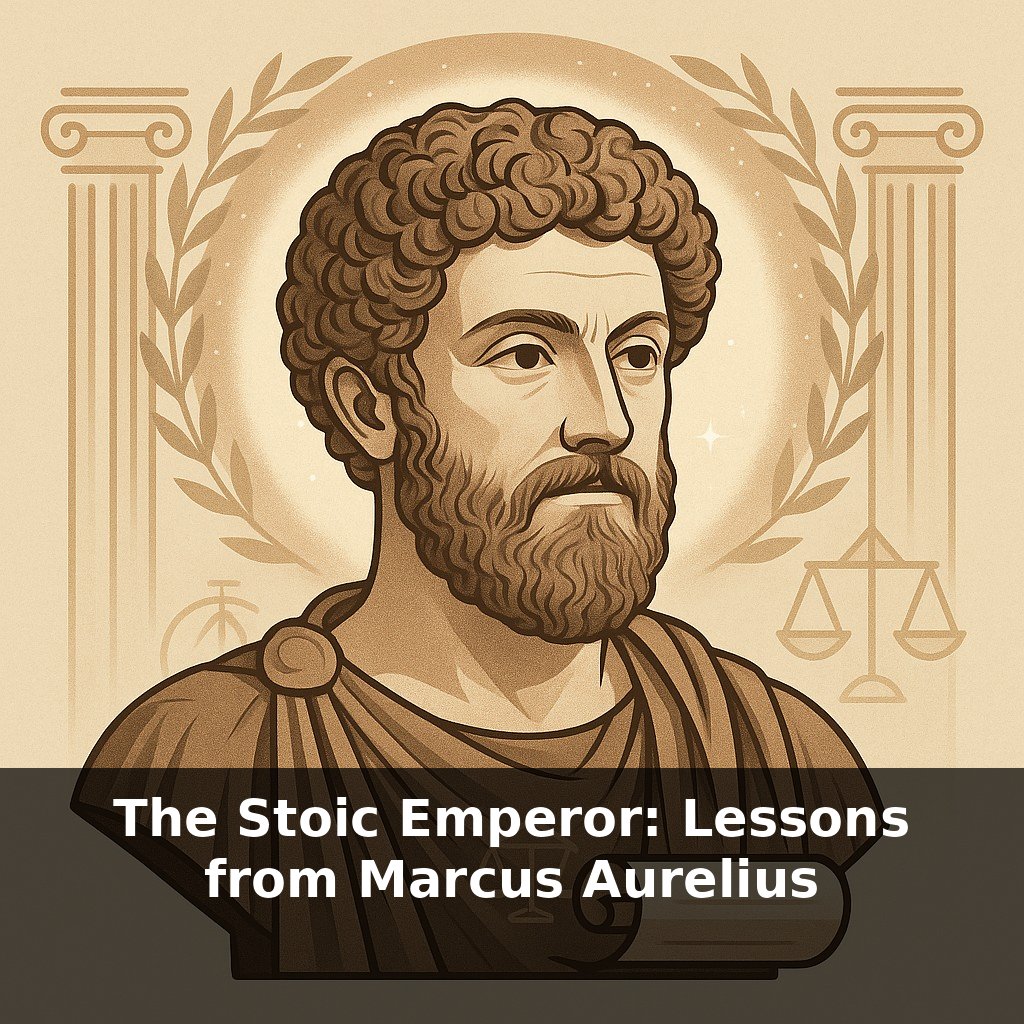
Marcus Aurelius didn’t write “Meditations” as a masterpiece for the ages; he wrote it like you might use a notes app on a bad day—short, blunt reminders to himself so he wouldn’t lose his head while wearing a crown. No audience, no polish, just a running dialogue with his better judgment. That’s precisely what makes it so useful now. We’re not looking at theory from a professor’s desk; we’re looking over the shoulder of someone managing wars, plagues, politics, and family drama, trying not to become the worst version of himself. His method was simple: break the day into small checkpoints and use each one to reset his perspective, the way you might quickly straighten a crooked painting every time you walk past it. In this episode, we’ll turn that private imperial toolkit into a realistic daily script you can test in your own life.
Marcus wasn’t chasing serenity on a mountaintop; he was scribbling reminders between military briefings and letters from senators who wanted him gone. His notes show a man under pressure choosing, again and again, to train his attention the way an athlete trains a specific muscle. Not by overhauling his entire life, but by inserting small mental drills into whatever the day already demanded. Think of it like rearranging what’s pinned on your mental “fridge door” so the right ideas are always in front of you when stress hits, boredom creeps in, or ego starts to swell. We’ll map how he did this across a single ordinary day.
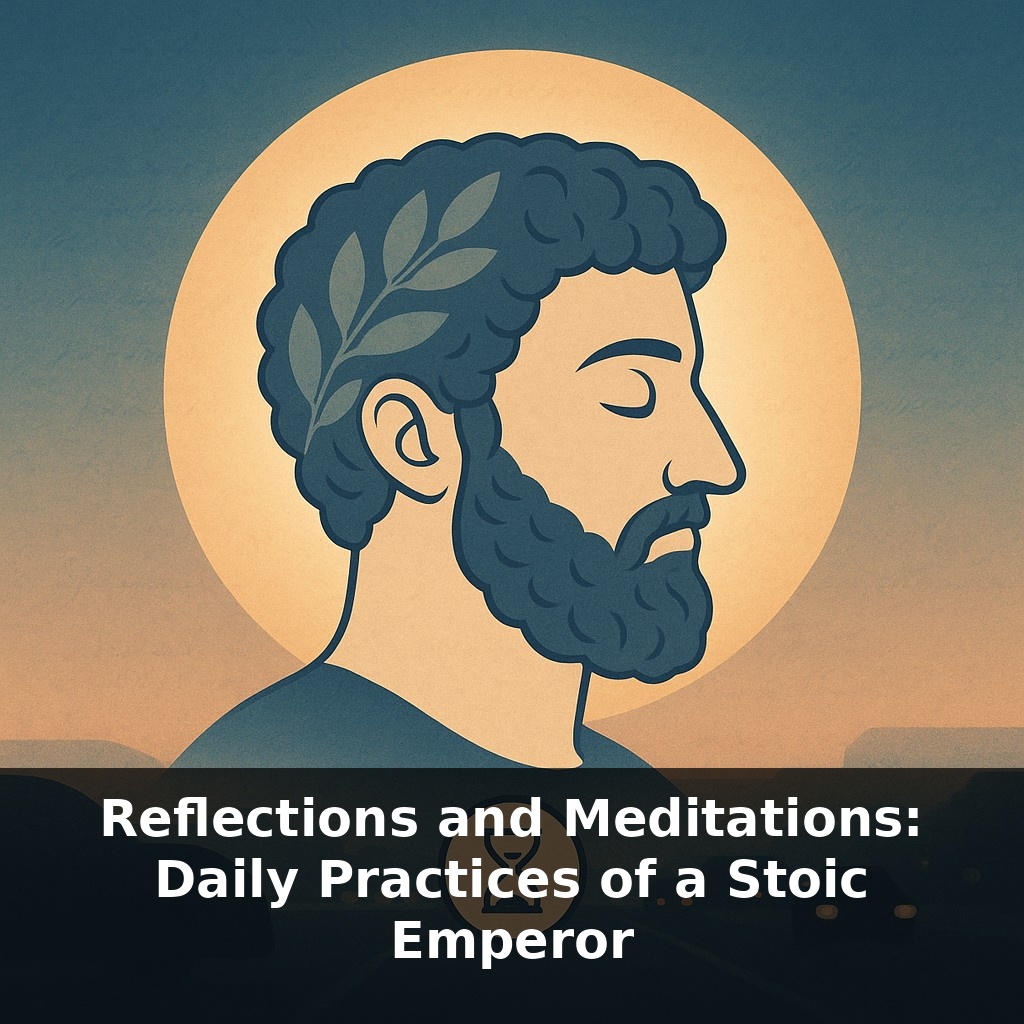
Marcus starts at dawn with what later Stoics call *premeditatio malorum*: a quiet, almost clinical preview of the day’s likely frictions. Not catastrophes—probabilities. “Today,” he writes, “you will meet meddling, ungrateful, arrogant, deceitful, envious, unsocial people.” It’s not cynicism; it’s calibration. By rehearsing the contact points—difficult colleagues, tedious chores, sudden delays—he lowers the emotional “shock value” when they appear. Modern studies on cognitive reappraisal find the same pattern: label the stressor before it arrives and your nervous system reacts less violently when it does. In practice, this can be astonishingly small. Thirty silent seconds before you unlock your phone: *There will be bad news, bragging, and nonsense in here. None of it has to run my mind.*
As the day gathers speed, he shifts from prediction to monitoring. A Stoic doesn’t just endure impulses; he inspects them. Marcus often catches himself mid‑thought: irritation, vanity, fantasy arguments. His question isn’t “How do I stop feeling this?” but “What story am I telling myself right now?” That tiny wedge of curiosity is where philosophy becomes a real‑time skill. You can see the parallel in modern CBT thought records, where you note: Trigger → Thought → Emotion → Action urge. The goal is not to win every inner argument, but to notice that there *is* an argument before you’ve already acted on it.
In the thick of responsibility—campaign decisions, legal disputes, family tensions—Marcus leans hard on one filter: What depends on me, and what doesn’t? He returns to this distinction so frequently it’s almost a refrain. Not as an excuse to withdraw, but as a way to concentrate effort. You can’t dictate whether others praise you, but you can shape whether their praise becomes your drug. You can’t stop people misreading your email, but you can decide to write with clarity and good faith.
One useful way to see this is like debugging code: when something “breaks” in your day, you trace it back. Was this caused by my judgment, my action, or by an external variable? If it’s in your “code,” revise it. If it’s in the environment, adjust expectations rather than rewriting yourself to please randomness. Over time, that sorting process becomes a habit of mind—less dramatic than revelation, more like steady housekeeping of the inner life.
Think of Marcus’s day as divided into three short “meetings” with himself: morning briefing, midday stand‑up, evening review. To see how this works off the page, shrink it into ordinary scenes. You wake up already late. Instead of lunging for your messages, you pause at the edge of the bed and quietly predict: the rushed commute, the curt reply from a client, the awkward silence in a meeting. You’re not scripting failure; you’re bracing your posture.
At lunch, a colleague gets credit for your idea. Rage spikes. Rather than composing a speech in your head, you run a quick inner query: “What am I actually afraid of here—being ignored, or being replaceable?” That question alone slows the spiral.
Then, walking home, you replay the day with almost bureaucratic detachment: Where did you overreact? Where did you waste energy polishing your image? Where did you actually live by your principles when nobody could see? One by one, you tag these moments—not to brood, but to refine tomorrow’s script.
Marcus’s notebook hints at a future where “quiet thinking time” is treated less like a luxury and more like daily hygiene. As wearables track sleep and steps, it’s not hard to picture them also flagging patterns in your self-talk and suggesting a Stoic-style prompt when your stress spikes. Like a budgeting app that nudges you before overspending, these tools could warn you before you “overspend” on outrage, helping people pilot their own minds in a noisier world.
Treat these practices less like lofty philosophy and more like the way you’d tune an instrument before playing. Small, regular adjustments keep you from drifting off‑key with yourself. Over time, your inner commentary becomes less like talk radio and more like a clear dashboard: fewer alarms, better signals, and a quieter sense of steering your own day.
To go deeper, here are 3 next steps:
1. Pick up the Gregory Hays translation of *Meditations* and read just Book 2 tonight, then open the Daily Stoic website and use their free “Marcus Aurelius 7-Day Challenge” email series to anchor what you read into a simple morning reflection ritual. 2. Install the Insight Timer app, search for “Stoic meditation Marcus Aurelius,” and follow one guided session this evening, then immediately jot a single sentence summary of what you learned directly in the app’s notes or in a dedicated “Marcus” notebook. 3. Queue up the *Daily Stoic Podcast* episodes specifically on Marcus Aurelius’ journaling (search “Marcus Aurelius journaling routine”) and, while listening tomorrow, mirror his practice by doing a 10-minute end-of-day review using their free downloadable “Stoic Evening Review” PDF from dailystoic.com.