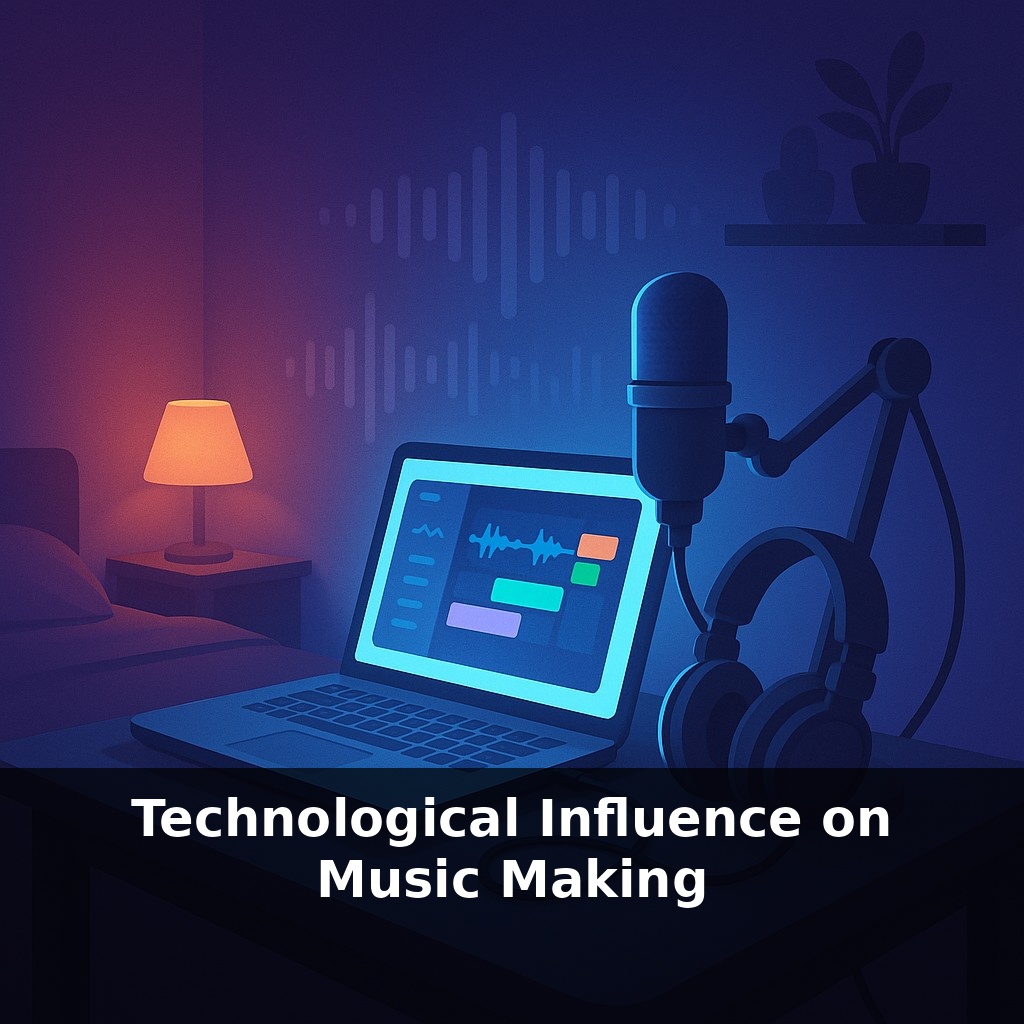
Some of the most-played songs on streaming platforms were recorded in bedrooms, not million‑dollar studios. A laptop, a mic, and a free app can now do what once took a whole building. So if the tools are nearly free, what actually separates a hit from a hidden track?
In the mid‑90s, building a decent studio could cost more than a car. Now, the price of entry is closer to a second‑hand phone. With a sub‑$1,000 setup and stock software, artists are winning Grammys and topping charts—Billie Eilish’s debut was built largely on tools that come bundled with Logic Pro. Meanwhile, algorithms sit at both ends of the process: AI engines help write chord progressions, services like LANDR master millions of tracks automatically, and recommendation systems decide who actually hears them. That floodgate effect is huge: users of one platform, Boomy, have generated tens of millions of tracks—millions of tiny signals competing for a listener’s next three minutes. In this new ecosystem, technology isn’t just shrinking studios; it’s reshaping what counts as skill, originality, and even “finished” music.
The upside? More voices than ever can join the conversation. The downside? It’s like walking into a stadium where everyone’s talking at once. Algorithms listen to that crowd, picking up patterns about what people skip, replay, or share—and those patterns quietly feed back into how new tracks are made. Hooks get shorter, intros get trimmed, genres blur to match playlists rather than purist labels. Collaboration shifts too: stems fly across continents in seconds, and producers refine songs with strangers they’ll never meet, following data traces instead of label memos or studio folklore.
When tools get cheap, the rare resource shifts from gear to judgment. The question quietly flips from “Can you make a track?” to “Out of infinite options, which ones do you choose—and why?” That’s where technology doesn’t just enable music; it nudges its very shape.
Take vocal processing. After “Believe,” Auto‑Tune stopped being just a safety net and became a stylistic choice. Today, singers might track a raw, fragile take, then print an aggressively tuned double on top. The contrast becomes the emotion: human vulnerability framed by a synthetic edge. The tech doesn’t replace expression; it widens the emotional palette, then leaves you to decide how far to push it.
The same goes for sound design. Stock synths, drum machines, and effects give everyone access to similar building blocks—yet recognizable “fingerprints” still emerge. One producer leans into distorted, side‑chained bass; another carves out intimate, whisper‑quiet vocals. Over time, those micro‑choices harden into identity, the way a painter’s brushstrokes or color choices become unmistakable across canvases.
Distribution tech twists the feedback loop. Instead of waiting months for radio spins or sales reports, artists watch real‑time dashboards: where skips spike, where people replay, which country suddenly grabs track three. Some lean into that data ruthlessly, trimming outros or reshaping arrangements to match what “performs.” Others use it as a loose compass—evidence, not orders—especially when an outlier song connects for reasons no metric can fully capture.
Then there’s the tension between speed and depth. With instant tools, you can make ten decent tracks in a day—or spend that day sculpting one risky, personal idea. The temptation is to chase volume, hoping one lands. Yet many breakthrough voices are the ones willing to ignore the default presets, resist the shortcut, and sit with uncomfortable slowness inside a fast system.
Technology, in other words, amplifies your habits. If you’re curious and intentional, it multiplies that. If you’re passive, it multiplies that too.
A beatmaker scrolling through stock sounds might land on the same kick you have—but what happens next is where tech becomes personal. One artist slices that kick into tiny grains, pitching each hit differently so it ripples like a basketball dribbling across uneven pavement. Another runs it through guitar pedals, then records the room with a phone mic to capture the clatter of air and hiss, folding the “mistake” back into the groove.
A songwriter using AI for chord ideas can treat the output like a sketchbook, not a script: keep the spine, reharmonize the bridge, then mute half the suggested instruments so there’s room for a whispered countermelody. A DJ flipping a bedroom mix for a club might automate subtle EQ changes that follow the crowd’s energy—boosting low‑mids as bodies pack the floor, clearing highs as they thin out—turning live response into a shapeshifting arrangement.
The tools stay the same; the questions you ask them don’t.
As tools keep accelerating, the real frontier becomes how you choose to slow down. You might use AI like a sparring partner, throwing wild ideas you’d never think of, then pushing back with edits that feel more “you.” Live shows could split in two directions: hyper‑polished VR sets and deliberately rough, phone‑filmed performances that feel like busking on a busy corner. Expect more hybrid artists—half coder, half composer—treating patches and prompts like secret tunings on a well‑worn guitar.
In this kind of abundance, your taste becomes your main instrument. Tech will keep adding knobs and menus, but your job is closer to being a gardener: pruning, shaping, letting some wildness stay. Your challenge this week: finish one small piece using “too simple” tools—and focus only on decisions, not features, as your measure of progress.