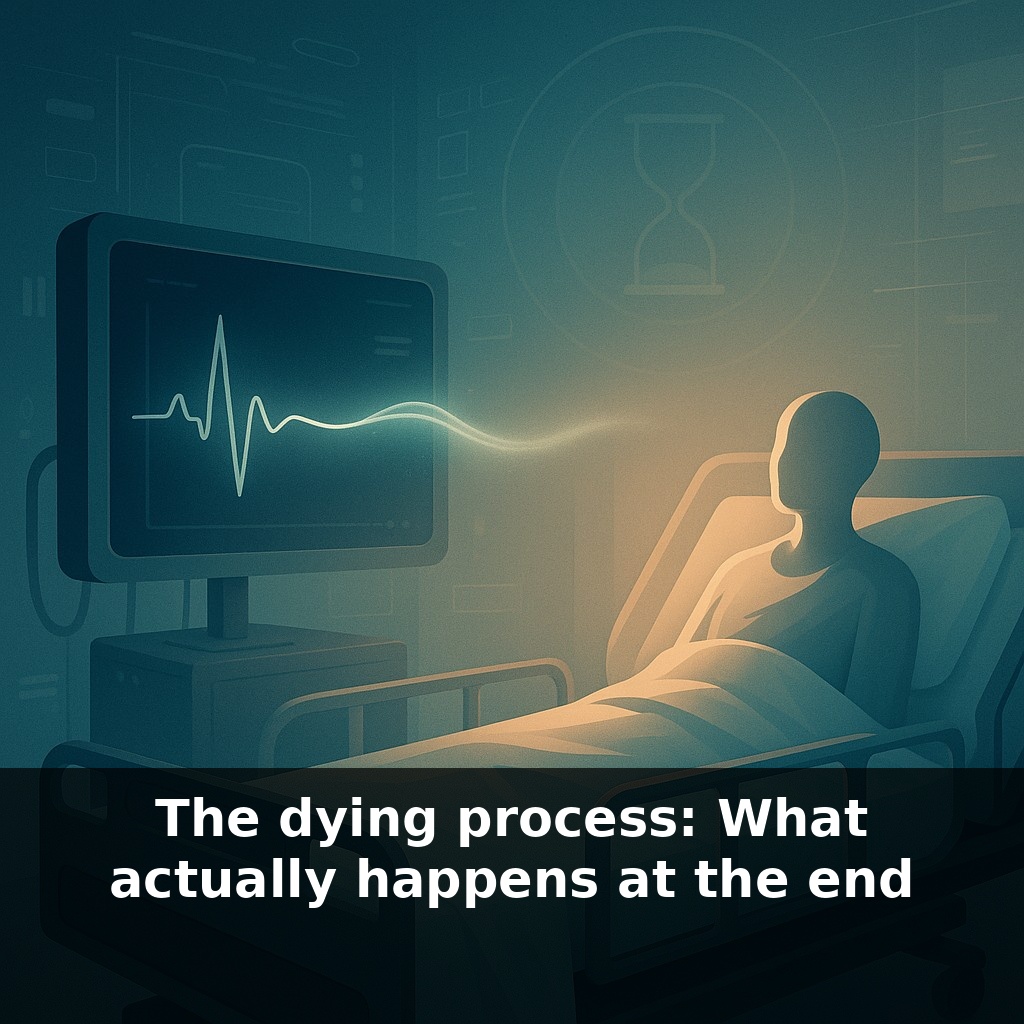
Most people today die surrounded by monitors and machines, not at home—and yet, in their final hours, the body is quietly following a pattern as old as humanity. In this episode, we’ll walk through those last steps, slowly enough that you can really follow along.
When death is close, the body doesn’t just “switch off”; it quietly reprioritizes. Energy is pulled back from anything non-essential and rerouted toward basic survival tasks. That’s why people often stop wanting food or drink, sleep more, and speak less. It isn’t giving up—it’s physiology tightening its focus.
Around this time, families often notice changes that feel alarming but are medically expected: hands and feet growing cool or blotchy, breaths becoming irregular or pausing for several seconds, a soft rattling sound from the chest. To clinicians, these are like familiar landmarks on a road they’ve traveled many times; they signal that care should shift away from fixing and toward easing.
We’ll move through these changes step by step—not to dramatize them, but to make them understandable, nameable, and a little less frightening.
As these changes unfold, time often feels strange for everyone in the room. Hours stretch during quiet breathing pauses, then collapse into a blur when nurses enter, medications are given, or a new monitor alarm sounds. Families may find themselves tracking tiny details—each swallow, each squeeze of a hand—like following the score of a close game, searching for clues about what comes next. Clinicians, meanwhile, are quietly watching a different set of signals: patterns in breathing, blood pressure, and responsiveness that help them estimate where someone is along this final trajectory.
The first unmistakable sign that someone has turned a corner toward dying is usually not dramatic. Often, it’s the quiet, steady retreat from eating and drinking. This isn’t starvation or dehydration in the usual sense; it’s the body recognizing that processing fuel now costs more than it gives back. Families may feel an urge to push “just a few more bites,” but forcing intake typically brings discomfort—nausea, choking, or fluid in the lungs—without changing the outcome. Clinicians watch this shift not as a failure, but as a signal: the body is changing priorities for the last time.
Alongside this, metabolism slows. Medications that were once helpful can start to linger too long or cause side effects, so teams often simplify: fewer pills, more targeted symptom relief. Blood tests become less useful; the numbers can look worse while the person seems more peaceful. That’s one reason palliative teams often recommend stopping routine lab draws, which can add pain without giving information that would change care.
As circulation gradually narrows its focus to the core, extremities may cool and change color. This mottling can look alarming if you’ve never seen it, but by this point, pain pathways are usually quieting too. Nerve signals conducted from the skin and limbs fade long before the visual changes peak. What looks harsh from the bedside may not be felt as harsh from inside the body.
Consciousness tends to loosen in stages: from drowsy but interactive, to brief, lucid moments between long sleeps, to periods where the person no longer wakes in a way others can recognize. Yet hearing often persists deep into this process. Brain recordings in critically ill patients have picked up responses to familiar voices even minutes before the heart stopped. That’s why clinicians encourage families to keep talking, reading, or simply sitting in companionable silence; presence doesn’t depend on conversation.
Breathing, too, starts to follow its own internal script. Patterns like Cheyne–Stokes—clusters of breaths with long pauses—can look frighteningly irregular, but the person is usually not suffocating. Carbon dioxide rises slowly, acting almost like an anesthetic, softening awareness and easing distress while the body’s automatic systems do what they’ve always done: adjust, compensate, and then, when there is nothing left to balance, finally let go.
Families sometimes picture the end as a single dramatic moment, but in practice it’s more like the last movements of a long piece of music: distinct, recognizable passages that still leave room for variation. Two people with the same diagnosis can “play” that final section differently. One may slip quickly from conversation into deep sleep over a single day; another moves back and forth for a week between lucid visits and quiet withdrawal.
Concrete details often guide bedside decisions. If someone grimaces or their forehead tightens when turned, clinicians may adjust morphine—not to hasten death, but to relax those reflexes so touch becomes tolerable again. When swallowing weakens, staff might switch pills to skin patches or tiny concentrated drops in the cheek. If secretions pool noisily, they may gently reposition the body or use low-dose medications to dry them, choosing what matters most to that person: fewer sounds, or less drowsiness.
Even in ICUs full of technology, these small, human-scale choices shape how the last days actually feel.
Up ahead, technology may turn those subtle end-of-life shifts into early “heads‑up” alerts: a wristband quietly flagging that someone is entering their final chapter, the way a weather app warns of an approaching storm. That could help families gather in time, record messages, or choose music and rituals that fit the person’s values. But it also raises hard questions: when should an app say, “It’s likely days now”—and who gets to decide what we do with that knowledge?
In the end, all the data points and bedside impressions converge on one simple task: keeping this particular person as comfortable and connected as possible. Your challenge this week: ask someone you trust how they’d want their last days to feel—quiet, musical, crowded, spiritual—and share your own answer. Treat it like comparing travel plans for a trip you both will take.