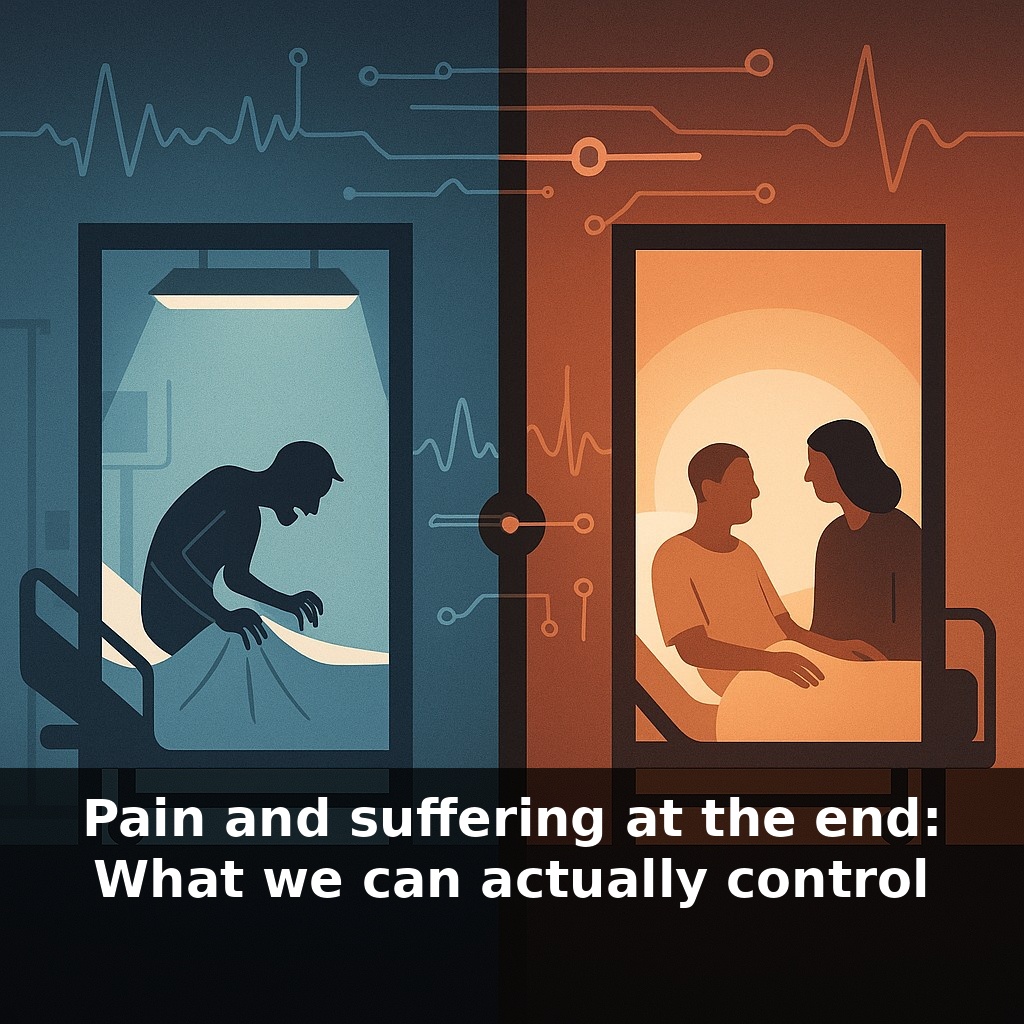
About half the people who most need expert help with pain at the end of life never receive it. In one room, a man is writhing, insisting “no more drugs.” Down the hall, a woman with the same disease is calm, talking softly with her daughter. What actually made the difference?
About half the people who most need expert help with pain at the end of life never receive it. In one room, a man is writhing, insisting “no more drugs.” Down the hall, a woman with the same disease is calm, talking softly with her daughter. What actually made the difference?
Pain is only one instrument in the larger orchestra of suffering, and it’s rarely playing alone. Fear, unfinished conversations, spiritual unease, financial stress, even the tension in the room can act like background noise that turns manageable pain into something overwhelming. This is where palliative and hospice teams quietly change the script. They don’t just reach for stronger medications; they adjust the whole environment around a person’s final days—who’s in the room, what’s being said, what decisions are still hanging in the air, and how honestly everyone is allowed to speak. That broader work is what we’re going to unravel next.
In real practice, the line between “pain” and “everything else” is blurry. A nurse adjusts a morphine drip, and the monitor numbers look better—but the patient is still gripping the bedrail, eyes wide. This is where an interdisciplinary team quietly starts mapping what’s actually going on. They’re listening for patterns: Does breathlessness spike when certain relatives leave? Does nausea worsen when test results are mentioned? Think of it like tuning a live mix at a concert—light, sound, crowd energy, and performer all interact. Change one element, and the whole experience can shift dramatically, for better or worse.
Most people assume the last stretch of life is a one‑way slide into more pain and less control. The research tells a different story: in many cases, the “how bad it has to be” is far more adjustable than we think.
The first lever teams pull isn’t “more morphine,” it’s precision. Instead of “Are you in pain?” they’ll ask, “Is it sharp or burning? Constant or in waves? Worse when you move or when you breathe?” That detail steers whether they reach for an opioid, a nerve‑targeting drug, a steroid to shrink swelling, or a nerve block. The goal isn’t numbing someone into silence; it’s tuning down the specific source enough that other parts of life can come back into focus.
The second lever is timing. Uncontrolled symptoms are much harder to rescue than to prevent. That’s why you’ll hear phrases like “stay ahead of the pain” or “don’t wait until it’s a 9.” Scheduled doses, long‑acting formulations, and continuous sub‑cutaneous infusions smooth out the spikes, so the nervous system never gets fully “on fire” in the first place.
Then there’s the work on everything that magnifies distress. Teams routinely ask about sleep, nausea, constipation, breathlessness, and itching—not as side notes, but as amplifiers that can make even modest pain intolerable. A laxative, a fan for air hunger, or changing a medication that causes vivid nightmares can lower suffering as much as raising an opioid dose.
Control also comes from clarity. When families don’t know what to expect—Will they choke? Will they suffocate? How long will this last?—anxiety climbs and so does reported pain. Honest, concrete explanations, and clear plans for “what we’ll do if X happens,” give people something solid to stand on.
Finally, relationships are treated as clinical data, not background. If a person only tenses when a particular topic or visitor appears, that’s a signal. Social workers and chaplains step in, not to “fix” families, but to surface what’s unfinished: apologies, blessings, practical worries about money or guardianship. Every resolved conversation lowers the emotional “volume” in the room.
Managing this phase is less like winning a battle and more like conducting a slow, responsive piece of music: many small, well‑timed adjustments, guided by what the person themselves says matters most right now.
Consider two people with the same diagnosis in the same facility. One keeps saying, “I don’t want to be a burden,” refusing extra visits and declining offers to adjust medications. The other asks for a volunteer to read aloud each afternoon, a chaplain to visit once a week, and a clear “if‑then” plan with the nurse for bad nights. Their bodies may be equally fragile, but their experience diverges sharply.
Teams often notice that once a patient’s biggest “unfinished thing” is addressed—a son reassured about tuition, a partner helped to find respite care—the person’s reported discomfort drops, even if drug doses stay the same. In one study, simply adding structured family meetings led to fewer crises and fewer requests for emergency transfers.
The practical lesson isn’t that mindset magically erases agony. It’s that specific, nameable needs—someone to translate medical jargon, a quiet hour without visitors, a different position in bed—operate like hidden volume knobs on distress, and they are frequently adjustable.
About 40 million people a year could benefit from this kind of support, yet most never see it. As genomic tools start predicting which drugs fit which bodies, and wearables quietly flag rising distress, comfort may become less dependent on geography or luck. Policy will have to catch up: do we fund home‑based teams the way we fund ICUs? Culturally, we’ll face a harder question: if comfort is more achievable, how do we rethink choices about how—and where—we spend our final months?
In the end, control may look less like heroics and more like small, deliberate edits: who holds the phone tree, which stories get told, what music plays at 2 a.m. Like arranging shelves before a long trip, these choices won’t change the destination, but they shape how heavy the bags feel—and who’s close enough to help you carry them.
Before next week, ask yourself: When I imagine my own last months of life, what kind of pain or suffering scares me most (physical, emotional, spiritual, or relational), and who in my life needs to actually hear that from me now? If my doctor told me tomorrow that time was short, which two or three specific things would I immediately want more control over (for example: where I’m cared for, who’s in the room making decisions, what treatments I’d refuse), and have I clearly told anyone those wishes? Looking at the people I trust most, who would I honestly feel comfortable empowering as my healthcare proxy, and what hard but loving conversation could I start with them this week about what “enough treatment” versus “too much” would mean for me?