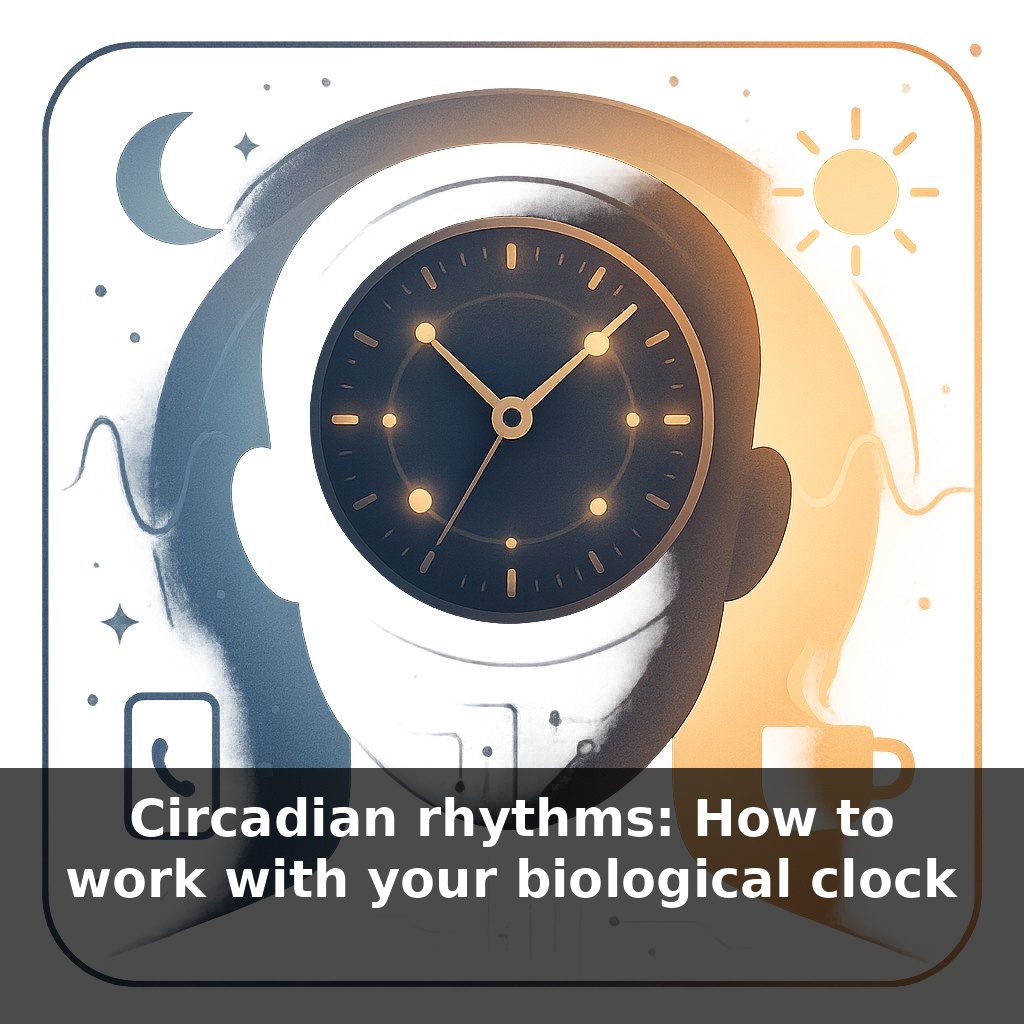
Right now, as you listen, every cell in your body is checking the time. Yet most of us run our day on calendar alerts, not our internal clock. You gulp coffee, fight a mid-afternoon crash, scroll at midnight—then wonder why willpower vanishes exactly when you need it.
Your internal clock is not “one thing” you fix by going to bed earlier; it’s a whole timing system with very specific settings. Your brain wants bright light in the morning, darkness at night, food in a 10–12 hour daytime window, and roughly the same sleep–wake schedule every day. Shift those anchors by even 1–2 hours and you start to feel it: slower reaction times, mood dips, and that wired‑but‑tired state at 11 p.m.
Now layer modern life on top: indoor offices at 300–500 lux instead of outdoor daylight at 10,000–100,000 lux, LED screens inches from your face at midnight, and meals drifting later until “dinner” is at 9:30 p.m. three nights a week. None of this breaks you in a day, but over months it creates a subtle jet lag without travel: you wake earlier than your biology, and ask your brain to focus when its sleep signals are still high.
That quiet misalignment shows up in places you don’t expect. Core body temperature, for example, peaks about 6–9 hours before your usual bedtime and then drops, helping you feel sleepy; push sleep back by 90 minutes and that cooling curve drifts with it. Hormones follow suit: cortisol should be high around 8–9 a.m. and low near midnight, yet late light and midnight emails can flip that pattern, leaving you wired at 11 p.m. and flat at 10 a.m. Even digestion runs on a schedule: gut clocks anticipate most of your calories in a roughly 10–12 hour span, not scattered across 16–18 hours.
Your biology gives you more flexibility than a fixed “early bird” or “night owl” label, but not unlimited freedom. Most adults’ clocks run about 24.2 hours, which means left alone in a cave with no light cues, you’d drift about 12 minutes later every day. Modern life accidentally recreates that cave: weak indoor light by day, strong blue‑heavy light from screens at night. Result: your clock tries to slide later while your alarm stays put.
So how do you work with this system instead of against it? Start with light timing, not sleep timing. Your brain is most sensitive to light as a reset signal in two windows: roughly the first 2 hours after waking, and the last 2–3 hours before bed. Bright, outdoor‑level light in the morning pulls your clock earlier; even 15–30 minutes at 5,000–10,000 lux can shift melatonin timing by tens of minutes over several days. In the evening window, as little as 30 lux of blue‑rich light (a dim lamp or tablet at arm’s length) can delay melatonin onset and quietly push tomorrow’s sleepiness later.
Next, line up your “daytime behaviors” with when your brain thinks it’s day. Exercise before local noon tends to advance your clock; intense workouts late at night can delay it. Large meals act as time stamps too: a 900‑calorie dinner at 10:30 p.m. tells your liver and gut that “daytime” has been extended, moving their rhythms away from the SCN in your brain. Over weeks, that internal disagreement shows up as reflux at night, sluggishness after breakfast, or nighttime blood sugar spikes.
Social timing matters as much as behavior timing. Consistently going to bed at midnight on weekdays and 2:30 a.m. on weekends creates about a 2.5‑hour “social jet lag,” similar to flying two time zones every week. You can’t erase that by sleeping in on Sunday; your circadian phase doesn’t jump back in a single night. Instead, small, 15–20‑minute shifts in wake time over several days, anchored by morning light and earlier meals, are what actually move the system.
If you normally fall asleep around 11:30 p.m. but want to feel tired closer to 10:30 p.m., don’t jump straight there. For 4–5 nights, move lights‑out by 15 minutes (11:15, then 11:00, etc.), and pair each step with about 20–30 minutes of outdoor light within 90 minutes of waking. Most people can comfortably shift about 1 hour earlier over 7–10 days this way without feeling wrecked.
Here’s a concrete weekend case. Say you wake at 7:00 a.m. on weekdays but 10:30 a.m. on Saturdays. That 3.5‑hour swing is roughly like flying from New York to California every Friday night. Instead, cap the weekend wake delay at 1 hour: 8:00 a.m. Saturday, 8:30 a.m. Sunday. If you stay out late, protect the next morning: wake at 8:30, get 15–20 minutes of light, and keep your heaviest meal before 8:00 p.m. that night.
Think of this like retuning a piano: you adjust one string (light), then bring the others (meals, exercise, social time) gently into line so the whole system sounds “in key” again.
Your challenge this week: treat timing as a performance tool. Pick ONE domain to optimize—focus, strength, or creativity. Then: for 7 days, schedule its most demanding task into the 3‑hour window when you usually feel naturally “on.” If that’s 9–12, protect it: no meetings, no email. Track output: words written, reps lifted, bugs fixed. If your best work improves by even 10–15 %, you’ve found a circadian “prime time” worth defending.
Your body already runs a precise schedule; your job is to stop scrambling it. Over the next month, test small, measurable tweaks: pull caffeine back to ≤2 p.m., keep 4 hours between last heavy meal and bed, and cap night‑time screen use to 30 minutes. Recheck energy, mood, and focus at the same time daily; a 20–30 % improvement means your clock is finally on your side.
Before next week, ask yourself: “If I had to pick a consistent 90-minute ‘deep work’ window that matches my natural mental peak (usually 2–4 hours after waking), what exact time would it be, and what will I protect it from (email, meetings, phone) starting tomorrow?” “Looking at my evenings this week, which specific habits (late caffeine, bright overhead lights, doom-scrolling in bed) are most likely pushing my circadian clock later, and what’s one I’m willing to cut off by a set time tonight?” “On a scale from 1–10, how aligned are my current meal times, exercise time, and light exposure (morning outdoor light, dimmer light at night) with a stable sleep-wake schedule—and what is one concrete tweak I’ll test for the next three days (e.g., 15-minute morning walk within an hour of waking or moving my workout earlier)?”