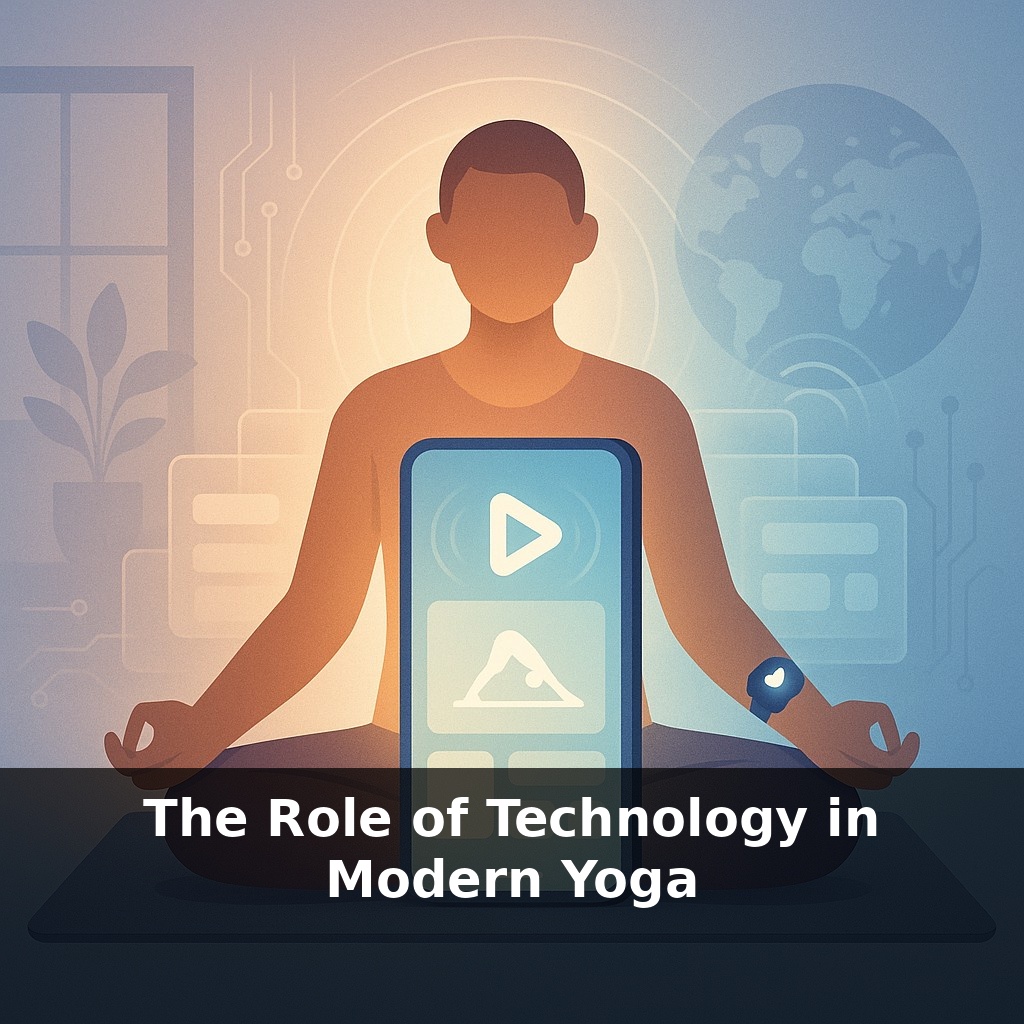
A single yoga app now reaches more people in a month than many big-city studios see in a year. In one home, someone follows a smartwatch cue to slow their breath; across the world, another streams “Yoga With Adriene.” Same poses, same mat—totally transformed doorway into practice.
Down Dog can spin out more than 60,000 different class combinations; Adriene’s channel alone now greets over 30 million visits each month. That’s not just convenience—that’s a reshaping of how people first meet yoga, when they return, and why they stay. For some, the phone in their pocket has quietly become their most consistent “teacher,” nudging them to roll out a mat at odd hours, in small apartments, or between meetings. For others, a smartwatch’s subtle buzz mid-pose turns abstract “mind–body awareness” into something you can literally see on a heart-rate graph. Like a musician using a tuner, you’re still the one doing the work, but the device helps you notice when you’re drifting off-key, so you can refine your alignment, pacing, and focus in real time.
And yet, there’s a quiet tension underneath all this progress: the same screen that reminds you to unroll your mat is also where email, news, and endless scrolling live. A smartwatch nudge can feel like support one day and surveillance the next. Technology widens the doorway into yoga, but it can also crowd your attention, like trying to listen to a soft acoustic guitar in a room where multiple playlists are competing for the speakers. The question isn’t “tech or no tech?” so much as “who’s leading the relationship”—your intention, or the algorithms designed to keep you engaged?
The first fork in the road is *how* you let technology enter your practice. One path is “default mode”: open whatever app is closest to your thumb, accept whatever class it suggests, leave notifications on, and hope something good happens. The other is intentional: you decide ahead of time what role tools will play—coach, calendar, community, or mirror—and you turn off everything that doesn’t serve that role.
When tech becomes a coach, personalization matters more than production value. Platforms that ask about your energy, injuries, or goals can gradually shape sessions that fit your real life instead of an idealized schedule. That’s partly why big apps now offer sliders for intensity, duration, and focus area; they’re trying to mirror how a live teacher might adjust when you walk into the room looking tired or wired.
As calendar, tech shines when it reduces friction. A recurring reminder that links straight into a pre-selected session removes at least three excuses: “I don’t know what to do,” “I don’t have time to choose,” and “I forgot.” Habit-tracking streaks and gentle nudges leverage the same psychology as language-learning apps—small, frequent wins compound. The UCLA data hint that consistency might matter more than location; the mat on your floor can rival the studio if you actually show up.
As mirror, wearables and cameras invite both insight and obsession. Seeing that you tend to hover in lower heart-rate zones might encourage you to occasionally pick up the pace; noticing that your breath jumps during balances can guide where to soften. But chasing “perfect” numbers easily dulls subtler signals from joints, fatigue, or mood. Advanced practitioners often flip this script: they use metrics briefly to learn their tendencies, then deliberately wean off, keeping only the minimum cues that genuinely sharpen awareness.
Community is the newest, strangest role. Comment threads, live chats, and virtual challenges knit together people who will never share a physical room, yet swap modifications, celebrate milestones, and normalize starting again after lapses. For some, posting a post-practice check-in feels safer than walking into a studio full of strangers. The paradox: you might feel more seen by someone across the globe than by the silent row of mats next to you.
Think of a tech-assisted session like an artist’s studio with different tools laid out. One day, your “palette” might be a calm, audio-only sequence from an app, lights low, phone facedown so the screen can’t pull you sideways. Another day, you prop the device at hip height and record a short clip, then watch just 10 seconds to notice where you’re collapsing or rushing, and immediately delete it so you’re not tempted to obsess.
A wearable can become a quiet background instrument: you set a soft vibration to cue a longer exhale every few minutes, then ignore the numbers until later, simply checking whether those tiny shifts matched your subjective sense of ease or effort. Some people use private group threads where friends post a single sentence after practice—“showed up tired, left steadier”—no photos, no streaks, just mutual accountability. Others schedule a monthly live online class with a teacher who recognizes their name in the chat, so the mostly-solo home routine is punctuated by moments of real-time support and gentle course-correcting.
As sensors shrink and disappear into fabrics, you may one day roll out a mat that quietly learns your patterns the way a garden learns your footsteps—where you linger, where you rush—and adjusts suggestions accordingly. AR overlays could highlight subtle shifts you’d never spot in a mirror, while local laws start treating movement data like medical records. The open question is who steers: you, curating tools like props, or algorithms, curating you.
So the question quietly shifts from “Is tech good or bad here?” to “Can I let it be a flexible prop?” Some days you’ll lean on it like a sturdy block; other days you’ll set it aside and wobble on purpose. Over time, you’re not aiming for a perfectly tracked journey, but for tools that bow out the moment your own inner cues speak louder.
Before next week, ask yourself: 1) “When I use yoga apps, online classes, or wearables, do they deepen my awareness of breath and body—or am I just chasing streaks, badges, or screen time?” 2) “If I turned off all tech for one practice this week, what would I notice about my focus, my pace, and my connection to the teacher (even if it’s a recorded class)?” 3) “Looking at my current digital tools—YouTube playlists, tracking apps, smart mat, etc.—which one truly supports my intention for yoga right now (stress relief, strength, spiritual growth), and which one silently pulls me away from it?”