A company can show record profits and still be days from missing payroll. In one recent wave of IPOs, nearly half had negative cash flow from operations while “looking” profitable. Today, we’ll step inside that disconnect and follow the actual money as it moves.
More than 95% of U.S. public companies build their cash flow statements the same way—and most managers still barely use them. That’s a missed opportunity, because this one report quietly answers three questions no dashboard can: Are we surviving day to day? Are we truly funding growth? And are we rewarding (or slowly burning) our owners and lenders?
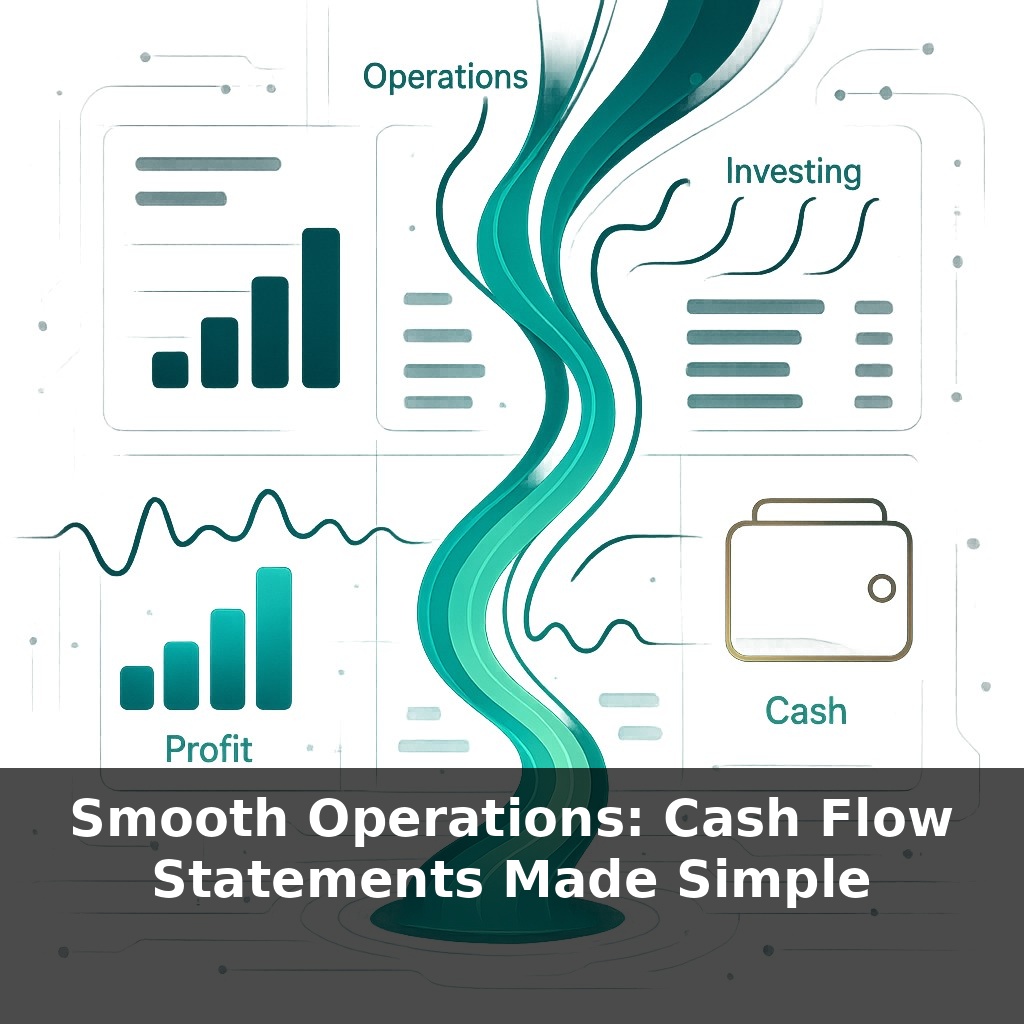
The cash flow statement does this by sorting every dollar into operating, investing, or financing activity. When you scan it line by line, you start to see stories: a “profitable” firm surviving on new loans, or a slow, steady engine of cash quietly paying for expansion.
Think of it less as an accounting chore and more as a diagnostic tool: a structured way to test whether the business is breathing on its own or living on a drip of outside money.
You’ll get the most value from cash flow when you stop reading it like a static report and start treating it like a time-lapse. Look at trends across several periods: is operating cash slowly strengthening, or are you quietly leaning more on financing each quarter? Then zoom in: which specific line items are actually moving the needle—inventory swings, slower collections, richer payment terms to key suppliers? It’s also where strategy shows up in numbers: aggressive hiring, a factory build, a share buyback all leave distinct fingerprints in the cash story over time.
Here’s where the pattern really starts to speak. Once you’ve grouped cash into operating, investing, and financing buckets, the next step is to ask: “Is this sustainable, and is it intentional?”
Start with the trend in cash from operations over several periods. Rising operating inflows paired with relatively stable revenues can signal that you’re tightening collections, managing inventory better, or negotiating smarter payment terms. If revenue is growing but operating cash is flat, that often hints at money getting “stuck” in receivables or stock sitting too long on shelves. You don’t need to be an accountant to see this; just compare direction and magnitude: are cash movements keeping up with the story you’re telling in sales meetings and board decks?
Next, read investing cash flows as a record of your strategic bets. Large, recurring outflows here might look scary in isolation, but they’re exactly what you’d expect from a growing business that’s building capacity, product, or technology. The key is to link them back to timing: are these heavy spends followed, a few quarters later, by stronger operating inflows? Amazon’s playbook—years of robust operating cash plowed into logistics, data centers, and content—shows what it looks like when that loop works.
Financing flows then tell you how you’re choosing to bridge the gap between day-to-day performance and long-term bets. Heavy inflows from new debt or equity aren’t automatically bad; early-stage and turnaround situations often depend on them. The question is: do you see a path, over time, toward those external funds shrinking as a share of total inflows? Likewise, big outflows in dividends, buybacks, or debt paydown are only truly “healthy” if operating inflows can comfortably cover them alongside investing plans.
One helpful way to view it: like a chef plating a dish, you’re balancing three elements on the same plate—short-term health, long-term investment, and stakeholder returns. When one dominates without a clear narrative (for example, constant refinancing just to stay afloat, or endless expansion with weak operating support), the imbalance shows up quickly in the pattern of cash.
Your job isn’t to memorize rules; it’s to compare these patterns to your own strategy. Does the way cash actually moves match the story you think you’re running?
A simple way to test your understanding is to trace how cash patterns would appear for very different businesses. Picture a fast-growing software startup that collects annual subscriptions upfront. Its report might show modest accounting profits but strong inflows from customers early in the year, then quieter periods where expenses continue while cash barely moves. The story: timing risk—flush today, exposed if renewals stumble.
Contrast that with a construction firm juggling large projects. Here, shifts in customer prepayments, retention clauses, and slow approvals can swing reported totals sharply between quarters, even if underlying work is steady. Watching how those swings line up with project milestones often reveals whether the firm is truly in control or just reacting.
Now consider a mature industrial company deliberately shrinking a legacy product line while investing in automation. You’d expect a gradual cooling of customer-driven inflows from the old line, partly offset by efficiency gains, while outlays for new equipment surge then taper. When that pattern doesn’t emerge, the “transformation” may be more slide deck than reality.
Regulators and investors are quietly raising the bar. AI tools are starting to scan patterns across thousands of companies, flagging who turns cash like a well-run restaurant and who’s just good at glossy menus. As settlement speeds up and digital money moves almost instantly, the “timing fudge” many teams rely on will shrink. Expect questions to shift from “Are we solvent?” to “How quickly can this model self-correct when the next shock hits?”
Treat this report like a sketchbook, not a verdict. Each period adds another layer of color: a bolder stroke for a risky bet, softer shading for discipline and restraint. Over time, you start to see your style—conservative, aggressive, adaptable. Keep asking: if next quarter surprised me, would this pattern help me respond faster, or leave me guessing why?
Before next week, ask yourself: “If I pulled up my cash flow statement today, could I clearly explain where my cash from operations is actually coming from (customer receipts, changes in receivables, inventory, payables)—and what surprised me when I traced the numbers back?” “Looking at my last three months, which specific outflows in the investing and financing sections (new equipment, debt payments, owner draws, loan proceeds) are helping my business grow, and which ones are quietly draining flexibility?” “If I had to make one decision this week—delay a purchase, renegotiate payment terms, adjust pricing, or build a cash buffer—based purely on my cash flow statement, what would I choose and why?”