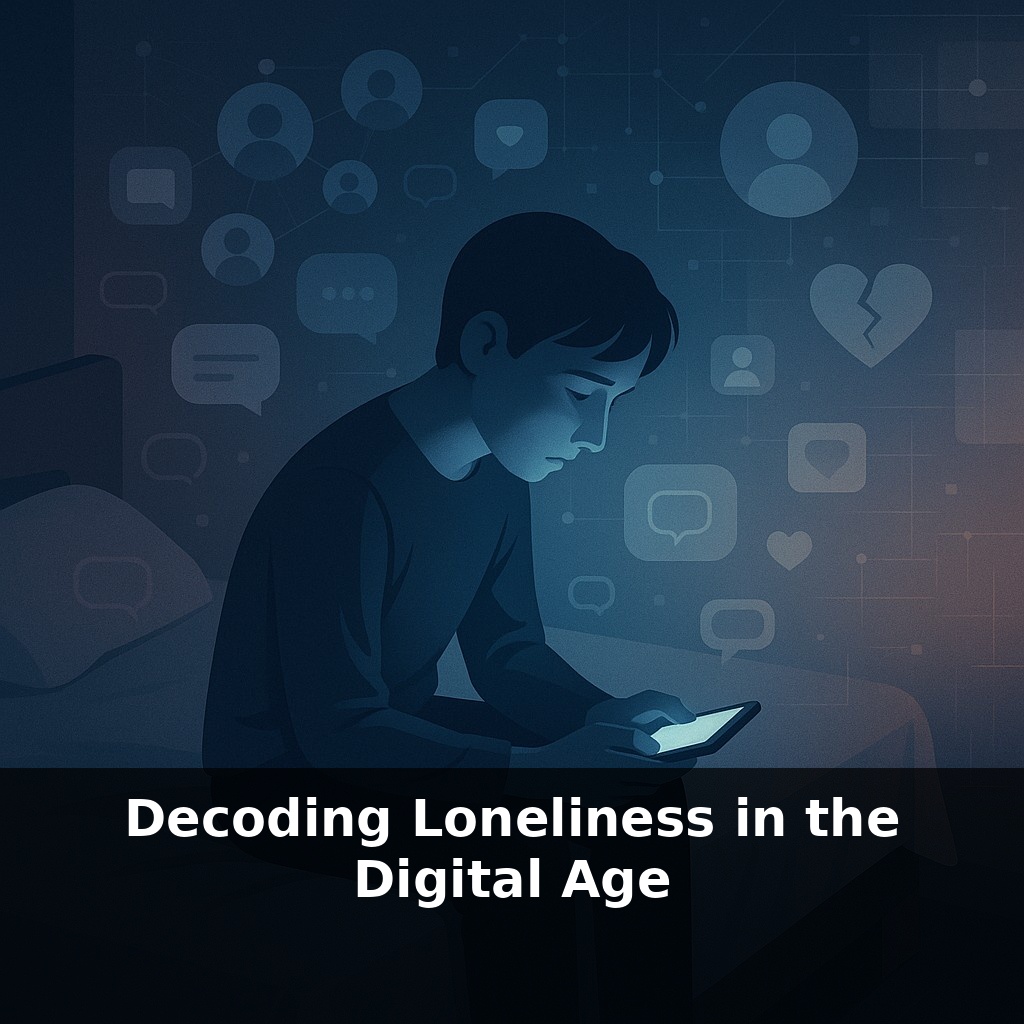
About half of adults now say they feel lonely—at the exact same time we’re messaging, liking, and scrolling more than ever. You reply to a group chat, swipe through stories, close the app… and feel weirdly emptier. How did “always connected” leave so many of us feeling alone?
Fifty‑eight percent of U.S. adults now qualify as lonely—and that number has climbed as our screen time has, too. Yet the culprit isn’t simply “too much technology.” Someone gaming online with close friends for two hours can walk away feeling connected, while someone silently scrolling for twenty minutes can feel drained and invisible. The difference lives in *how* we use these tools and what they’re designed to reward. Many platforms are built to keep your eyes on the screen, not to deepen your relationships; quick likes, endless feeds, and streaks pull you in, but they rarely nudge you toward vulnerable, two‑way connection. Over time, that mismatch between superficial contact and deeper needs can make ordinary days feel oddly hollow. In this episode, we’ll untangle which kinds of digital interactions nourish you—and which quietly erode your social health.
Researchers are now tracking *how* we use our phones almost like sleep studies: not just “how many hours,” but *what* those hours look like. A night spent in a lively group call lands very differently in your body than a night hopping between five apps alone. Notifications, typing bubbles, “seen” receipts—these tiny design choices subtly train your brain to chase micro‑approval and fear missing out. Over weeks and months, that constant low‑grade vigilance can crowd out the slow, unhurried moments where trust and ease usually grow with other people.
Here’s the quiet twist researchers keep finding: it’s not just *what* apps you use—it’s whether you’re active or passive inside them. Studies repeatedly show that when people *create* (sending messages, commenting thoughtfully, sharing updates with a specific person in mind), their mood and sense of belonging tend to hold steady or even improve. When they mostly *consume* (scrolling, watching, lurking), their loneliness ticks upward.
That 2017 study you heard about didn’t just flag “2+ hours” as a problem; it found that people who spent more of that time passively scrolling felt worse than those who used the same platforms to actually talk. Same apps, same day, radically different outcomes.
Two other ingredients quietly shape your experience: comparison and control.
Comparison shows up whenever your brain treats other people’s highlight reels as data about your own life. The more polished photos, promotions, and couple selfies you absorb without context, the more likely you are to misread “their good moment” as “my failure.” Meta’s internal Instagram research on teen girls is one vivid example, but the pattern shows up across genders and ages: heavy comparison predicts feeling left out, even when your offline life hasn’t changed.
Control is about whether *you* decide when and how to engage, or the app does. Autoplay, infinite scroll, and “who’s online” lists quietly pull you into reactive mode—responding, refreshing, checking—rather than reaching out on your own terms. People who report the highest digital well‑being often do small, deliberate things that restore a sense of choice: they mute certain threads, batch replies, or move more of their meaningful conversations into slower, less performative spaces like private chats, voice notes, or scheduled calls.
One useful way to think about this comes from medicine: a drug can heal or harm depending on dose, timing, and route. A late‑night doomscroll when you’re already down hits very differently than a ten‑minute voice memo exchange with a friend before bed.
All of this points to a practical shift: instead of asking, “How many hours am I on my phone?” a better question is, “When I put my phone down, do I feel more seen—or more invisible?” The answer to that, over time, is what shapes whether your digital life quietly cushions you… or quietly isolates you.
Think about three ordinary nights and how differently they land.
Night one: you watch a friend’s concert live stream, drop a few fire emojis, then close the app. It’s fun, but you’re a face in the crowd. You’ve *witnessed* their life without actually entering it.
Night two: you open a close‑friends group chat, send a messy voice note about your day, and two people respond with their own. Same phone, but now there’s rhythm, inside jokes, and the feeling that your presence changed someone else’s evening.
Night three: you join a small Discord or WhatsApp group that only meets for one purpose—sharing works‑in‑progress, trading recipes, co‑working in silence. These “micro‑communities” are where many adults now find the depth that big feeds don’t offer: fewer people, clearer expectations, more room to show up imperfectly.
Design matters too. Apps like BeReal or Cappuccino try to cap performance by nudging brief, unpolished updates. They’re not magic fixes, yet they hint at a different goal: less broadcasting, more mutual witnessing.
Fewer of our future “friends” may be people, yet the stakes stay human. As VR meetups, AI companions, and hybrid offices spread, we’ll be nudged to choose: let algorithms pre‑assemble our social lives, or treat them like training partners that help us reach real‑world goals. Laws may force platforms to prove they support mental health, much like buildings prove they’re fire‑safe. The open question is whether we’ll accept default settings—or learn to redesign them together.
So the open question isn’t “screens: good or bad?” but “what kind of social life are my screens training me for?” You might notice some threads belong in quieter spaces—like moving a meme‑only chat into a monthly call where you actually swap stories, the way teammates debrief after a game. Each small redesign is less a detox, more a practice in choosing the connections you keep.
Before next week, ask yourself: “Which 1–2 online spaces (a specific Discord, group chat, or subreddit) leave me feeling more disconnected after I log off, and what boundary (muting, time limit, or unfollowing) am I willing to try for just seven days?” “Who is one person I already know—maybe a quiet coworker, an old classmate, or someone I only DM with—whom I could invite into a slightly ‘deeper’ interaction this week (a voice note instead of a text, a 20-minute video call, or a walk instead of scrolling together)?” “If I replaced just 15 minutes of aimless scrolling tonight with a single, honest message that starts with ‘I’ve been feeling more alone than I let on…’, who would I send it to, and what am I most afraid might happen—and what’s the more hopeful possibility?”