You’re likely spending several hours more each week on email than on actual friends. Yet one quick, ten‑minute chat can lift your mood for the whole day. In a world that rewards busyness, why does our calendar so often sideline the people who keep us alive?
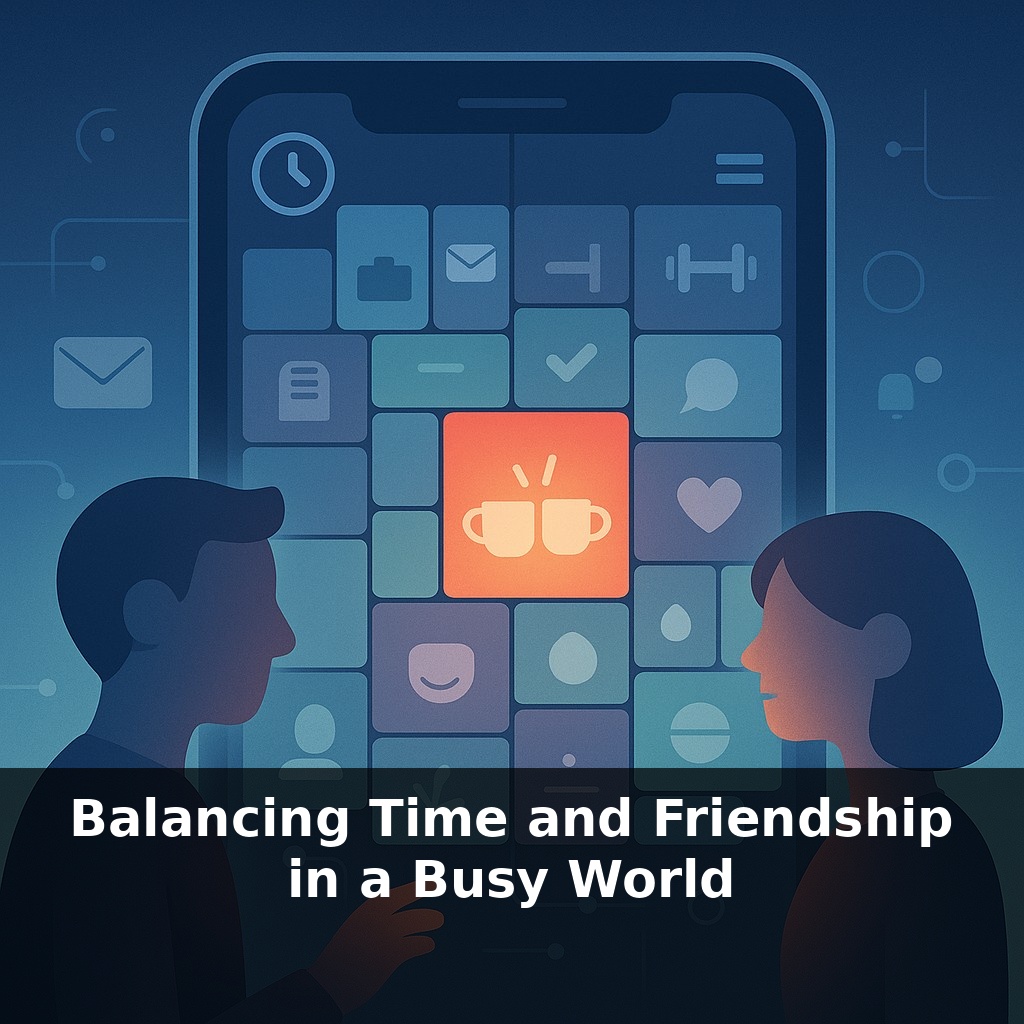
Your calendar probably looks like a game of Tetris: color‑coded blocks for meetings, workouts, errands, and maybe “self‑care”—but almost nothing that explicitly says “friend.” Not because you don’t care, but because friendship often lives in the leftover spaces: the walk between tasks, the commute call, the “we should catch up soon” that never quite lands. Meanwhile, the data are blunt: adults now socialize far less than a generation ago, and after a few quiet months, even a good friendship starts to feel like a tab you forgot to reopen. The paradox is that the same tools and planning habits that cram our days can also quietly protect the people who matter most. In this episode, we’ll experiment with treating your limited time like a mindful budget, so that work, rest, and real connection don’t compete—but cooperate.
The trouble isn’t that you don’t care about people; it’s that your time is sliced into odd shapes that rarely fit another human being. Back‑to‑back meetings, late‑night emails, and “just one more thing” errands leave only crumbs of energy. That’s where most friendships quietly end up: in the crumbs. Yet research on time‑use shows something hopeful—people who deliberately pair their social time with existing routines (like weekly workouts or errands) are far more likely to sustain close ties. Instead of searching for big, empty afternoons, you can design small, repeatable touchpoints that survive even your busiest weeks.
Think about the hours of your week the way a coach thinks about an athlete’s training blocks: not every minute is equal. Some hours you’re sharp and generous; others you’re drained and impatient. Research suggests that when connection happens during your natural “energy peaks”—for many people, mid‑morning or late afternoon—you’re more present, more curious, and walk away feeling restored instead of depleted. So the question isn’t only “Do I have time for friends?” but “Which version of me is showing up when I do?”
This is where purposeful scheduling stops feeling cold and starts feeling kind. Instead of cramming people into leftover slots, you experiment with three kinds of “friend time”:
1. **Anchors**: predictable, low‑friction commitments that happen automatically: a standing Thursday walk, a monthly lunch near your office, a shared online game night. The point isn’t grand experiences; it’s rhythm. When something is on the calendar by default, you remove the energy cost of “Should we…?” every week.
2. **Sparks**: short, spontaneous touches that ride on top of what you’re already doing: a five‑minute voice note while you’re walking the dog, a meme sent during a commute, a quick “thinking of you” text before a big meeting. These tiny contacts interrupt the “out of sight, out of mind” slide without demanding a full conversation.
3. **Deep dives**: occasional, longer hangs where you both expect real attention—no multitasking, no half‑scrolling. You don’t need many; even once every month or two with a close friend can reset the sense of closeness that starts to fade with long gaps.
Technology can quietly support all three, if you use it with intention instead of defaulting to endless feeds. Shared calendars make anchors easier to protect. Group chats and asynchronous messages become channels for sparks instead of background noise. For deep dives, you might use Do Not Disturb or calendar blocks so that both of you can trust the time will actually feel spacious.
None of this means turning your life into a social spreadsheet. It means noticing where your real capacity lives, then placing people you care about inside those windows on purpose—so that connection isn’t something you squeeze in, but something your week is built around.
Alex realized their calendar always filled itself—with client calls and deadlines—but never magically produced a “friend window.” So they treated their week like a playlist: two “up‑tempo” slots for people who energize them, one slower, reflective slot for a deeper catch‑up. Instead of waiting to “feel free,” they named three friends and matched each to a slot that fit both schedules and personalities.
Priya, a new parent, knew evenings were chaos. She experimented with “layered” connection: a shared grocery run with a friend on Saturday mornings, a weekly co‑working video call during naptime, and a once‑a‑month brunch booked three months out. Those layers meant that even when one plan fell through, the others still held.
Think of this like a good basketball rotation: not every player is on the court all game, but everyone has a role and a moment. Some friends are “daily text” people, some are “quarterly retreat” people—and that’s okay if the cadence is intentional, not accidental.
Your calendar may soon feel less like a to‑do list and more like a living ecosystem. As 4‑day weeks and remote work spread, extra “white space” won’t automatically turn into connection; people, apps, and cities will compete to fill it. We might see AI nudging us toward “social streaks,” employers measuring “relational wellness” alongside productivity, and neighborhoods designed like open‑plan studios—where bumping into people is as normal as checking email. The open question: who will shape those hours—markets, algorithms, or you?
So the experiment isn’t to “do more,” but to notice what quietly works for you. Maybe it’s a Tuesday commute call, a fortnightly game night, or voice notes traded like postcards. As your seasons shift—new job, move, breakup—you can keep adjusting the dials. Think less “perfect balance,” more like tuning an instrument until it sounds like your actual life.
Before next week, ask yourself: 1) “Looking at my calendar for the next 7 days, which one social commitment is draining me more than it’s feeding me—and what boundary or honest text could I send today to gently renegotiate it?” 2) “Who are the two friends I miss most that I keep saying I’m ‘too busy’ for, and what specific 20–30 minute window can I lock in this week for a quick walk, coffee, or voice note catch‑up?” 3) “When I’m with friends, what habit (constant phone checking, venting about work, multitasking) most pulls me out of the moment, and what’s one simple rule I can try at our next hang—like ‘phone in bag for the first 30 minutes’—to really be present?”