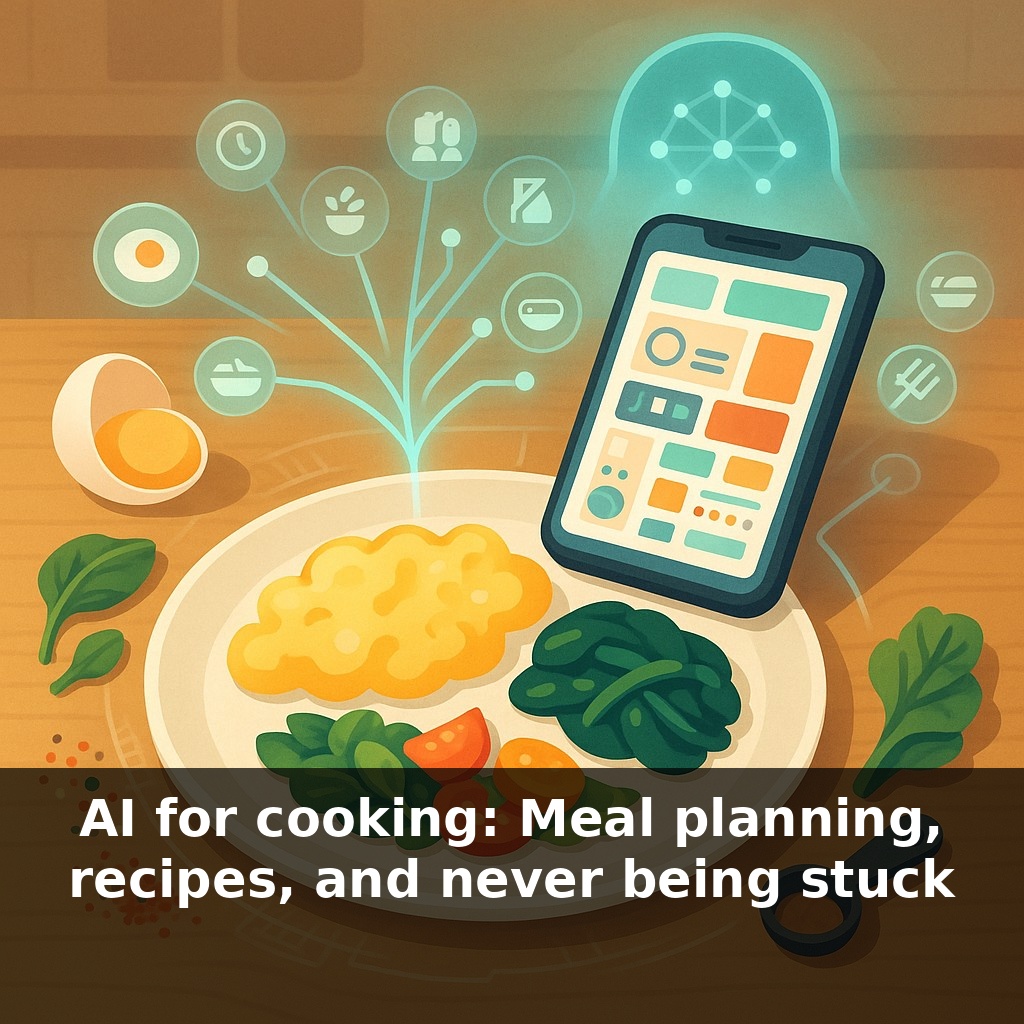
Tonight, somewhere, an AI is quietly planning more dinners than most chefs cook in a lifetime. One home cook types: “I’ve got eggs, wilting spinach, and ten minutes.” Another says: “Feed two kids, no dairy.” The same invisible assistant calmly answers both.
But this new “digital sous-chef” isn’t just about convenience—it quietly reshapes how decisions get made in your kitchen. Instead of flipping through stained cookbooks or scrolling endless feeds, you’re nudged toward options that balance cost, nutrition, and time without you ever seeing the trade-offs calculated in the background. Some tools now scan your pantry, spot the half-forgotten cauliflower, and surface a recipe that pairs it with pantry spices and the last of yesterday’s roast chicken. Others factor in training runs, kids’ sports schedules, and late meetings to suggest meals you can actually pull off on a Tuesday. And as smart ovens, fridges, and voice assistants sync up, the gap between “What should I eat?” and “Dinner is ready” starts to shrink into a guided, mostly automated sequence—still your tastes, but increasingly co-authored by algorithms.
And the data quietly backing all this up is getting hard to ignore. Systems tuned on millions of cooking decisions don’t just guess what you might like—they watch what people actually cook and finish. Grocery apps now use that behavior to suggest add‑ons that reliably grow baskets, not by pushing junk, but by completing meals you’ll probably make. Cameras inside smart ovens recognize what you’ve put in and adjust on the fly, so you’re less “babysitting the roast” and more “checking in like a concert conductor,” making small creative choices while the machine holds the tempo and timing steady.
Under the surface, these systems are constantly learning what “good food” means to *you*, not just to some average user. One platform might notice that every time it suggests salmon, you swipe past it unless there’s a sweet glaze involved. Another picks up that you reliably cook lentil dishes only on Sundays, when you seem to have time for longer simmers. Over hundreds of tiny choices—skips, saves, ratings, even how often you repeat a dish—the model refines a private profile of your comfort foods, your “only on weekends” ambitions, and your hard no’s.
Nutrition gets pulled into that profile too, but in more flexible ways than a simple calorie target. If you log training days, a planning tool can quietly push more carbs beforehand and protein afterward without turning dinner into a clinical spreadsheet. If your doctor flags high blood pressure, some apps can tilt you toward lower‑sodium options, swapping broths, sauces, or garnishes while still keeping the core dish recognizable. Instead of a separate “diet” mode, health constraints become one more ingredient in the recommendation mix.
On the creative side, generative models trained on massive flavor datasets are starting to act like brainstorming partners. You might ask for “a week of tofu dishes that *don’t* taste like diet food,” and get riffs that borrow techniques from Korean, West African, or Turkish home cooking—combinations you’d rarely see in a single cookbook. IBM’s Chef Watson experiments hinted at this kind of cross‑pollination; newer tools take it further by folding in your cultural background, budget, and available shops.
Then there’s coordination with the outside world. Some grocery integrations track prices and promotions in real time, reshaping a planned menu when chicken doubles in cost or broccoli hits a discount. Others look across your household accounts: if someone else already added yogurt and tomatoes, your planner may steer you toward a chickpea curry that finishes both before they expire. Used well, it’s less about fancy gadgets and more about quietly aligning taste, health, cost, and waste so your everyday cooking feels less like a juggling act and more like playing from a well‑rehearsed score.
Think of a Tuesday night: you open a cooking app, tap “30 minutes, under $8 per serving,” and it quietly pulls in local store data, surfacing three dinners that line up with a nearby sale and a coupon you forgot you had. Another day you’re traveling for work; the same system switches context, suggesting hotel‑kitchen‑friendly meals that rely on a microwave and a paring knife instead of a full stove. Parents report using kid‑specific modes that gradually nudge picky eaters—from “plain pasta only” to “try one new sauce this week”—and the app tracks which experiments actually get eaten, not just plated. Some early adopters with food allergies are using integrated scanners: they point a phone at a product in the aisle, and the planner instantly reshuffles the week’s meals if that brand is unsafe or out of stock. Like a good bandmate who’s memorized your setlist, it doesn’t just know the song—it adjusts when the venue, audience, or instruments change without making you start from scratch.
Your kitchen could soon behave more like a responsive studio than a static room: wristbands quietly flag stress, nudging dinner toward calming flavors; climate alerts shift menus to drought‑friendly crops; neighborhood‑level data helps coordinate bulk buys, so surplus herbs from your windowsill “tour” next door instead of wilting. As food choices become streams of data, expect debates over who conducts the orchestra: you, platforms, or public health goals.
As these systems spread from phones to fridges to grocery carts, your food history starts to look less like a messy drawer and more like a living sketchbook. New tools may help you swap recipes with distant friends, remix family dishes with a tap, or share “house setlists” of weeknight favorites the way people trade playlists after a great concert.
Before next week, ask yourself: 1) “If I let an AI plan three weeknight dinners for me today, what specific constraints would I give it—like my actual fridge contents, budget, and time limit—and what would I learn by cooking at least one of those suggested meals tonight?” 2) “Looking at the recipes I keep defaulting to, which one could I ‘upgrade’ with AI (for example: ‘make this vegetarian,’ ‘turn this into a one-pan dish,’ or ‘adapt this for my air fryer’) and how different does it feel to cook with that smarter version?” 3) “If I asked AI to generate a Sunday batch-cooking plan using my staple ingredients (e.g., rice, beans, chicken, frozen veg), how many lunches or dinners could I realistically cover this week, and what would that free up—time, money, or mental energy?”