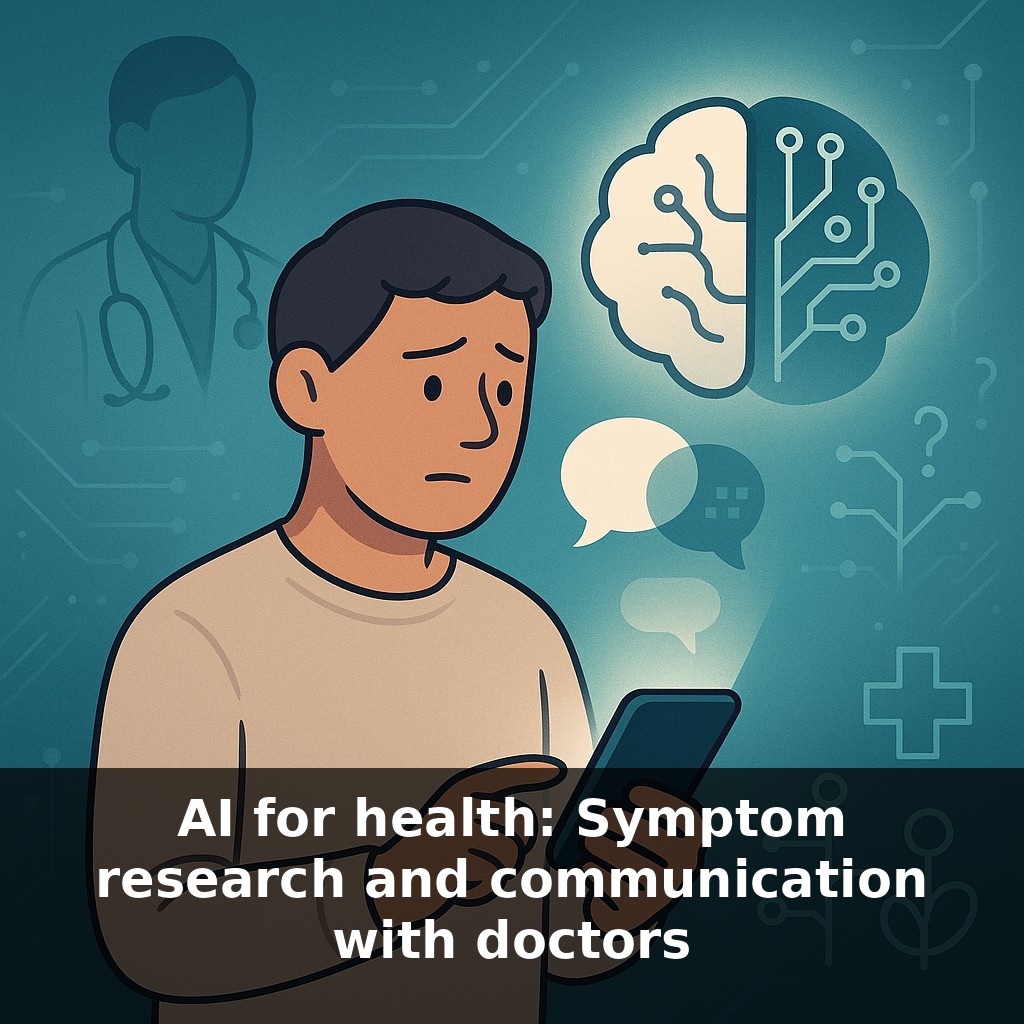
AIs are now guessing what might be wrong with you—before you ever speak to a doctor. In one study, they nailed the top few possibilities only about half as often as real clinicians. Still, millions tap these tools first. So why do people trust a sidekick that often gets the headline wrong?
Some people now type chest pain into an app before they even think about calling a clinic. Others show up to appointments with AI‑generated symptom lists, timelines, even “likely conditions” printed out like a setlist before a concert. Doctors are starting to meet not just patients, but patients plus their digital second opinions—and that’s changing the tone and tempo of the whole visit.
The real shift isn’t just guessing what might be wrong; it’s reshaping how information moves between you and your clinician. New tools can turn a rambling story into a clear, time‑stamped summary. Others listen in the exam room and draft the note, so the doctor can keep their eyes on you instead of the keyboard. Used well, these systems don’t replace judgment; they make room for more of it in the moments that matter most.
Now the frontier is shifting from “what might this be?” to “how do I say what’s going on?” Some apps nudge you with questions about patterns you might gloss over: Does the cough wake you at night? Did the pain start after travel? Others help you rehearse what to bring up, like a friend running lines with you before a tough interview. On the clinician side, early tools flag gaps—no medication list, unclear onset, missing family history—so they can steer the conversation rather than chase details. The promise isn’t a smarter checklist; it’s a clearer shared story in less time.
Some of the newest systems do something subtle but powerful: they learn the *shape* of typical illness stories. A straightforward ankle sprain tends to produce a short narrative with a clear “before and after.” A slow‑burn autoimmune condition, by contrast, scatters clues across months of fatigue, rashes, and odd lab results. By comparing your account to thousands of prior patterns, AI can spot when your story looks unusually complicated for what seems like a simple complaint—and quietly suggest that the visit may need more time, or a different kind of specialist.
Under the hood, there are two big jobs. First, translating everyday language into structured concepts a clinician can skim at a glance: “sharp,” “burning,” “pressing” chest sensations become distinct options, each pointing in different clinical directions. Second, keeping track of uncertainty instead of hiding it. Rather than forcing you to choose *one* box, modern systems can store “90% sure this started last week, 10% chance it’s been brewing for longer” and surface that nuance later.
Voice‑based tools add another layer. When they process a conversation, they can highlight where you and your clinician may be slightly misaligned: you said “dizzy” but also “room spinning,” which often matters; you mentioned missing doses “sometimes,” but also “about three times a week.” The draft note can gently emphasize those discrepancies so they get clarified while you’re still in the room, not after you’ve gone home and started to worry.
There’s also a growing role in safety nets. When certain clusters of details appear—new weakness on one side, trouble finding words, sudden worst‑ever headache—the system can prompt the clinician to document why a stroke *isn’t* suspected, not just why a migraine *is*. That doesn’t decide care, but it can counteract tunnel vision on the first explanation that seems to fit.
Crucially, these systems can be tuned for different settings. A crowded urgent‑care clinic might prioritize speed and red‑flag spotting; a mental‑health intake might focus on open‑ended narrative, life events, and long‑term patterns. The underlying machinery is similar, but the questions, pacing, and emphasis change with the kind of help you’re seeking.
Some systems are starting to specialize, a bit like different instruments in a band. One might focus narrowly on skin issues, trained on millions of photos plus short descriptions so it can say, “This rash pattern is unusual—bring it up even if it looks minor to you.” Another tracks how your story changes over time: your joint pain notes from six months ago, the migraine diary you kept last winter, the questions you answered last week when you messaged the clinic. When you finally sit down in the exam room, that history can be condensed into three or four turning points instead of 40 scattered entries.
Early research is testing whether this “pre‑visit shaping” changes outcomes: Do people with complex chronic illness get to the right referrals faster? Are emergency departments able to see, at a glance, who has quietly been getting worse for weeks versus who is acutely ill today? The answers are still emerging, but pilot data suggest that better‑organized stories can sometimes matter as much as better guesses.
Soon, these systems may feel less like separate gadgets and more like part of your everyday health rhythm. A late‑night question about chest tightness, a spike in resting heart rate on your watch, and a text from an elderly parent could all feed into one quiet background helper that nudges you: “This combo is unusual—check in now, not next month.” The upside is earlier course‑corrections; the risk is alert fatigue if design and regulation don’t keep pace.
In the end, the goal isn’t to turn you into a mini‑doctor; it’s to help you show up with a clearer story and better questions. Think of it less as outsourcing your worries and more as rehearsing before a crucial conversation. As regulators, clinicians, and patients shape these systems together, the real experiment is how much calmer those conversations can become.
Before next week, ask yourself: 1) “If I opened an AI symptom checker right now, what are the 3–5 concrete details about my main health concern (onset, triggers, exact location, how it’s changed) that I’d need to type in so it actually gives me useful patterns to discuss with my doctor?” 2) “Looking at the AI’s summary or suggested questions, which 3 feel most important to bring to my next appointment—and how might I phrase them so they’re clear, respectful, and specific (for example, ‘Could this pattern suggest X, and what tests would rule that out?’)?” 3) “Where do I see the line between using AI as a preparation tool versus letting it worry me—what personal ‘rules of use’ (like time limits, trusted apps, or always checking serious findings with my clinician) can I set today to keep it helpful, not overwhelming?”