Ignite Your Wonder — Why Space Exploration Grabs the Human Spirit
📝 Transcript
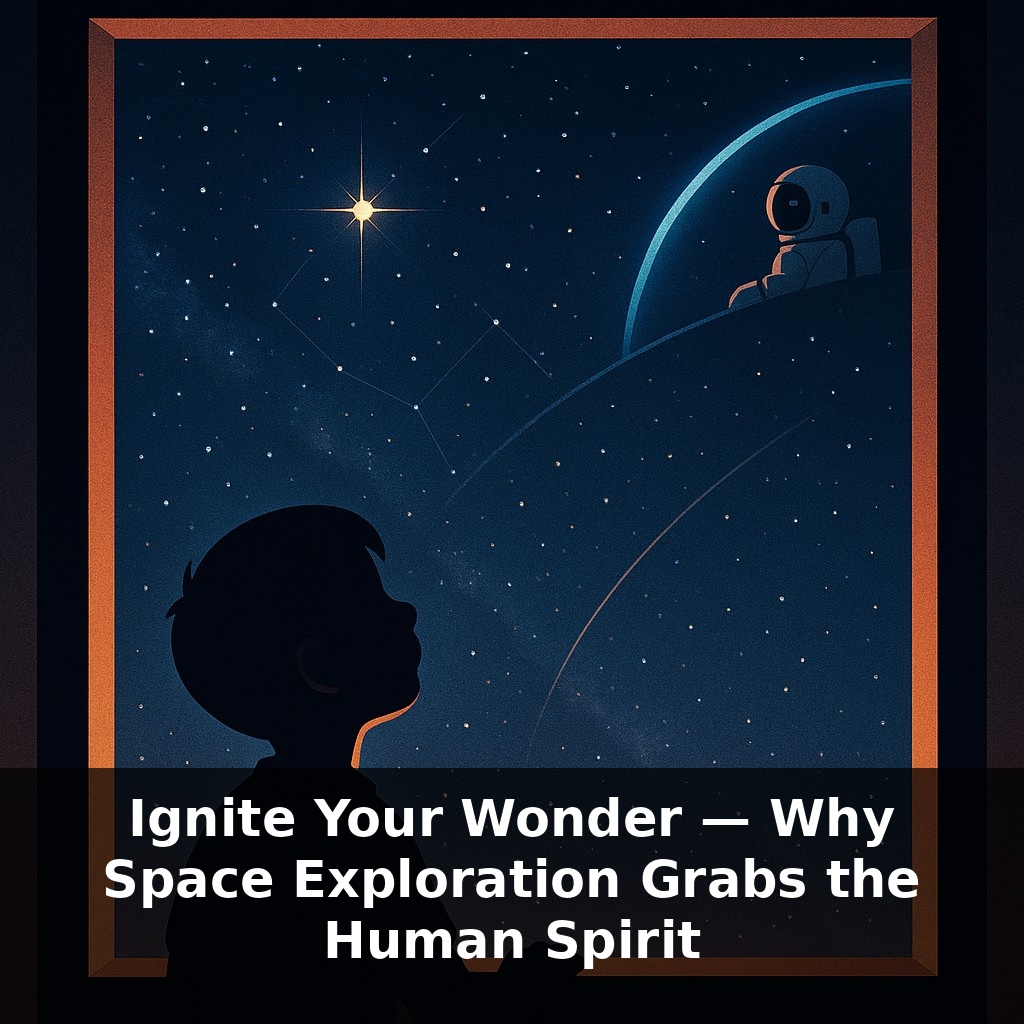
In all of human history, fewer people have reached space than could fill two big passenger jets. Yet on a clear night, countless eyes tilt upward. A child at a window, an astronaut at a porthole, you on a late walk—all pulled by the same quiet question: what’s out there?
Maybe your first memory of the night sky isn’t a telescope, but a ceiling sticker, a flashlight under the covers, a blackout that suddenly revealed more stars than streetlights. That quiet tug you felt wasn’t just “liking space”—it was the same deep curiosity that once pushed our ancestors over the next hill, across a river, into unknown forests.
Today, that tug rides on rockets and radio waves. We launch metal mirrors colder than Pluto to catch faint whispers of galaxies. We strap cameras to robots and let them wander Mars for years. We tune in as astronauts drift past our planet at 7.66 kilometers per second, turning sunrise into something that happens sixteen times a day.
Yet the biggest shift might be inward: each new image, each mission, subtly rewrites the story we tell ourselves about where we live, and what kind of species chooses to look up and ask for more.
Out there, the milestones arrive as headlines: “new exoplanet found,” “oldest galaxy detected,” “ISS completes another year in orbit.” Down here, they land in quieter ways—a teacher replaying a launch clip in class, a tired nurse scrolling past the latest James Webb image on a phone, someone pausing a commute podcast because an astronaut describes Earth as “fragile” and suddenly that word won’t leave their mind. These moments stitch big, distant missions into ordinary days, turning abstract exploration into something oddly personal, even for people who never touch a spacesuit or a lab.
If you strip away the drama of launches, space exploration looks surprisingly down‑to‑Earth: it is, at its core, a disciplined way of following questions to their furthest possible edge. Why does that pale star flicker? Are there planets wrapped in clouds like ours, circling other suns? How did all this structure—galaxies, clusters, filaments—condense out of an almost perfectly smooth early universe?
One clue to why this grips us sits in our biology. Brains reward novelty. The same neural circuits that once flagged a new fruit or a strange footprint now fire when we see a never‑before‑imagined James Webb image or hear that a “Super‑Earth” might skim the habitable zone of a distant star. We feel that as wonder, but under the hood it’s a survival system retooled for cosmic scale.
And there’s the vantage point. When Frank White interviewed astronauts in the 1980s, he kept hearing the same shift: seeing Earth from above didn’t just look different—it felt morally different. Borders faded, weather systems sprawled, cities glowed like a single organism. Many described a kind of cognitive snap, a sudden compression of “us” into one fragile, shared home. Later psychological studies found that even people who only see orbital footage, not the real thing, often report subtle nudges in their sense of global identity and environmental concern.
Technology keeps amplifying that effect. Apollo 8’s “Earthrise” was one turning point; JWST is another. Its 6.5‑meter mirror, unfolding far from home, can gather enough ancient light to show galaxies as they were only a few hundred million years after the Big Bang. That’s not just a prettier picture; it’s a data set about how quickly complexity can blossom from simplicity—how fast hydrogen can learn to arrange itself into stars, planets, and eventually, beings capable of asking where they came from.
If you think of human attention as a limited resource, space exploration is a deliberate decision to spend some of it looking outward so that, paradoxically, we can return with sharper questions about life, climate, technology, and even ethics down here.
Think of a medical scan that reveals a hidden fracture long before pain forces you into the ER. Space telescopes play a similar role for our understanding of reality, exposing structures and processes we’d never detect with surface‑level “symptoms” alone. When JWST spots water vapor in the atmosphere of a distant world, it’s not just tagging an exotic planet; it’s quietly expanding the catalogue of conditions under which chemistry can tilt toward biology.
Meanwhile, the International Space Station is less a distant lab than a pressure cooker for innovation. Fluids behave oddly without weight, flames curl into blue spheres, metals mix in new ways. Companies test drug crystals that grow more perfectly, farmers get better soil‑moisture data from spin‑off satellites, disaster teams use improved imaging to map flood paths.
The wonder is real, but it’s also practical: every new orbiting instrument is a kind of question machine, turning “Why?” into “What can we do with this?”
Space exploration’s next chapter could feel less like watching distant fireworks and more like learning to use a new sense. Lunar ice may become propellant, turning nearby space into a refueling network instead of a barrier. Huge mirrors and sensitive spectrometers may read the “breath” of alien atmospheres, hinting at biology. And if launch costs keep falling, orbit could shift from rare frontier to shared workshop, where art, science, and policy quietly rehearse futures for Earth.
In the end, following those questions beyond Earth loops back to daily life in quiet ways: cleaner water systems, sharper climate models, sturdier materials in your phone and bike helmet. Your challenge this week: pause at the next headline about a mission, and instead of skimming past, ask yourself, “How might this ripple into my own tomorrow?”
From this course
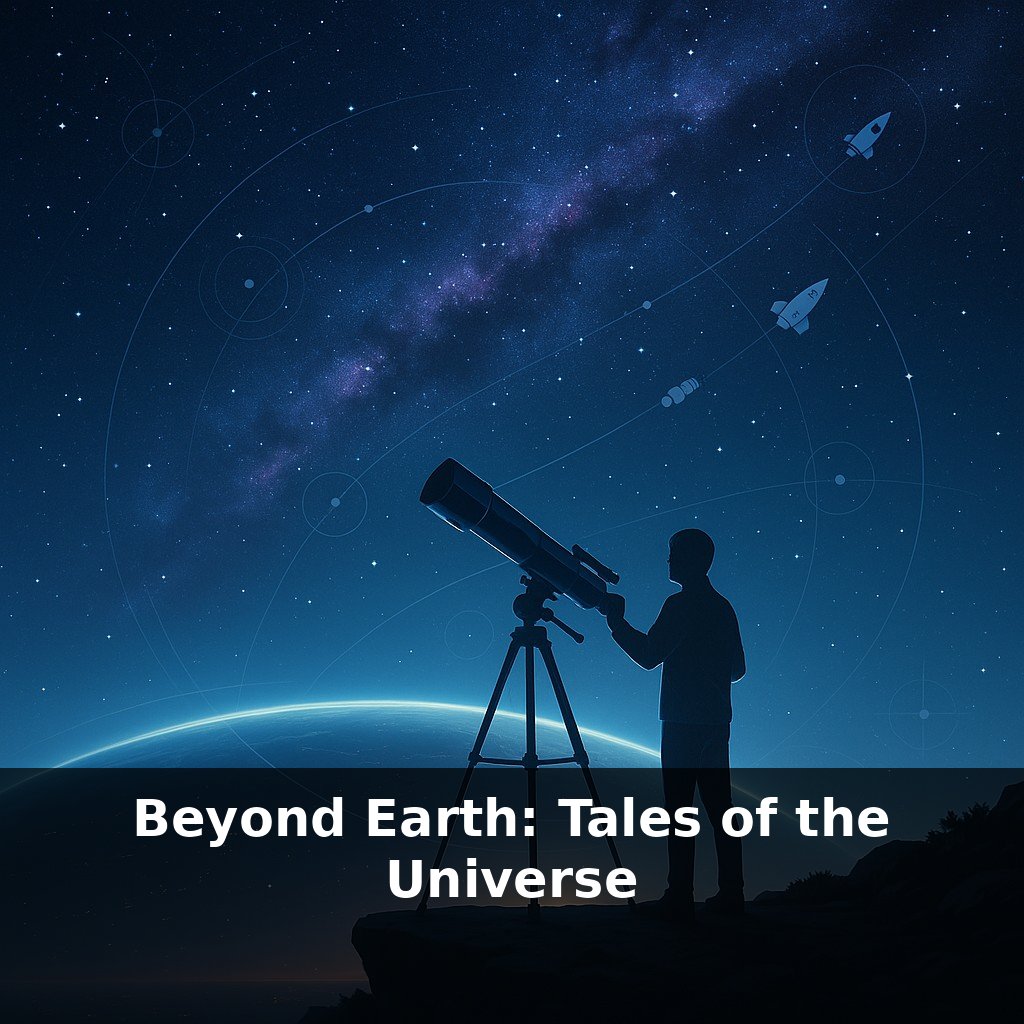
Beyond Earth: Tales of the Universe
10 episodesUnlock all episodes
Full access to 10 episodes and everything on OwlUp.
Subscribe — $1.99/monthLess than a coffee ☕ · Cancel anytime