A force weaker than a fridge magnet decides how stars move, how planets dance, and whether a rocket escapes Earth at all. An astronaut drops a pen in orbit, and it hovers instead of falling. So here’s the puzzle: if gravity is so weak, how is it in charge of everything?
The same force that quietly tugs your coffee mug to the table also shapes the fate of galaxies—and powers the tools you rely on every day. Your phone’s map, the timing of financial transactions, even the synchronization of power grids lean on gravity measured to astonishing precision. Miss by a fraction of a microsecond, and GPS locations drift by meters; stretch that error, and global systems start to wobble.
Up in orbit, missions thread narrow gravitational “corridors,” stealing speed from planets or sliding into fuel-saving transfer paths that can mean the difference between reaching Mars and missing it forever. Down here, tiny shifts in Earth’s gravity reveal underground water, melting ice sheets, and hidden magma chambers.
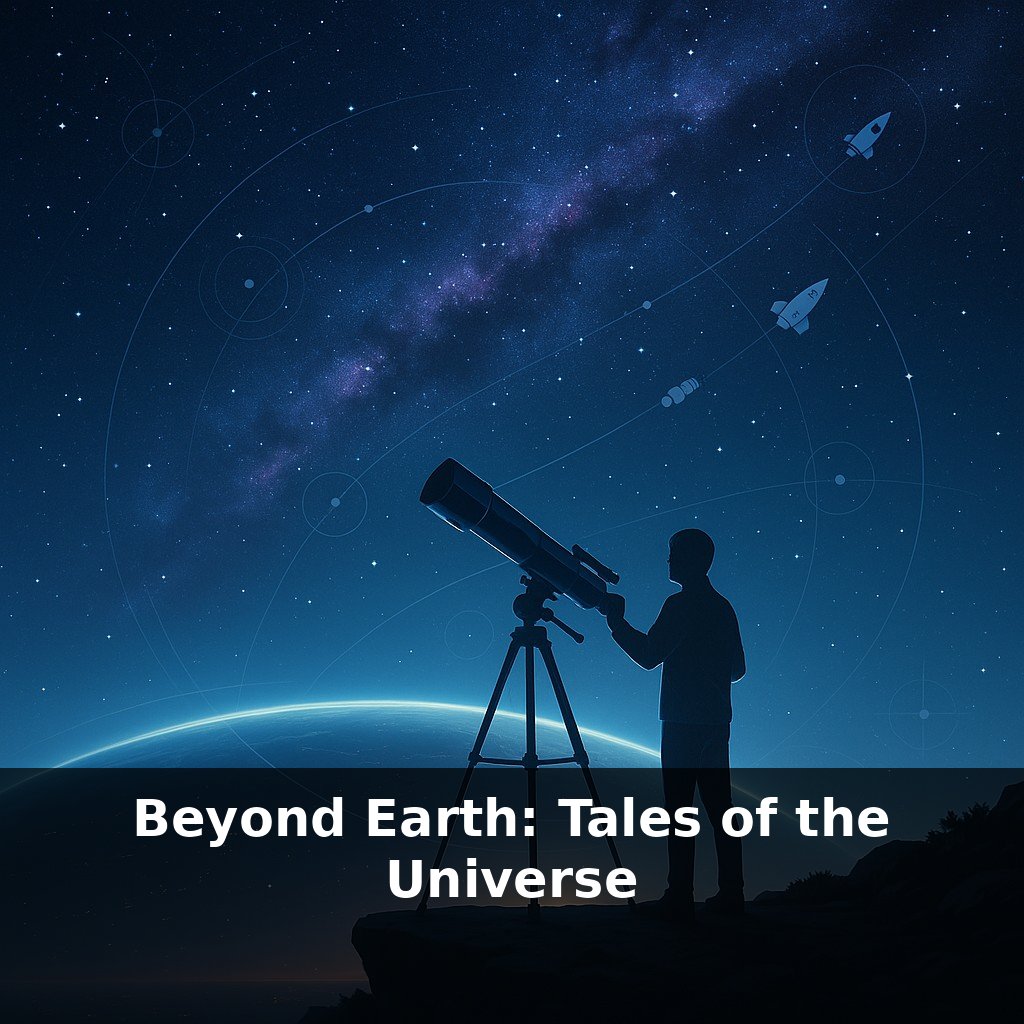
In this episode, we’ll follow gravity from quiet backyard falls to interplanetary slingshots—and see how mastering this “invisible glue” turns raw pull into navigation, insight, and discovery.
But gravity’s story gets stranger the farther we step from home. Earth’s familiar pull is just one setting on a cosmic “gravity dial.” On the Moon, each footstep would feel like walking in slow motion; on Mars, your best high jump would suddenly triple. Astronauts on the ISS, rushing around Earth at 7.66 km/s, live in microgravity so intense that bones thin and fluid shifts toward the head, forcing doctors to rethink how the human body works. Space agencies now treat gravity almost like a design material—tuning missions, habitats, and even exercise machines around its changing strength.
A dropped hammer on the Moon, a spacecraft skimming past Jupiter, and a satellite quietly timing your phone’s location are all playing by the same strict rule: follow the path that takes least “effort” through spacetime. In physics we call that path a geodesic—a kind of straight line drawn on a curved stage. The stronger the curvature, the tighter the path bends, and the more extreme the journeys we can engineer.
This is where orbital mechanics becomes less like throwing stones and more like long‑distance navigation. Launch a spacecraft from Earth to Mars and you don’t “point and shoot” at where Mars is now; you aim for where it will be months in the future, threading a moving target while both worlds race around the Sun. The Hohmann transfer orbit does this with exquisite thrift, nudging the spacecraft just enough that the Sun’s gravity does most of the reshaping—like a skillful sailor trimming sails and letting the wind do the heavy lifting instead of burning fuel straight into the waves.
Once you’re moving fast, gravity can boost you further. Voyager 2’s famous swing past Jupiter wasn’t a lucky fling; engineers tuned its approach so that falling into and climbing out of Jupiter’s gravity well reshuffled momentum between planet and probe. Jupiter slowed by an utterly imperceptible amount; Voyager gained about 16 km/s and a ticket to Uranus and Neptune. Modern missions chain these assists together—around Venus, Earth, even tiny moons—to reach otherwise impossible destinations with modest rockets.
On smaller scales, planetary differences become laboratories. The Moon’s 1/6 g makes bulky rovers feasible and changes how dust behaves; Mars’s 0.38 g reshapes aerobraking, parachute design, and how future habitats will manage fluids and fire. These environments force engineers to relearn basics: how to land without atmosphere, how to drill when your weight isn’t enough to push the bit down, how to build structures when “up” and “down” have different meanings than on Earth.
The more precisely we can predict and measure these subtle pulls—from planetary flybys to tiny tugs on orbiting spacecraft—the more confidently we can push outward, turning a universal constraint into a calculation we can deliberately exploit.
Think smaller than planets: engineers now use gravity’s nuances to hunt for hidden things on Earth. Tiny changes in local pull betray buried aquifers, oil reservoirs, even unstable slopes before they fail. It’s like running a silent scan of the planet’s interior without drilling a single hole. In space, mission planners treat different gravity levels as distinct “training environments.” Lunar missions are testbeds for tools and habitats that must later survive Mars’s stronger pull and thin air; a drill design that barely bites in low-g regolith can fail completely once gravity and dust properties change together.
Medical researchers, meanwhile, look at altered gravity as a way to probe how bodies age. Months in orbit can mimic years of bone loss or cardiovascular change on Earth, compressed into a single mission. That harsh shortcut may teach doctors how to better protect bedridden patients or the elderly. Even future deep-space farms will depend on carefully tuned spin‑generated “artificial gravity” to keep soil, water, and roots behaving well enough to feed crews far from home.
Gravity’s next chapter may feel less like falling and more like steering. As we learn to read tiny tugs between worlds, we can thread probes through the Solar System like needles through fabric, reaching targets once labeled “too hard.” Orbital labs could become greenhouses for new tissues and alloys, grown in calm, drifting conditions the way a slow river polishes stones. Even cities on the Moon or Mars may treat local pull as a civic resource—zoning, transit, and industry all tuned to the planet’s quiet tug.
As we keep tuning into gravity’s faint whispers, new uses emerge: guiding asteroid‑deflection tests, mapping dark matter through its quiet lensing, even timing ripples from colliding black holes. Your challenge this week: each time you drop, pour, or spill something, pause and ask: if this tiny fall were data, what hidden story could it reveal?