About half the people who see your content will forget it in less time than it takes to scroll past a single post—yet a tiny fraction will remember one line you wrote for years. This episode dives into what separates forgettable noise from the words that actually stick.
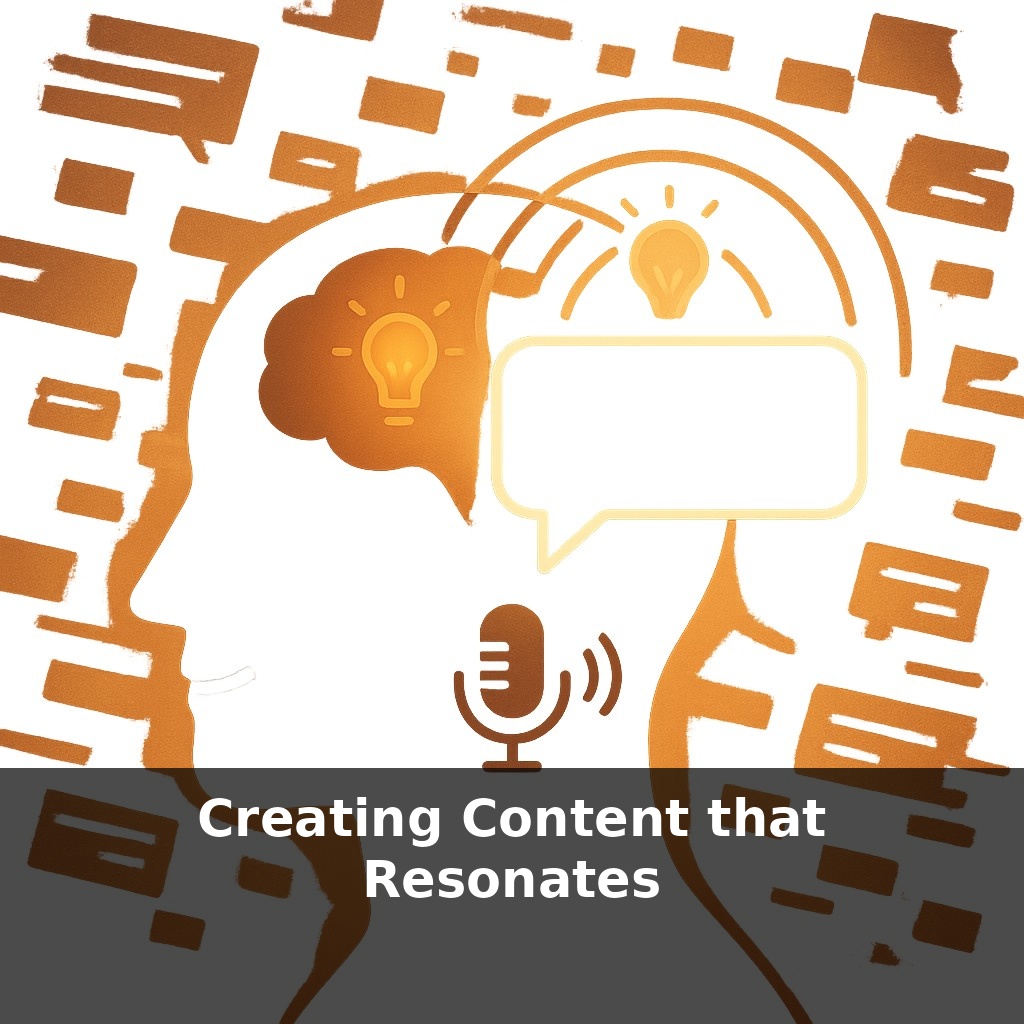
Most creators assume “better content” means adding more tips, more value, more words. But the research points somewhere else entirely: the content that lands isn’t the longest or the cleverest—it’s the content that hits a precise emotional and psychological chord for a specific group of people. Neuroscience, marketing data, and campaign results all play back the same track: resonance happens when insight, emotion, and iteration sync up.
Think of it like debugging code in a complex app. You don’t rewrite the entire system every time something breaks; you isolate the bug, test hypotheses, and ship small fixes until performance improves. Resonant content works the same way: you start with what your audience actually struggles with, you tell a story that makes their brain care, and then you keep adjusting based on what their behavior tells you—not what your ego wants to see.
Most creators stop at, “Who is my audience?” when the better question is, “What moment are they in when my content appears?” Are they doom‑scrolling between meetings, researching in a panic at 1 a.m., or casually browsing over coffee? Each context changes which part of their brain is in the driver’s seat. That’s where tools like personas, social listening, and first‑party data become less about demographics and more about mapping real situations: deadlines, emotional states, tiny habits. You’re not just aiming for a type of person—you’re aiming for a specific Tuesday afternoon in their life.
Here’s the first hard shift most creators need to make: stop writing “content,” start writing for *moments plus motivations*.
That 1 a.m. researcher? They’re not looking for a brand. They’re looking for relief. Relief from confusion, from embarrassment, from a problem that’s starting to feel personal. Your job is to locate that moment precisely—and then decide what emotional gear you want to engage: reassurance, righteous anger, hopeful possibility, even a bit of productive guilt.
This is where audience insight becomes usefully specific. Instead of “busy professionals,” you map something like: “Marketing manager, just got asked for a campaign idea by Friday, nervous because last quarter underperformed, scrolling LinkedIn on mobile between calls.” Now you know why a blunt opening line like, “Your last campaign didn’t flop because of your idea—it flopped because the story never hit an emotion,” will stop the scroll. It names their private fear, then reframes it.
To get that level of precision, steal from UX research more than from traditional branding. Watch screen recordings, listen to sales calls, mine customer emails for phrases they repeat when they’re *frustrated*, not just when they’re happy. Those “angry paragraphs” often hide the clearest, rawest language you can mirror back in your content.
Next, decide which emotion you’re deliberately dialing up. Not randomly, not “whatever sounds inspiring,” but “for this piece, I’m going to lean into awe,” or “for this thread, I’m going to channel focused indignation at a broken industry norm.” That choice will shape your examples, your verbs, your pacing.
Then you wrap that emotion around a concrete outcome. “Anger → clarity about what’s broken → first small action they can take.” “Awe → new possibility they hadn’t considered → one simple next step.” Each piece becomes a tiny emotional arc, not just a pile of tips.
Think of your content calendar less as a list of topics and more as a portfolio of emotional journeys your audience can choose from, depending on the exact Tuesday afternoon they’re having.
Think about three real posts you’ve seen lately:
First, a founder’s thread that starts: “We spent $120k on ads and got *worse* results. Here’s the stupid mistake I made.” It works because it names a costly fear, exposes vulnerability, and promises a lesson. The “hook” isn’t clever—it’s specific, risky, and grounded in a real event.
Second, a short video where a fitness coach quietly says, “If you’re opening this at midnight, you’re probably angry at yourself. Here’s one thing you did right today.” That line lands because it enters a private moment and flips the script from shame to relief in 5 seconds.
Third, a carousel from a B2B SaaS brand: slide one is a blunt metric—“27% of your pipeline is ghosting you for the same reason”—followed by screenshots of actual email lines that push buyers away, then rewritten versions. No fluff, just direct translation from problem to fix.
In each case, notice how the creator zooms into a tiny, truthful scene—and then builds the story *out* from there.
AI will raise the bar: when anyone can generate 50 “pretty good” posts in a minute, the only moat is how precisely you understand a *real* person’s context. Think of it like high-frequency trading: the edge comes from faster, cleaner signals, not more random bets. The creators who win will design tiny feedback loops into everything—polls in stories, reply-worthy prompts, micro-surveys—so each piece sharpens the next. The risk isn’t using AI; it’s outsourcing your thinking instead of amplifying it.
The real shift is treating every post like a hypothesis, not a masterpiece. You publish, then watch: where do people pause, reply, rewatch, save? Those are breadcrumbs. Follow them. Like a chef tweaking a signature dish, you adjust seasoning—timing, tension, detail—until your audience stops merely tasting and starts craving what you make.
Here’s your challenge this week: Choose one real audience problem you’ve seen in your DMs, comments, or customer emails in the last 30 days, and create a single “pillar” piece of content (a 5–7 minute video, long-form post, or newsletter) that walks through your exact 3-step solution, with one story from your own experience baked in. Then repurpose that same pillar into three snackable posts: one “myth vs. truth” carousel or tweet thread, one 30–45 second tip video or Reel, and one “before/after” style post that shows the result of applying your method. Publish all four pieces over the next 7 days, and at the end of the week, compare which format got the most saves, replies, or shares—and commit to creating two more pieces in that winning format next week.