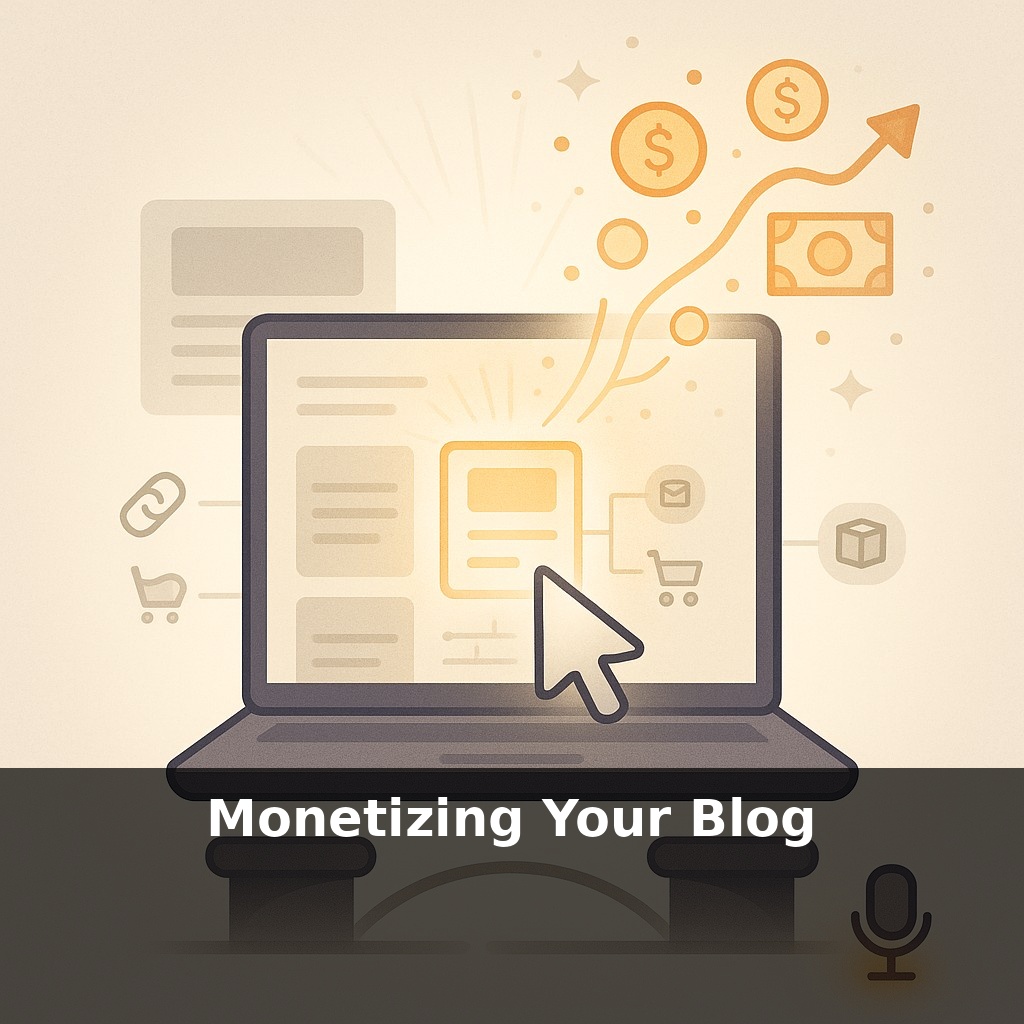
Last year, one tiny blog post made more money than a full‑time salary—without going viral. The secret wasn’t luck; it was how that blogger chose to earn from each visitor. Today we step into that decision moment, where a single click can be worth pennies…or a paycheck.
“Affiliate marketing alone is projected to hit around $15 billion globally, yet most bloggers still rely almost entirely on random display ads.” That gap between what’s possible and what most people do is where your blog’s real earning power is hiding.
Up to now, we’ve looked at what happens in that tiny moment when a reader clicks. Now we’re zooming out to the broader system around that moment: which revenue streams you pick, and how they interact with the people who actually read your work.
Instead of chasing every monetization tactic you see on YouTube, we’ll map each option—ads, affiliates, sponsorships, and your own products—against three levers you can actually control: traffic volume, audience intent, and earned trust. Think of it as arranging ingredients in a kitchen so the same recipe (your post) can be served in different, profitable ways.
Some blogs quietly earn more from 1,000 true fans than others do from 100,000 drive‑by visitors. The difference isn’t a secret ad network; it’s how deliberately the blogger aligns what they sell with why people showed up and how much faith they already have in the site. This is where strategy replaces guesswork. Instead of asking “How do I make money from my blog?”, you start asking “Given my current traffic, intent, and trust, what’s the *highest‑value* next step for a reader to take?” Suddenly, design choices, opt‑ins, and even which posts you prioritize become business decisions, not aesthetics.
There’s a reason two blogs in the same niche, with similar traffic, can earn completely different amounts: they’re pulling different levers at different strengths.
Think in terms of three profiles your blog can slip into at any given time:
1) **High‑traffic, low‑relationship mode** This is where many beginners live: lots of search visitors, shallow engagement. Here, “set and forget” income looks tempting, but randomness kills you. Instead of stuffing every page with everything, decide *one primary outcome* per content type.
Example: - Fast how‑to posts → lightweight display ads + subtle internal links to deeper guides. - Big comparison guides → minimal distraction, focused on one or two revenue actions.
You’re not chasing maximum options per page; you’re engineering a clear default path.
2) **High‑intent, low‑traffic mode** This is where small, specialized sites can quietly outperform larger ones. If your readers arrive with urgent, specific problems, your layout should behave more like a focused landing page than a magazine.
Concrete moves: - Put “next step” CTAs where the decision moment happens (right after the answer, not buried in the footer). - Use comparison tables, calculators, or short checklists that naturally lead into a product, service, or recommended tool.
Here, every friction point is expensive, so you care more about clarity than aesthetics.
3) **Growing‑relationship mode** Once people start returning, commenting, or opening your emails, your blog stops being a collection of isolated posts and becomes more like a product ecosystem.
This is where sequencing matters more than any single monetized page. Ask: *In what order do I want a reader to encounter offers?* Maybe: - First visit: light ask (join a focused email series). - Second or third: deeper, premium solution. - Later: selective, negotiated sponsorships that match what your returning readers keep clicking.
A useful mental check: if a new revenue idea can’t be clearly mapped to one of these modes, it’s probably noise. You can want all four income types eventually, but not all at once, everywhere.
Your job isn’t to bolt money onto your blog; it’s to decide which version of your blog is showing up for which reader today—and then design the path that makes that visit worth more to both of you.
A concrete way to see this: look at three real‑world styles.
One blogger in the home‑coffee niche treats each post like a carefully tuned espresso machine. Their “best grinders” guide has no sidebar, no pop‑ups—just a tight comparison, then a single “start here” recommendation that leads into a short email course on dialing in your grind. Lower RPM than plastering ads everywhere, but the beans they do grind (those readers) get turned into higher‑value shots in the form of stacked product offers over time.
Another runs a minimalist travel‑hacking site. They accept only a few, deeply negotiated sponsorships each year—like a premium card or lounge service—and build “trip blueprints” that naturally feature those partners as steps, not interruptions. Think of it like a tasting menu: each dish arrives in the right order, and by dessert, the upsell feels inevitable.
A third blogger, writing for junior developers, offers concise “bug clinic” posts, then quietly invites readers into paid office‑hour bundles once they’ve fixed something using a free snippet.
Soon, monetizing a blog will feel less like “adding ads” and more like designing a small, evolving product. As cookies fade and feeds fragment, the blogs that win will behave more like niche studios: collecting their own audience signals, packaging specific outcomes, and updating offers like software releases. Instead of chasing every new platform, you’ll treat each post as a feature, each email as an onboarding step, and each offer as a version update you can ship, test, and refine.
As you tweak how each post earns its keep, treat your blog less like a billboard and more like a test kitchen: keep small “batches” of ideas simmering, taste often, and keep what your readers devour. Over time, patterns in what they buy, share, and save will quietly point toward offers you haven’t built yet—but probably should.
Here’s your challenge this week: Choose ONE monetization path from the episode (affiliate links, your first low-priced digital product, or sponsored content) and implement it on a single blog post within the next 48 hours. Add at least three contextually relevant affiliate links or a clear call-to-action for your new $9–$29 digital product directly into that post, and update the headline and intro to naturally lead into the offer. Then, set up basic tracking (Google Analytics or your blog platform’s stats) and check in after 7 days to compare that post’s clicks or conversions against its current baseline.