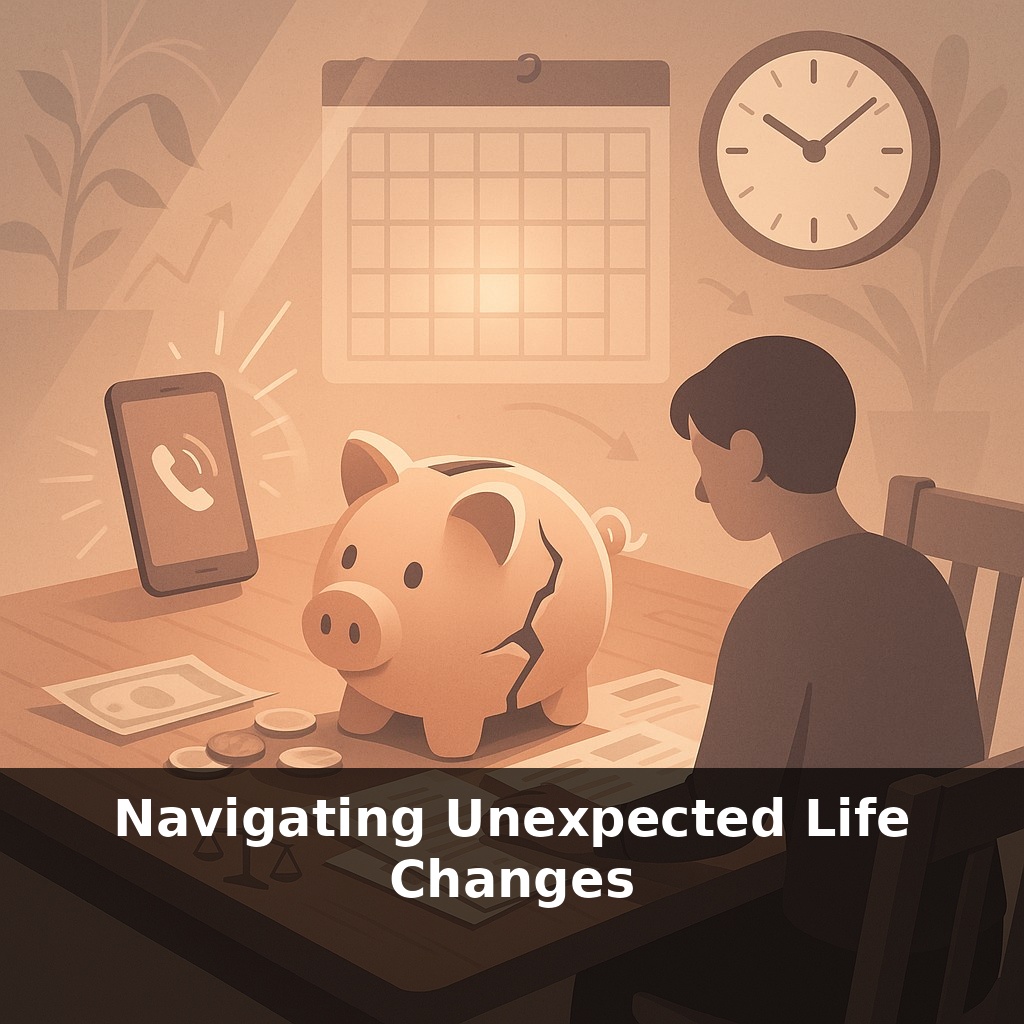
About half of bankruptcies tied to medical bills trace back to one simple problem: no emergency savings. Middle of an ordinary Tuesday, the phone rings—job gone, paycheck paused. In that moment, your past choices quietly decide how bad the next few months will feel.
The tricky part about sudden life changes isn’t just the money—it’s the timing. Bills keep arriving right on schedule, while your income or health or family demands suddenly don’t. That mismatch is where stress spikes and rash decisions creep in: cashing out retirement, maxing high‑interest cards, skipping key payments to “catch up later.”
Households that make it through those stretches intact rarely do it by sheer luck or toughness. They’ve done two quieter things in advance: they’ve parked cash where it’s easy to reach, and they’ve learned how to bend their budget without breaking it. That second part—flexibility—isn’t about living on rice and beans forever. It’s about knowing, in advance, what you’ll cut first, what you’ll protect no matter what, and what backup levers you can pull if a crisis lasts longer than expected.
Resilience doesn’t start on the day everything goes sideways; it’s built quietly in the months—or years—before. The research is blunt: households with even a modest cash buffer and a plan for shifting their spending don’t just “cope” better; they avoid most of the worst‑case outcomes entirely. That’s because when life swerves—layoff, illness, a parent who suddenly needs you—you’re forced into rapid‑fire decisions. Without a pre‑thought playbook, the loudest problem wins. With one, you can treat money choices more like updating a route in a maps app: reroute quickly, but still head toward your long‑term goals.
Most people meet “unexpected” expenses on a pretty predictable schedule: every year or two, something big breaks, someone gets sick, or work gets rocky. The surprise isn’t that disruptions happen; it’s how thin most households run in between them. That thinness is what turns a rough month into a cascading, years‑long setback.
Research on recent crises points to three quiet upgrades that make the difference.
First, the size and *placement* of your liquid savings matters. Parking a few months of core bills in a separate, high‑yield online account turns them from “extra money” into a specific safety tool. Keeping it slightly out of sight reduces the temptation to raid it for vacations or gadgets, while still letting you move cash into checking in a day or two when you actually need it. Think of it more like a system setting than a “nice‑to‑have” pile of cash.
Second, households that navigate shocks well almost always have some kind of income buffer beyond their main paycheck. That can look like a partner’s part‑time work, a small freelance stream, tutoring on weekends, renting out a room, or even a standing agreement with a former employer that you’re available for contract work. In normal times, these look small, even inefficient. In a disruption, they’re the difference between “zero income” and “reduced income”—and that gap is where you preserve options.
Third, flexible budgeting works best when you’ve already sorted your spending into layers. One practical way: list your monthly outflows in order of how hard they are to reverse. At the top: rent or mortgage, basic food, utilities, minimum debt payments. Next: subscriptions you can pause with a few clicks, variable habits like takeout or ride‑shares, discretionary transfers like extra loan prepayments. At the bottom: true luxuries or long‑term extras. When trouble hits, you don’t start from a blank page; you start from that ranked list and work downward.
The households that made it through 2008 or COVID‑19 with the least damage didn’t necessarily earn more. They had a place to land cash safely, more than one trickle of money coming in, and a pre‑ranked set of trade‑offs they could execute in weeks, not months.
A useful test is to walk through a specific curveball. Say your hours get cut for three months. Instead of vague “belt‑tightening,” you’d open your banking app and run a drill: move only your must‑pay bills to auto‑pay, drop every subscription that doesn’t touch shelter, food, health, or basic connectivity, and route any side income straight into the account handling those core bills. Notice how different that feels from blindly swiping a credit card to “deal with it.”
Or flip it: a parent needs sudden caregiving, but you want to avoid panicked choices at work. One person handles this by pre‑deciding that if caregiving hits, they’ll first tap vacation days, then temporarily reduce retirement contributions, *then* consider unpaid leave—each step buying time while keeping housing and insurance intact.
Here’s your challenge this week: run one 15‑minute “what if” drill. Pick a single disruption—job loss, medical leave, family emergency—and write the first three money moves you’d make *in order*. If any step depends on an account, document, or side income you don’t actually have yet, that’s your next tiny project.
As work gets choppier—short-term contracts, shifting hours, AI reshaping roles—money plans will need to behave more like apps that auto‑update than static spreadsheets. Expect employers to offer “rainy‑day” pockets inside 401(k)s, and banks to nudge you with alerts like, “Your income just dipped 20%; pause these three costs?” The risk is a split future: those who engage with these tools treat shocks like detours; those who ignore them hit the same bump and crack the axle.
The next twist won’t show up on your calendar first; it’ll show up in your checking balance, your group chat, your sleep. Treat that as an early‑warning signal, not a verdict. You can still tweak dials: earn a bit more here, pause something there, renegotiate a bill. The aim isn’t perfection; it’s staying flexible enough to choose your next move.
Before next week, ask yourself: “If tomorrow looked completely different than I’m expecting, what 2–3 non‑negotiables (people, routines, or values) would I want to protect no matter what changed—and how can I start honoring them today?” “Thinking about the last big curveball in my life, what did I actually handle better than I give myself credit for, and what does that reveal about strengths I could lean on in the next unexpected shift?” “Who is one person I’d want in my corner if things suddenly changed, and what simple conversation or check‑in could I initiate with them this week to start building that support before I need it?”