About eight out of ten jobs never start with an online application—they start with a conversation. A quick coffee chat. A comment on LinkedIn. A friend-of-a-friend message. Today, we’re going to pull back the curtain on how those quiet connections quietly move careers.
Eighty-five percent of jobs are filled through networking, yet most career changers still pour their energy into perfecting résumés and refreshing job boards. There’s a quiet mismatch here: the real action is happening in the relationships you haven’t started yet—and in the ones you haven’t touched in months. The good news? You don’t need to be an extrovert or “working the room” every night. You need a simple, sustainable way to create and maintain the right kinds of connections, especially those loose acquaintances and online contacts that sit just beyond your inner circle. In this episode, we’ll shift from vague advice like “network more” to concrete, low-pressure moves you can make this week—online and offline—to open doors in a field that doesn’t know you…yet.
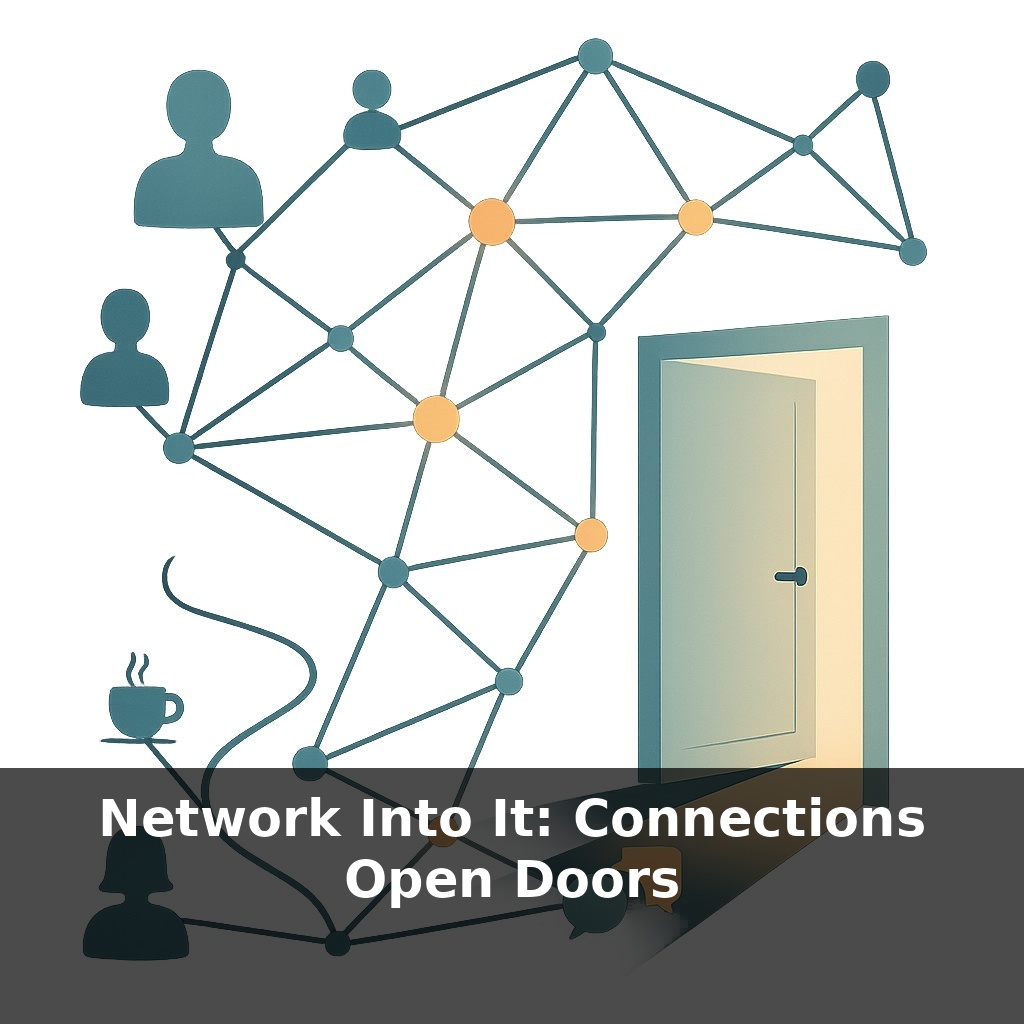
Most people treat networking like a fire alarm: ignore it until there’s smoke, then frantically pull it. But the people who navigate career change smoothly treat it more like routine maintenance—small, regular check‑ins that keep things running so opportunities don’t burn out before you ever hear about them. Here’s the twist: your next role is more likely to come from someone who barely knows you today than from your closest contacts. Digital platforms quietly tilt the odds in your favor, because even a modest online presence can ripple through second‑ and third‑degree circles you couldn’t map on paper if you tried.
Here’s the quiet math behind career change: if only about 30% of roles are ever posted, then most of the market is invisible to anyone who’s only clicking “Apply.” The leverage point isn’t more applications; it’s more people who think of you when something moves behind the scenes.
That starts with redefining what “good networking” looks like. It’s not collecting business cards, nor is it chasing famous people. The most useful relationships tend to sit at the intersection of three things: relevance (they’re close enough to the space you want to enter), diversity (they don’t all know each other or work in the same niche), and recency (you’ve been in touch within the last few months).
Relevance is why it’s often more powerful to know a mid‑level product manager at a company you admire than a celebrity CEO somewhere else. That PM hears about team reshuffles, upcoming hires, and projects that might need help long before HR writes a job description. Diversity matters because a monoculture network reflects back what you already have, not where you’re trying to go. Five people at your current company can’t open as many new doors as one person each in five different organizations.
Recency is where most people quietly lose opportunities. Research shows you don’t need constant contact; a light touch every 2–3 months is enough. Think: reacting thoughtfully to a post, sharing a short article with a one‑line note about why it made you think of them, or sending a quick “how did that launch go?” message. These micro‑touches keep you in the “active memory” zone without feeling transactional.
For career changers, the most strategic move is to build a small “bridge network” into your target field: people one or two steps ahead of where you want to be. They don’t have to be hiring managers. Someone who changed into UX design last year, or transitioned from teaching to L&D, can offer context, sanity checks, and warm intros that job descriptions never provide.
Your goal isn’t to impress these people; it’s to understand their world well enough that, when something shifts in it, they naturally think, “This might be a fit for you.”
Think of your “bridge network” like a carefully chosen medical team: you’re not trying to meet every doctor in the hospital—you want a few specialists who understand your specific condition and the procedure you’re heading toward. One might be the seasoned surgeon (a hiring manager), but the others are often residents and nurses: the person who just made the switch, the recruiter who sees patterns across companies, the engineer who quietly mentors newcomers.
Concrete example: want to move into data analytics? Start with three roles: - A junior analyst who joined in the last 18 months - A hiring manager who has posted for analysts this year - Someone in a neighboring role (ops, finance) who partners with analytics
Each sees different “symptoms”: skill gaps, culture issues, unposted needs. When you talk to all three, you’re not asking for a job—you’re triangulating reality. Patterns in their stories point to where you should focus: a missing tool, a certification, a project type you must ship. That clarity makes later introductions feel natural, not forced.
As AI tools start suggesting who you “should” meet, your edge becomes how you show up once you’re in the room. Think less about collecting names and more about curating a small “board of advisors” who grow with you over the next decade. Reputation will travel with you across platforms, like a trusted chef whose signature dish keeps drawing regulars—even when they move kitchens. The experiment now: practice being the person others are glad to recommend, before you need the recommendation.
Treat this like testing a new recipe: the first version won’t be perfect, but you’ll learn which ingredients—people, topics, formats—spark real exchange. Your challenge this week: notice who energizes you, who teaches you something new, and who you’d gladly help again. That list is the soil where your next chapter is already starting to grow.