Right now, nearly all the atoms in your body are quietly “holding hands” in ways that decide whether you’re solid, liquid, or gas. In this episode, we’ll step inside that invisible handshake system—where the simple question “why do things stick?” gets surprisingly dramatic.
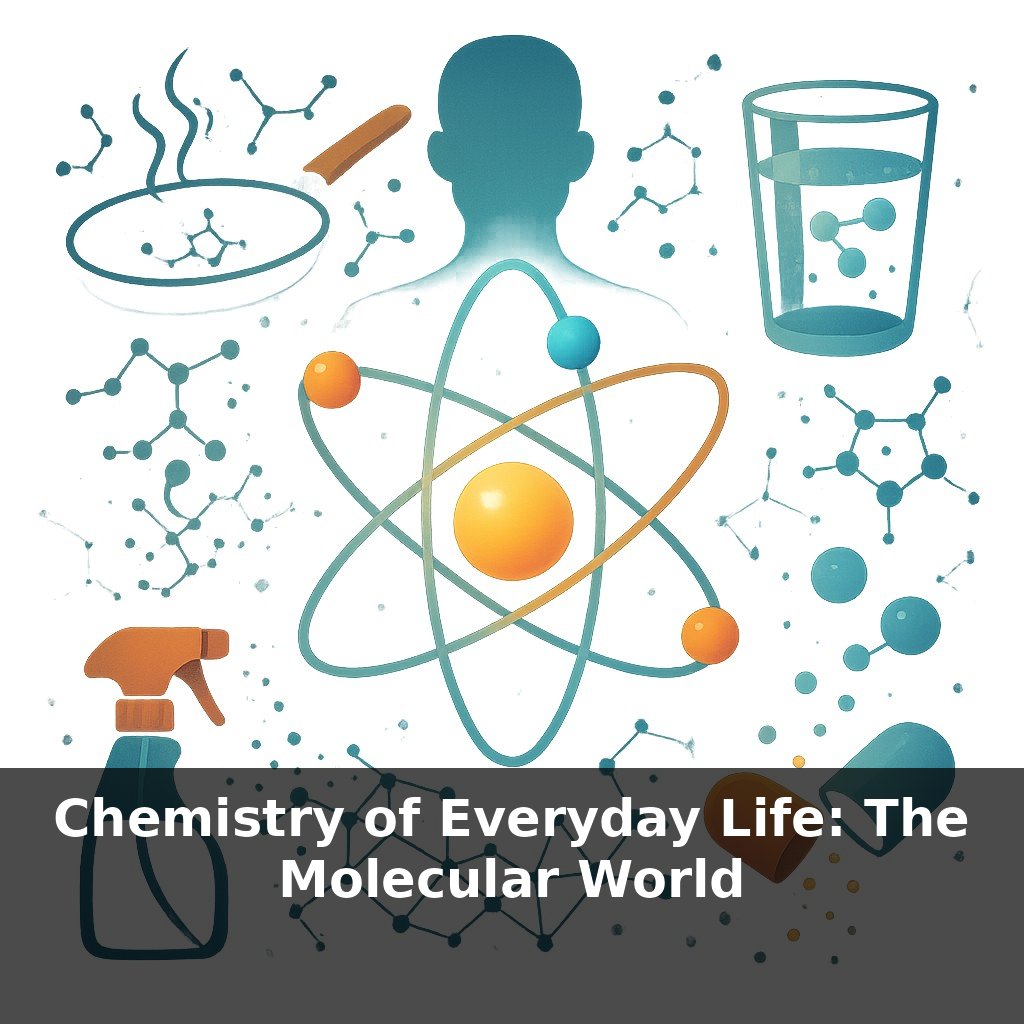
Some of those “handshakes” are more like iron grips, others more like quick taps on the shoulder—and which ones you get determines everything from your phone’s battery life to how easily chocolate melts in your hand. Chemical bonds are the quiet rule‑set behind whether salt shatters, copper bends, or water climbs up a plant’s stem against gravity. They decide which molecules snap apart in your stomach and which survive long enough to become part of your brain. In this episode, we’ll zoom out from individual particles and look at the different ways they lock together: from full‑on electron transfers in table salt, to shared electron “routes” in the DNA in your cells, to the fleeting attractions that let geckos walk up walls. By the end, “why does this stick?” turns into “what kind of bonding is running the show here?”
Now we’ll widen the lens from “what’s holding things together” to “how that grip changes what stuff can actually do.” Bonding isn’t just a microscopic curiosity; it quietly scripts everyday behavior. Why does table salt crumble but glass resists your weight? Why does sugar caramelize on a hot pan while steel barely softens in the same kitchen? Behind each outcome is a different bonding pattern setting limits on how easily particles can move, rotate, or separate. In the next steps, we’ll connect specific bond types to real‑world traits: melting points, conductivity, solubility, and even how your own cells stay organized.
So what actually changes when particles grip each other in different ways? Start with something dramatic: temperature. Heating any substance is basically you paying energy to loosen its internal grip. If the grip is dominated by strong ionic attractions, as in many minerals, you have to pay a lot—hence melting points upwards of hundreds of degrees Celsius. When the grip is mainly between separate molecules via weaker attractions, as in many organic solids, far less energy is needed, so they soften and melt in an ordinary oven.
Hardness tells a different part of the story. In a crystal like quartz, an enormous, continuous web of directional covalent links makes it difficult for layers to slide past each other; push too hard and it fractures instead. Compare that to metals: here, atoms sit in an ordered array bathed in a pool of mobile electrons. Layers can shift while the electron “sea” keeps everything coherently bound, so metals bend and can be shaped without shattering.
That shared pool of electrons also explains electrical behavior. In metals, charges move freely, so wires carry current and cookware spreads heat efficiently. In a solid ionic lattice, the charged building blocks are locked in place; electricity only flows once the lattice melts or dissolves in water and those charged units can move independently.
Solubility is another consequence. For an ionic crystal like table salt to vanish into water, water’s polar molecules must surround and separate each charged ion. If that interaction repays the energy cost of pulling the crystal apart, the solid dissolves. For nonpolar substances like many oils or waxes, water can’t offer that payoff; instead they cluster together and float or form droplets.
Inside you, subtle variations on these ideas control function, not just form. The double helix of DNA is stabilized internally by covalent links, but the two strands recognize and un‑zip from each other using weaker attractions between complementary bases. Proteins fold into precise shapes because some parts prefer water’s embrace, others avoid it, and countless small attractions and repulsions collectively steer each chain into a working 3D structure. Change the pattern of grips, and you can turn a flexible chain into a rigid fiber, an insulator into a conductor, or a harmless molecule into a potent drug.
Why does ice make roads treacherous while a sugar glaze just gets sticky? The difference lies not only in structure but in how easily those internal grips rearrange at everyday temperatures. On winter streets, a thin, pressure‑softened layer on top of ice behaves almost like a lubricant, letting tires slide. In a bakery, heating a sugar coating lets molecules shuffle just enough to flow, then lock in place again as a shiny shell once it cools.
In your kitchen, salt on a tomato doesn’t just “add flavor”—it breaks apart in the watery juices, freeing charged pieces that interact with taste receptors and pull out hidden aromas. Oil in a salad dressing stays stubbornly separate until you add mustard or egg yolk; their molecules can “talk to” both water and oil well enough to broker a temporary truce.
Think of it like weather inside materials: some are locked in a long, stable “climate,” others flip rapidly between localized “storms” of motion, and those differences quietly decide how they behave in your hands.
Your challenge this week: run a mini “bond‑behavior lab” at home or work by doing three specific experiments and asking, each time, “what kind of internal grip must be changing here?”
1) In the freezer, put equal‑size cubes of pure water, salty water, and sugared water. Time how long each takes to freeze and then how quickly each cube melts on a plate at room temperature. Notice which mixtures resist freezing, and which puddle first.
2) On the stove, gently heat three equal pinches: table salt in a dry pan, sugar in a dry pan, and grated cheese on foil. Observe which softens, browns, melts, or stays stubbornly granular at the temperatures your burner naturally reaches.
3) In three glasses, mix water with: cooking oil, isopropyl rubbing alcohol, and vinegar. Shake them the same way. Track which combinations separate cleanly, which partly blend, and which form stable mixtures.
By the end of the week, you’ll have a short list of “mystery behaviors.” Keep it handy—we’ll decode each one with specific types of internal attractions and their energy trade‑offs in upcoming episodes.
Tweak how particles cling together and you tweak the future. Engineers are already nudging internal grips to steer ions like lanes on a highway in solid‑state batteries, or to let gases “check in” but not escape in carbon‑capture filters. In medicine, tailoring tiny charge patterns is like designing custom keys for cellular locks. As we learn to choreograph not just who sticks to whom, but for how long and under what conditions, whole technologies start to look more like programmable matter than static stuff.
Next time you sip coffee, tap your phone, or watch ice cream slump in the sun, you’re watching countless tiny deals being made and broken. The same quiet rules that let snowflakes stack and medicines dock also let plastics flex and dyes cling to fabric. As you notice these small dramas, you’re learning the grammar of matter itself.
Here’s your challenge this week: Pick three everyday items from your kitchen or bathroom (for example: table salt, sugar, and cooking oil) and “diagnose” what kind of bonding holds each together—ionic, covalent, or something else like hydrogen bonding or Van der Waals forces. Then, test your guesses with one simple experiment per item: check if it dissolves in water, if it conducts electricity when dissolved (you can use a cheap conductivity/EC pen or a simple battery–LED setup), or how it behaves when gently heated. Finally, explain out loud (to a friend, family member, or voice memo) why each substance behaves the way it does based on its bonds, using at least one phrase from the episode (like “electrostatic attraction” or “sharing electrons”) in each explanation.