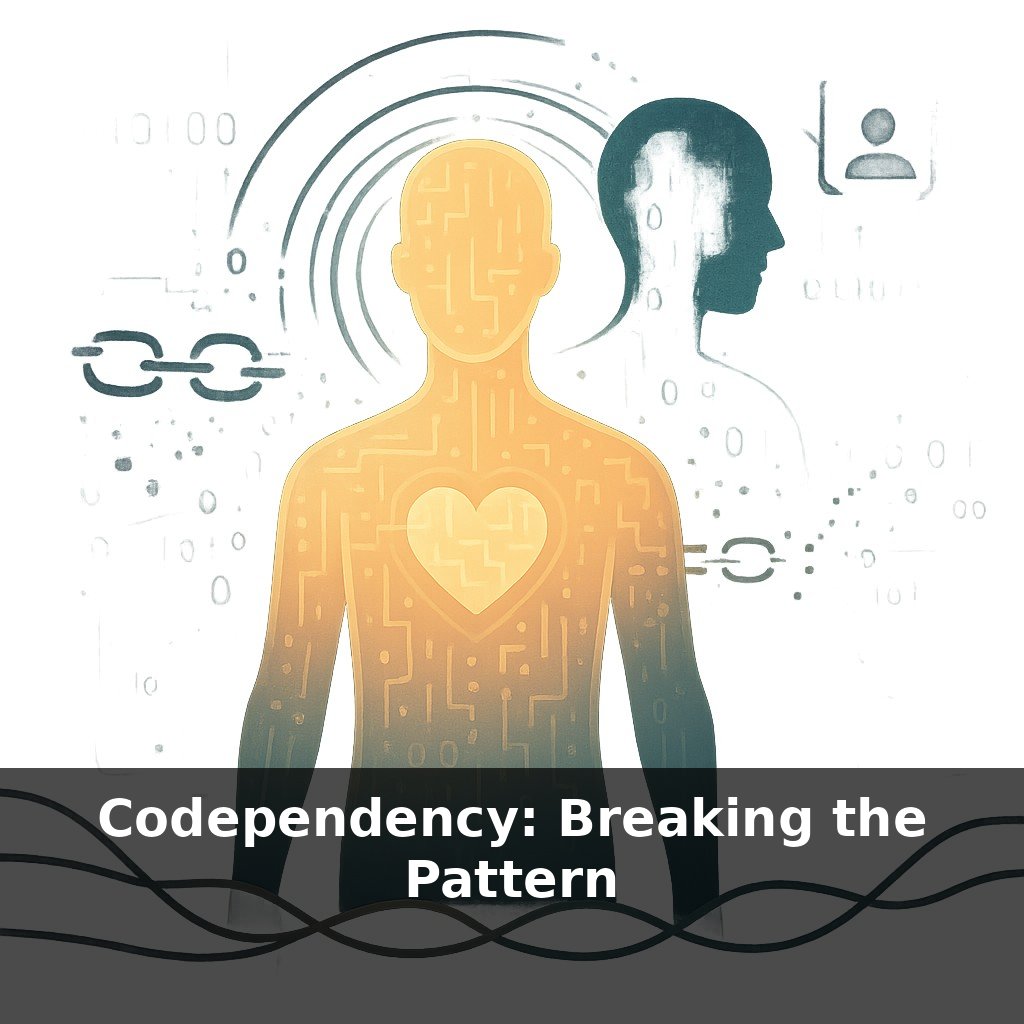
About nine out of ten adults from chaotic homes show codependent traits—yet most don’t realize they’re in a pattern at all. You’re in a kitchen fight, swearing you’ll leave, and an hour later you’re soothing the very person who hurt you. How does that flip happen so fast, and why does it feel so familiar?
That flip often starts long before the kitchen fight. It can begin with a small jolt of fear: a change in tone, a late reply, a slammed cupboard. Your nervous system registers “danger” before your mind forms a thought, and suddenly you’re bargaining, appeasing, over-explaining. It feels urgent, but what’s really happening is old wiring lighting up.
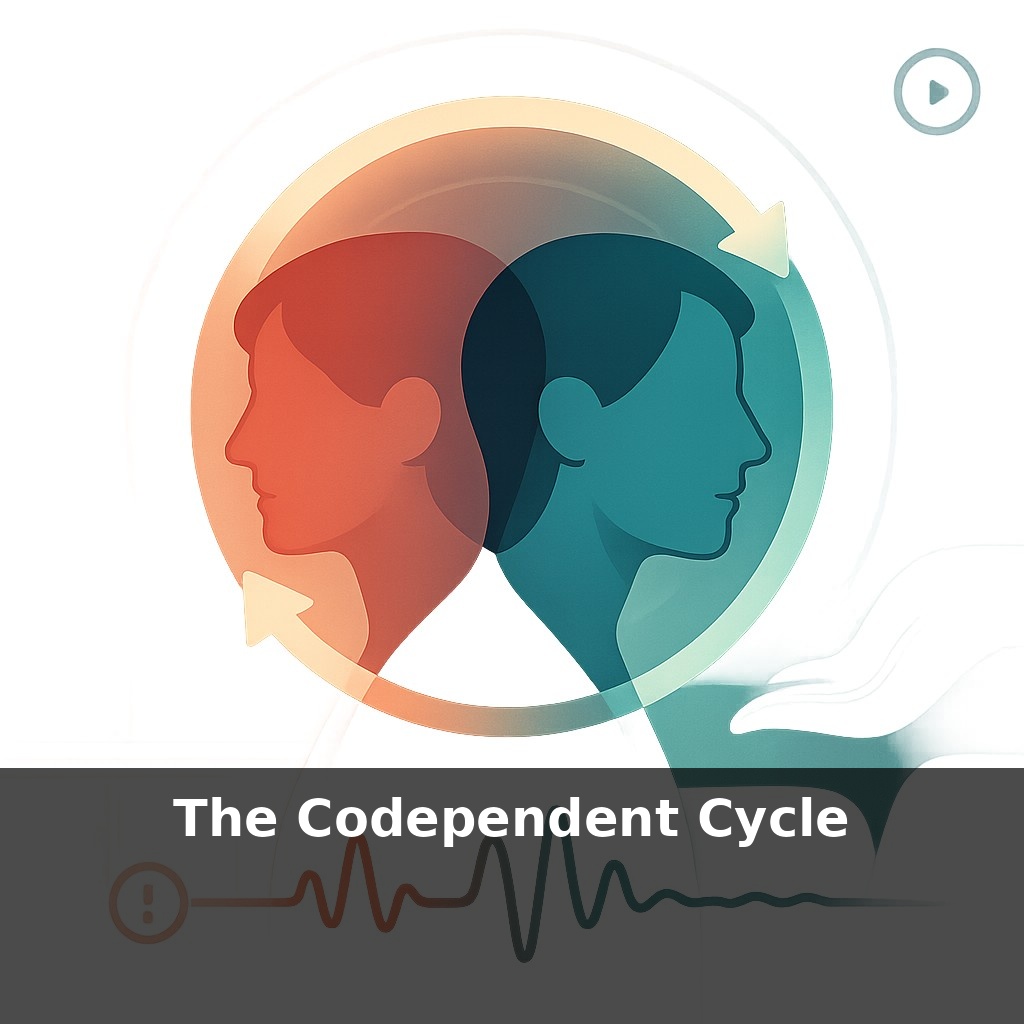
In this episode, we’ll unpack the six-stage cycle that tends to run underneath these moments: the intense pull toward someone, the slow build of tension, the rush to fix, the brief calm that feels like proof you’re “meant for each other,” the quiet exhaustion, and the crash that pulls you right back to the start. Not because you’re weak or “too much,” but because your brain, history, and hope for connection have all teamed up to keep the loop alive.
That loop doesn’t start in adulthood; it’s usually an upgrade of old survival strategies. If you grew up tracking moods in the room like weather—scanning faces, adjusting your tone, stepping in to soothe—you were training for this cycle long before your first relationship. Your brain quietly linked “being needed” with “being safe.” Add intermittent rewards—sweet texts after silence, affection after a blow‑up—and the bond thickens. It’s less like choosing a bad pattern and more like running a program that once protected you, even as it now keeps you stuck.
Most people only notice this dynamic at the extremes—the ugly fight, the desperate apology. The codependent cycle actually feeds itself in quieter, almost boring ways that are easy to miss.
Start at the beginning of a typical day in one of these relationships. You wake up already slightly braced. Nothing’s “wrong,” but you’re pre‑checking the emotional temperature: Did they roll away from you in bed? Are they quieter than usual? Is their text shorter this morning? Each tiny cue is like a micro‑notification, nudging you to adjust yourself before anything explodes.
By mid‑day, your attention is no longer fully yours. Part of your mental bandwidth is permanently allocated to tracking them. You remember their schedule better than your own. You pre‑emptively cancel your plans “just in case they need you.” On the surface, this looks like devotion. Underneath, it’s a full‑time regulatory job—trying to manage someone else’s inner world so you don’t have to feel the threat of disconnection.
When tension rises, your behaviours can split into two main tracks. One is overt rescuing: you call in sick for them, pay the bill they hid, smooth things over with their boss or family. The other track is subtle self‑erasure: you change your opinions mid‑sentence, downplay your successes, avoid topics that might “set them off.” Both tracks have the same goal: steer the relationship back toward temporary peace.
That moment of peace is where the trap tightens. The nervous system drop—“We’re okay again”—doesn’t just feel good; it teaches your brain that all the over‑functioning was worth it. The more often that pairing repeats (panic → fixing → relief), the stronger the link becomes between self‑betrayal and safety.
Over time, this bleeds into identity. You may start telling your story in a particular way: “I’m the strong one,” “People always lean on me,” “I just love deeply.” Inside, though, there’s a quieter narrative: “If I stop doing this, they’ll leave,” or “If I have needs, I’ll be too much.” Those beliefs often come straight from early experiences that trained you to equate love with emotional labour.
In a sense, it’s like taking the same commuting route every day, even when it’s jammed with traffic. You know it’s stressful, but your body, brain, and history treat it as the only way to get where you need to go. The first step out isn’t slamming on the brakes; it’s realizing you’re on autopilot—and starting to notice all the tiny, routine decisions that keep steering you back onto that same crowded road.
Think about how your calendar or group chat quietly exposes this cycle in action. Your week might be filled with “check in on them,” “swing by just to see how they’re doing,” or late‑night messages from friends: “You ok? You seemed off after their call.” No one labels it as overgiving; it just looks like you being “the reliable one.” Tech can deepen this: read receipts, typing dots, and streaks keep you hyper‑attuned, refreshing for signals that things are still “okay,” even when you’re exhausted.
You may also notice it at work. You stay late to cover a teammate who chronically drops the ball, tell yourself you’re being a team player, then feel strangely irritable when they come in cheerful the next morning. Or in family group chats, you jump in to defuse tension, send the soothing text, volunteer to host—again. The outside world often praises this as generosity or leadership, which makes it even harder to question whether the cost to you is quietly becoming too high.
Digital tools could quietly reshape how this plays out. Mood‑tracking apps, for instance, can reveal how often your day spikes or crashes after specific interactions, like seeing a graph instead of guessing the weather. AI companions may soon flag when your messages shift from authentic to appeasing. As VR and teletherapy evolve, you might rehearse hard conversations the way athletes run drills—testing new responses in low‑risk spaces before you bring them into real‑life relationships.
Noticing this loop is like finally spotting a watermark on paper you’ve been writing on for years—it was there the whole time. From here, curiosity matters more than blame. You can start asking: Which moments pull me in fastest? Which tools—journals, apps, trusted people—help me pause? Each small pause is a tiny exit door from the well‑worn route.
Before next week, ask yourself: 1) “In the last few days, where did I rush in to fix, rescue, or ‘keep the peace’ for someone else, and what was I afraid would happen if I didn’t?” 2) “When I feel that tight, anxious pull to manage someone’s mood, what would it look like in that moment to pause, take three slow breaths, and let them have their own reaction instead of stepping in?” 3) “If I said one kind, honest ‘no’ this week—especially in a situation where I usually over-give or over-explain—what specific boundary would I choose, and how might that start to loosen my role in the codependent cycle?”