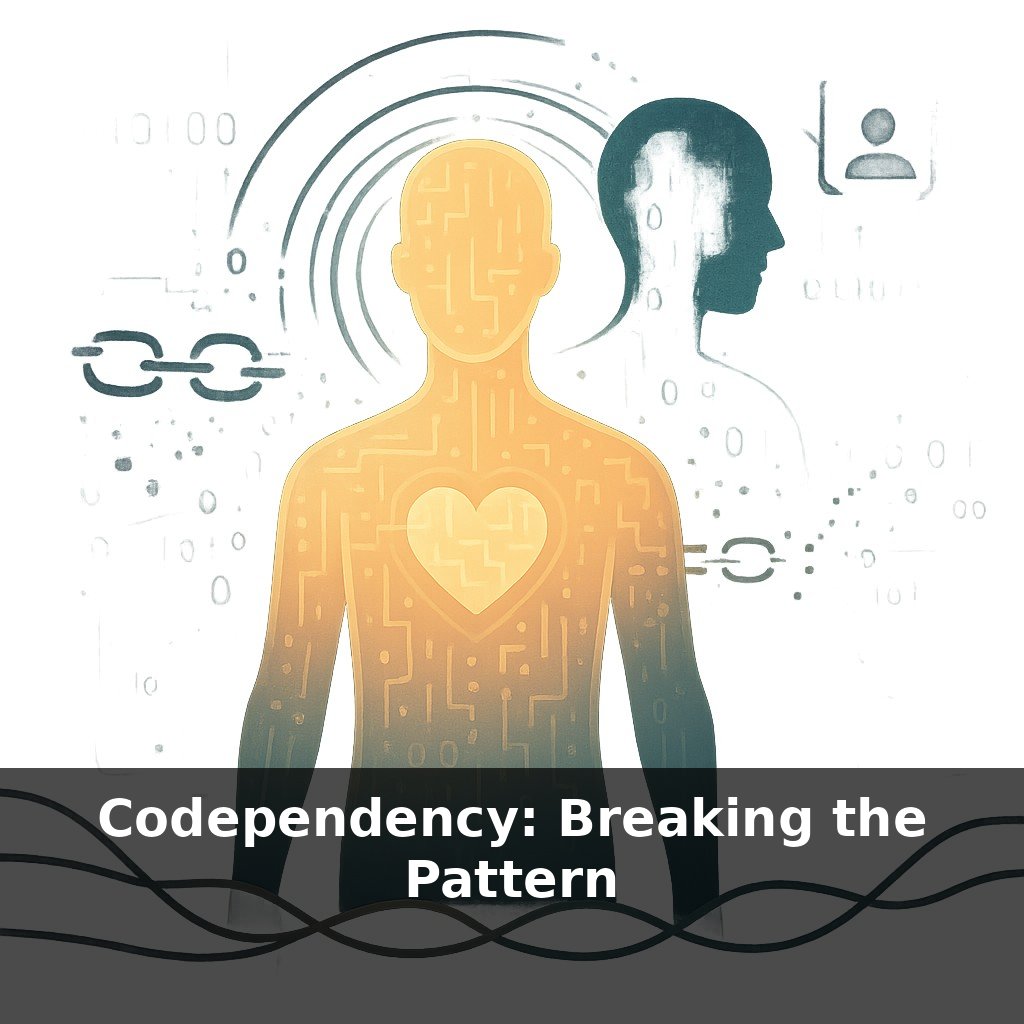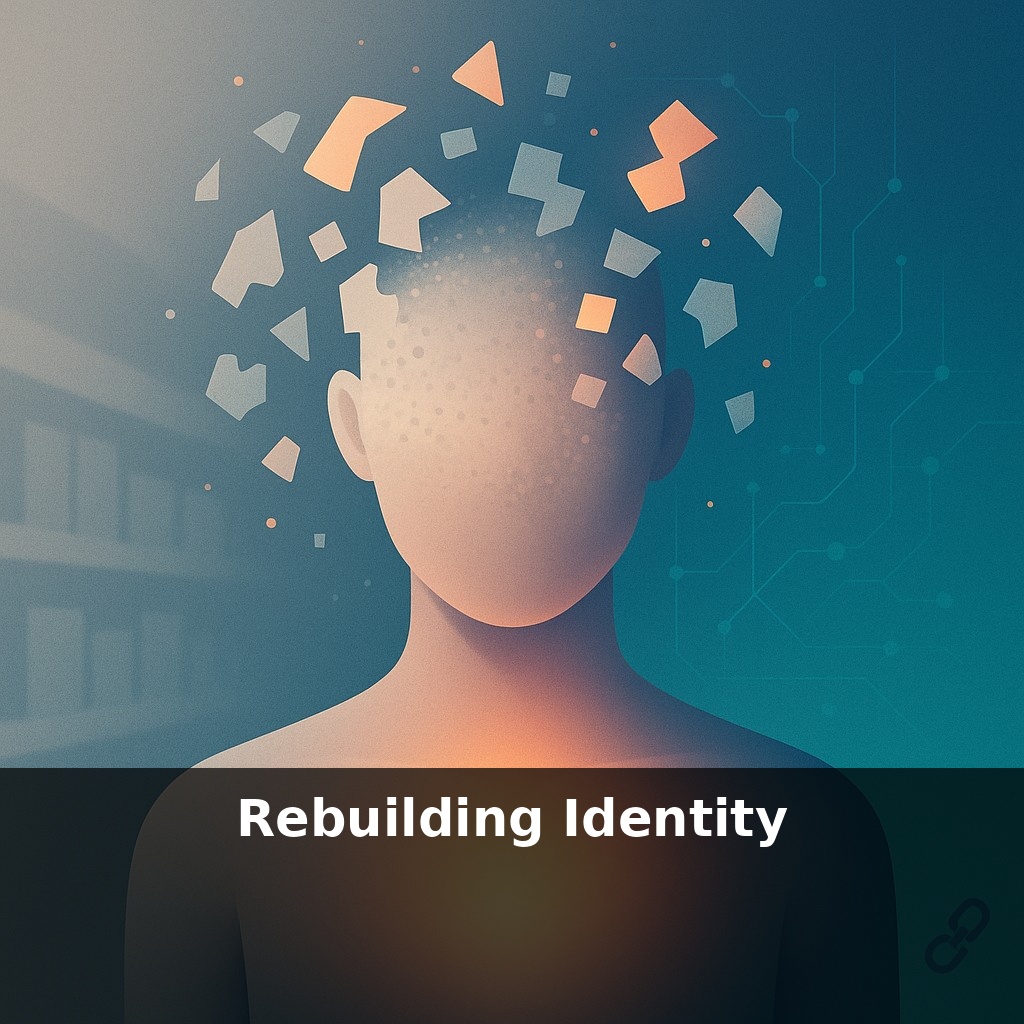
About half the people leaving a codependent relationship say the same thing: “I don’t even know who I am anymore.” One person freezes in a grocery aisle, unable to choose a cereal. Another panics on a free weekend, with no one else’s needs to manage. This episode explains why.
Up to 40% of clients in outpatient addiction clinics show strong codependent traits—and when those relationships end, many report a strange “blank” where their sense of self should be. Not just “I’m sad,” but “I don’t know what I like, what I value, or what I want.” That blank isn’t permanent, and it isn’t a personality flaw. It’s a predictable outcome of years spent organizing your life around others.
In this episode, we’ll treat identity as something you can *rebuild* with specific tools, not just wait to “find.” You’ll learn how low self-concept clarity fuels anxiety and depression, why your brain may resist early changes, and how practices like values clarification, new skills, and carefully chosen people can speed up the process. We’ll also look at why many people see solid progress in 12–24 months—and what to do so you’re one of them.
Research on people leaving enmeshed relationships shows a clear pattern: the first 3–6 months often feel chaotic, but those who actively experiment with new ways of living usually report more stability by month 12. One study of 214 adults in recovery groups found that those who tried at least 3 new roles (like learner, creator, volunteer) within a year had 2× higher self-rated “inner steadiness.” That’s the frame for this episode: we’ll treat the next 12–24 months like a structured rebuild, using small, repeatable experiments rather than waiting passively to “feel like yourself again.”
For most people, the “rebuild” starts with self‑differentiation—learning to notice where you end and others begin in daily life. A practical entry point is tracking three channels: your body, your thoughts, and your behavior in specific interactions.
Start with your body. Research on attachment injuries shows that formerly enmeshed partners often override physical cues: they skip meals, ignore exhaustion, or agree to plans while their stomach knots. For one week, pick 3 recurring situations (e.g., texting an ex, family group chats, work requests) and rate tension in your body from 0–10. If it hits 6 or higher and you still say “yes,” you’ve located an over-ride. That over-ride is a live example of where your old pattern still runs the show.
Next, look at thoughts. People coming out of these dynamics often report “internal committees” that sound like parents, partners, bosses. A 2019 study of 302 adults leaving high-control relationships found they used an average of 4–5 different “voices” when describing inner dialogue. Take 5 minutes after a hard conversation and write down exact sentences that ran through your mind. Label each sentence as Me, Them, or Mixed. Over a month, many clients see the “Them” column shrink from ~80% of lines to closer to 50% just through this labeling alone.
Behavior is where you begin to shift identity on purpose. Identity theory research suggests that even tiny role experiments—10–15 minutes, 2–3 times per week—can measurably change how you describe yourself within 8–10 weeks. So instead of asking, “Who am I now?” ask, “What micro‑role can I try this week that doesn’t revolve around fixing someone?” Examples: spending 20 minutes as a learner (watching a tutorial), 15 minutes as a creator (drafting a poem, beat, or sketch), or 30 minutes as a mover (walk, stretch, dance).
Group environments can accelerate this. Codependents Anonymous reports over 1,000 meetings across 60+ countries; social identity research shows that belonging to just one values‑aligned group doubles the odds you’ll maintain new habits at 6 months. The key is choosing spaces where you’re not rewarded for over‑giving, but for honesty, boundaries, and small personal risks.
A concrete way to start the rebuild is to run small “identity experiments” and track outcomes like a researcher. For 4 weeks, pick 3 roles to test that are unrelated to caretaking. Example set: “beginner musician,” “local explorer,” “truth‑teller.”
Week 1–2, assign each role a specific, tiny behavior with numbers attached: - Beginner musician: 10 minutes, 4 days per week, learning one chord or beat. - Local explorer: 1 new place per week within 5 km of home. - Truth‑teller: in 3 conversations per week, state 1 honest preference (coffee vs. tea, which movie, when you’re tired).
Week 3–4, rate each role twice: (1) enjoyment from 0–10, (2) sense of “this feels like me” from 0–10. Keep only roles that average ≥6 on either scale, and drop or modify the rest. Over 3–4 cycles (about 3 months), you might test 9–12 roles and keep 3–5 that consistently score higher. This gives you data‑based clues about emerging identity rather than relying on mood or guesswork.
Your challenge this week: Choose just 2 roles, define their numbers, and start your first 7‑day test.
Within 10 years, you may complete a “self-rebuild plan” the way people now do fitness programs. A tele-therapist could review your weekly logs and adjust exercises in real time, while an AI coach flags 3–5 daily moments where you slip into old patterns. Schools might run 8‑week labs where students practice saying “no” in scripted scenarios and track stress on smartwatches. Expect debates over data privacy as these tools analyze thousands of micro‑choices to map your emerging sense of self.
Across the next 12–24 months, aim for measurable shifts, not perfection. For example, target 1–2 clear “no’s” per week, 15–20 minutes daily in non‑caretaking roles, and 1–3 check‑ins monthly with a trusted guide or group. Review progress every 30 days. Identity won’t “appear”; it will emerge from these 50–100 small, repeated choices.
Start with this tiny habit: When you catch yourself saying “I’m just the kind of person who…”, pause and quietly add the word “currently” to the end of that sentence in your head. Then, add one more 3-word upgrade like “learning to __________” that fits who you want to become (for example: “currently… learning to speak up” or “currently… learning to rest”). Do this every single time that old identity story pops up today, no matter how small or silly it feels.