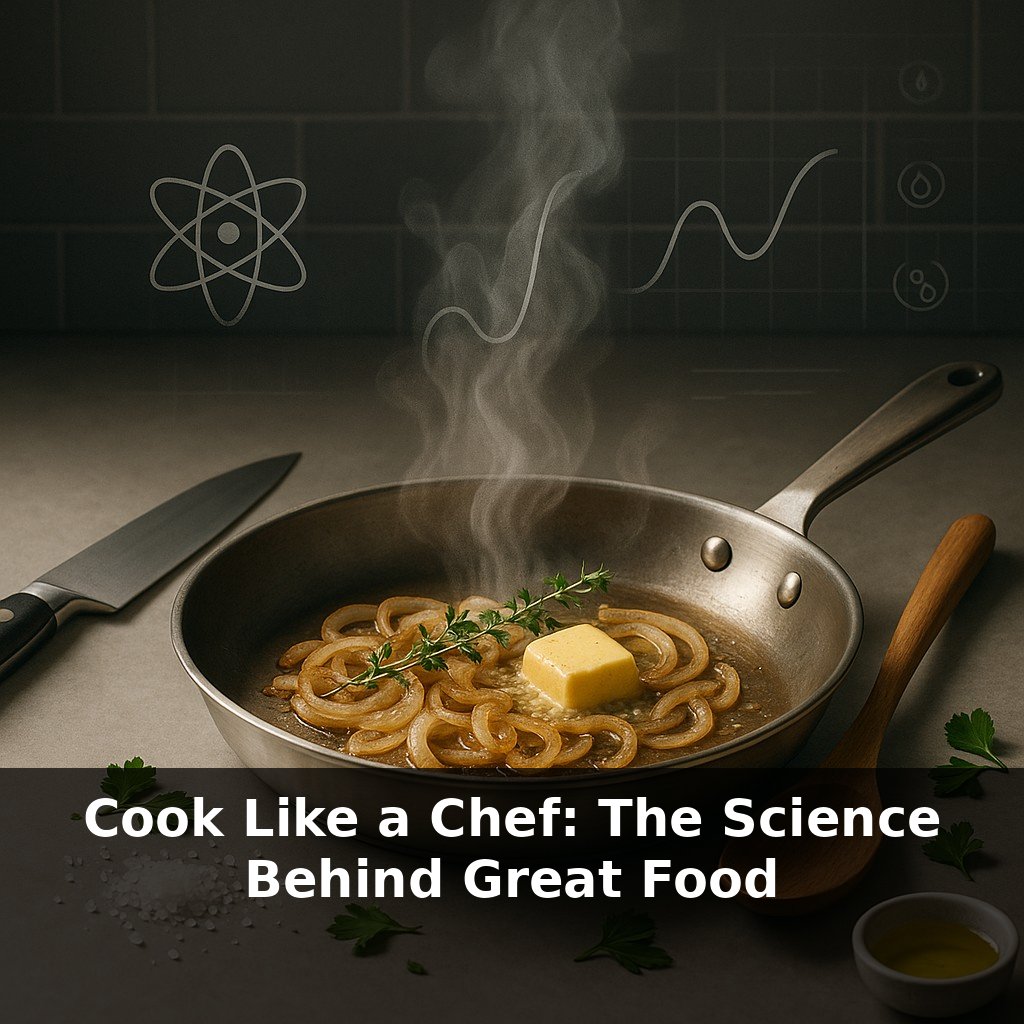
Restaurants spend hours perfecting one thing most home cooks rush past in minutes: browning. A pale steak, limp roasted veggies, a beige loaf—all taste flat. But with a small shift in how you use heat and moisture, those same foods can explode with deep, complex flavor.
About 30–40% of the flavors in many cooked dishes come from one quiet background process: the Maillard Reaction. It’s why a baked potato tastes more interesting than a boiled one, why toast beats plain bread, and why coffee smells like… well, coffee and not wet beans. Yet most home cooks trigger it by accident instead of on purpose, losing control over how intense, nutty, or roasted their food can taste.
Professional kitchens treat it more like a recipe than a coincidence. They adjust pH with a pinch of baking soda, dry surfaces with almost fussy precision, and choose pans and cooking fats not just for convenience, but for how they influence this reaction. Subtle changes—like salting earlier or later, or using a fan in the oven—shift which flavors dominate. In this episode, you’ll start treating Maillard not as a mystery, but as a dial you can turn up, down, and sideways.
In pro kitchens, Maillard isn’t just “make it brown and hope”—it’s closer to zoning laws in a city: chefs decide which flavors are allowed to “build” where and when. They’ll brown chicken skin hard while keeping the interior almost poached-soft, or push onions right to the edge of bitter for a deeply savory sauce. Tiny levers matter: raising pH for speed, choosing cuts with more surface proteins, or staging cooking so one side of a food gets aggressively developed while the other stays gentle. Your job now is to start noticing where you want contrast, not just color.
Walk into a bakery at 5 a.m. and you’ll see Maillard decisions everywhere: some loaves blasted dark, others kept blond; sheet pans rotated; steam vented at precise moments. None of that is random. It’s about controlling *when* and *where* those reactions surge so you get contrast instead of monotone brown.
You already know the reaction exists; now you’re going to treat it like a tool with four main dials you can actually use: time, temperature, pH, and water activity—not just “moisture” in the vague sense, but how available water is at the surface.
**1. Time: when to be patient, when to sprint**
Think of time as your “investment horizon.” A quick, high-heat sear on thin pork chops? You’re going for fast, concentrated development—pull as soon as color looks right or you’ll dry them out. Slow-roasting a whole cauliflower at moderate heat? You can let color creep across the surface for 45–60 minutes, building layers of toasted, nutty notes without burning. Long cooks favor gentle heat; short cooks can handle intensity.
**2. Temperature: where you park the dial**
You don’t have to memorize precise degrees, but you do need ranges. For stovetop work, that means preheating pans until a drop of water skitters, then backing off if fat smokes aggressively. In the oven, it might mean starting high to “set” the crust on bread or lasagna, then lowering the temp so color deepens instead of jumping straight to bitter. Think in phases: high to kick-start, moderate to develop, low or off-heat to coast.
**3. pH: when to cheat with chemistry**
You saw how alkalinity speeds things up; now decide *where* that’s useful. Tossing Brussels sprouts with a pinch of baking soda before roasting can give you more browned edges before the centers turn sulfurous-mushy. A dab in a pan of onions accelerates deep savoriness—great for weeknight cooking—but use restraint for sweet applications like French onion soup, where excessive dark notes can crowd out delicate sweetness.
**4. Water activity: managing the “traffic”**
You’re not just drying food; you’re scheduling evaporation. Salting chicken the day before and leaving it uncovered in the fridge tightens the skin so it blisters beautifully in the oven. Brushing mushrooms with oil instead of washing lets them brown instead of steam. On a sheet pan of vegetables, crowding versus spacing changes how much steam gets trapped—one pan, two very different flavor outcomes.
Your next step is to start choosing which dial to move first, instead of turning all four by accident.
Think of this like redesigning a kitchen for better workflow: same space, smarter layout. You’re not chasing “more browning”; you’re deciding *where* extra depth belongs and where it would get in the way.
Start with contrast on one plate. Fry eggs in two batches: first on low, covered, until just set—soft edges, no serious color. Second batch in a thoroughly heated pan, more fat, uncovered, letting the edges go lacy and deep gold. Same ingredient, same breakfast, but now you *feel* how changing the development on the rim changes how the yolk reads.
Next, try split-treatment on a single ingredient. Do half a batch of potatoes as small cubes, the rest as thick wedges. Roast together, same pan, same seasoning. The cubes offer lots of developed surface; the wedges keep more gentle interior. Taste them side by side *in the same bite* and notice how the mix is more interesting than either alone.
You’re not just making things darker; you’re deciding which bites should shout and which should whisper.
Supermarket snacks are already tested with gas sensors and trained models; now imagine that precision shrunk into your oven. Instead of a dumb “Bake at 200 °C,” you’d have presets tuned to chickpeas, mushrooms, or plant burgers, each chasing a distinct aroma fingerprint. Recipe writers might specify target spectra the way baristas specify grind size. Your role shifts from manually chasing a perfect crust to choosing a “flavor profile” and letting the machine drive.
Your challenge this week: treat color like a map, not a goal. Pick one dish you already cook well—burgers, tofu, mushrooms—and serve two versions on the same plate: one just at the shade you usually stop, one a notch darker. Note which bites feel rounder, which taste harsh, and where contrast helps. Next time, “design” that gradient on purpose.