What Is Blockchain? The Technology Explained Simply
📝 Transcript
Right now, software is moving billions of dollars in Bitcoin and other crypto… without anyone in charge. No bank manager, no help desk, no “trusted middleman.” In this episode, we’ll pull back the curtain on the technology that makes that kind of trust even possible.
Most people first meet blockchain through price charts and headlines about crypto booms and busts. But behind the volatility is a very simple promise: a record of “who owns what” that doesn’t depend on any single company, government, or server staying honest or even staying online. That makes it useful far beyond digital coins. Today, developers are using blockchains to track supply chains, move dollars across borders in minutes, verify digital art ownership, and even coordinate online communities that manage real treasuries. In finance, it’s like moving from closed, proprietary spreadsheets to a shared transaction layer that many institutions can plug into without handing control to a rival. In this episode, we’ll zoom out from the buzzwords and look at why so many major firms are quietly experimenting with blockchain—and what that might mean for how money and value move in the next decade.
In finance, the excitement isn’t just about new assets—it’s about new market plumbing. Traditional systems rely on batches, business hours, and long chains of intermediaries. By contrast, blockchains can settle value continuously, with shared visibility across institutions that usually guard their databases like walled gardens. Think of the difference between mailing paper statements and streaming real-time portfolio data. This shift matters for risk, liquidity, and access: when settlement speeds up and records align automatically, entirely new products, trading strategies, and business models become possible.
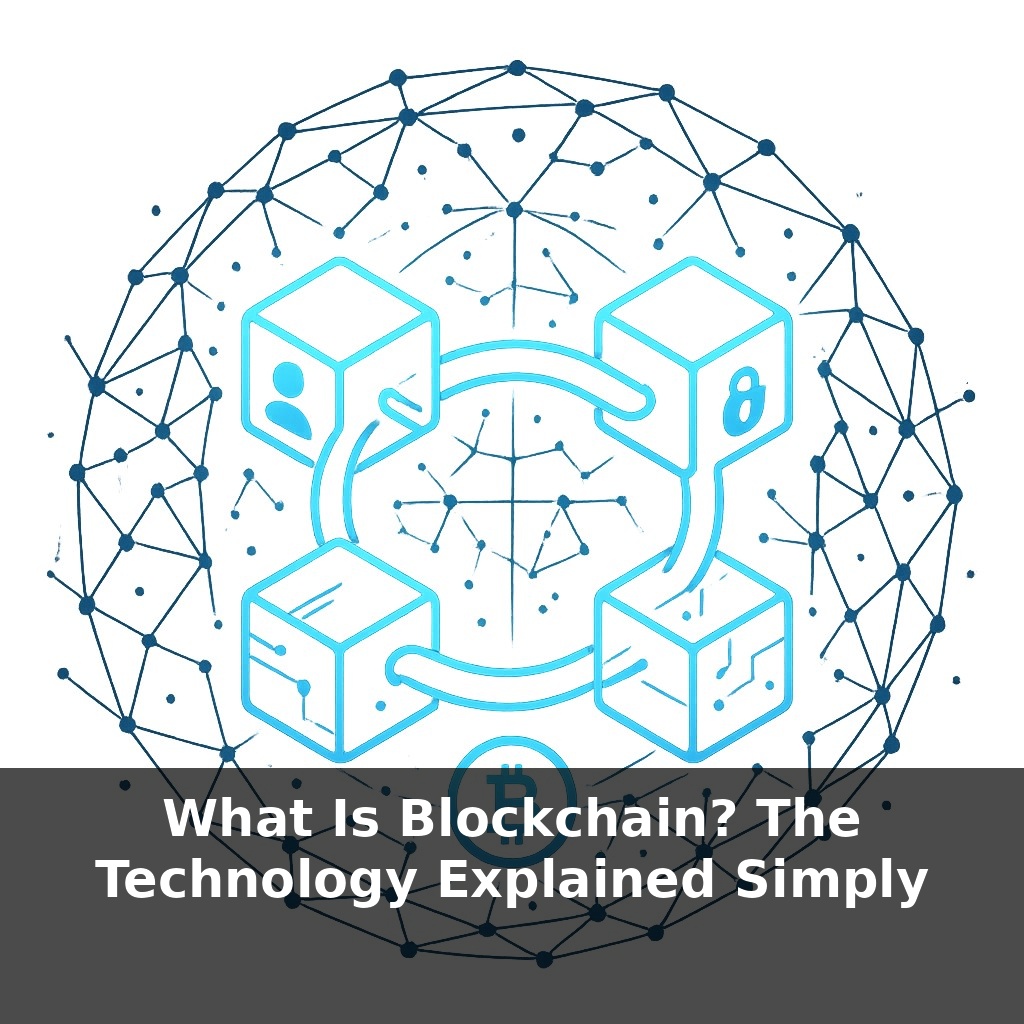
At its core, a blockchain is just a special kind of database. What makes it different is *how* information gets in, *who* can write to it, and *why* everyone trusts what’s already there.
Let’s unpack that by following a single transaction as it travels through a typical public blockchain network.
Step one: broadcast. When you send value—whether that’s a token, a stablecoin, or a piece of tokenized real estate—your transaction is shouted out to a global network of computers called nodes. Each node checks the basics: does the digital signature match your cryptographic keys, do you have enough balance, are you following the protocol’s rules?
Step two: ordering. Valid transactions don’t go straight into the history books. They sit in a waiting room (often called a mempool) until a block producer—on Bitcoin, a miner; on many newer networks, a validator—selects some of them and proposes a new block. This is where block time comes in: on Bitcoin, that selection happens on average every 10 minutes; on Ethereum, roughly every 12 seconds.
Step three: consensus. The network needs to agree that the proposed block follows the rules and builds correctly on previous blocks. Different systems use different “voting mechanisms.” Proof-of-Work spends energy and computing power; Proof-of-Stake uses locked-up capital and economic penalties. Either way, the goal is the same: make it extremely expensive to cheat, and straightforward to verify honest work.
Step four: finality. Once enough blocks have been added on top of yours, the cost of rewriting that part of history becomes impractical. That’s why merchants and exchanges often wait for several “confirmations” before treating a payment as irreversible. Immutable here means “economically infeasible to change,” not magically unchangeable.
This structure has an important side effect: transparency. Every confirmed transaction is visible to anyone running the software or exploring public block explorers. That’s how analytics firms can trace funds in hacks, and how regulators can monitor flows—even though addresses are pseudonyms.
Think of it like a global, append-only ledger that music producers, venues, and streaming platforms all plug into: every royalty split, every play, every payout written once, visible to all, and settled by code rather than by quarterly reconciliations.
Think about the moments when today’s financial “plumbing” obviously creaks: cross‑border payroll that arrives days late, corporate actions that take weeks to reconcile, trade finance deals buried in email threads. These are the seams where blockchains are quietly being tested as neutral coordination layers.
For instance, several global banks are piloting tokenized deposits—digital representations of customer balances that settle instantly on shared ledgers while still sitting inside the regulated banking perimeter. In trade finance, consortia are experimenting with shared records of letters of credit so that exporters, importers, and insurers see the same state without overnight file exchanges. Asset managers are exploring tokenized money‑market funds that can move 24/7 between exchanges, lending platforms, and treasury desks.
Your challenge this week: pick one corner of finance you deal with—payroll, investing, or payments—and map where delays or manual checks still dominate. Then ask: what if the “source of truth” here was shared, programmable, and always on?
In the next decade, blockchains may quietly disappear into the background, the way TCP/IP did for the internet. You might lease a car whose title updates on-chain each time it’s resold, or get a mortgage where repayments, rate changes, and lien releases are enforced by code. Loyalty points, carbon credits, even concert tickets could all settle on shared rails, making today’s fragmented balances feel as outdated as carrying separate wallets for every store.
Over time, you may stop thinking about “blockchain” at all and just notice money, assets, and rights flowing with fewer frictions—like traffic lights quietly keeping a busy city moving. The real shift isn’t just faster payments; it’s markets, contracts, and even identities becoming more programmable, composable, and open to builders you’ve never heard of yet.
Before next week, ask yourself: 1) “If I had to explain how a blockchain block is created and linked to the previous one—step by step—to a 10‑year‑old using only everyday examples (like a shared Google Doc or a public notebook), how would I do it?” 2) “Looking at something I use regularly (payments, loyalty points, digital tickets, supply tracking), which part could realistically benefit from an immutable, shared ledger instead of a private database—and why?” 3) “If I were forced to choose one simple blockchain use case to *actually try* this week (e.g., sending a small crypto transaction, exploring a block explorer, or checking the provenance of a digital asset), which would I pick, and what do I want to notice or learn while doing it?”
From this course
Crypto and Blockchain Explained (Without the Hype)
7 episodesUnlock all episodes
Full access to 7 episodes and everything on OwlUp.
Subscribe — $1.99/monthLess than a coffee ☕ · Cancel anytime