Right now, there are tens of thousands of tradable crypto tokens—and most people couldn’t clearly explain even three of them. You browse an app, see colorful names and price charts racing by. Which ones are money, which are votes, and which are just digital collectibles?
More than 23,000 tokens trade in the wild today, yet they aren’t all trying to do the same job. Some are built to move value across borders in minutes, others to let you steer the direction of a protocol, and others exist mostly as in‑jokes that occasionally turn into billion‑dollar markets. The catch: on a blockchain, they can all look identical at first glance—just tickers and charts.
Under the surface, though, each token class encodes a different set of promises and expectations: Who benefits if this succeeds? Who takes the risk if it fails? What actually backs its value—cash, code, community, or pure speculation?
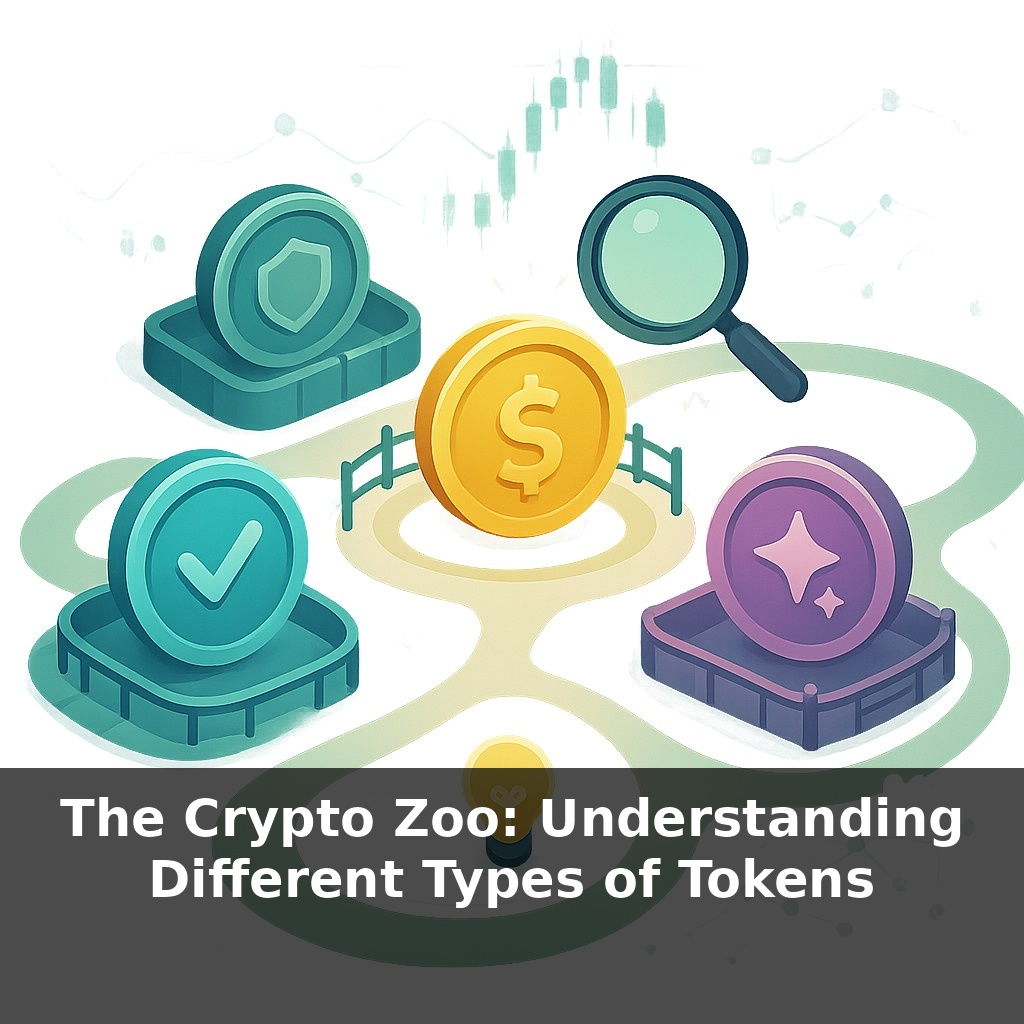
In this episode, you’ll zoom out and sort this apparent chaos into a few clear categories: payment coins, utility and governance tokens, stablecoins, security‑like assets, NFTs, and the louder‑than‑life world of meme and community tokens.
Some of these assets are designed to be boring on purpose—others are engineered to be as volatile and attention‑grabbing as possible. That isn’t an accident; it’s encoded in their incentives and distribution. Which wallets get them first? Are new units constantly issued, burned, or capped forever? Do holders earn fees, yield, or only potential price appreciation? Think of a streaming platform’s catalog: some titles are evergreen staples, some are experimental pilots, others are buzzy limited series. Each token category attracts a different crowd, timeline, and risk profile—and that mix shapes how its market behaves.
Start with the boring‑sounding part: supply. Bitcoin famously caps out at 21 million units. Many newer assets don’t have a hard cap at all, but use rules that steadily issue new units, or remove them (“burning”) under certain conditions. That design choice quietly answers a core question: are you betting on digital scarcity, on growth fueled by ongoing issuance, or on some middle ground where new units reward participation but don’t drown existing holders?
On smart‑contract platforms like Ethereum, those rules live in code templates like ERC‑20. That’s why we can have 600,000+ token contracts on a single network without rewriting everything from scratch. A founder can decide: is this thing transferable by anyone, or only whitelisted addresses? Can it be paused during emergencies? Are there special admin keys that can change parameters later? Each toggle shifts risk between users, creators and regulators.
Demand is just as engineered. Many utility‑style assets try to create “sink” mechanisms: you must spend them for access, fees, or boosts, and some portion gets locked or destroyed. That can offset new issuance and support price—if real usage appears. If it doesn’t, those sinks become cosmetic, and the market eventually notices.
Stable‑oriented designs flip the story: they sacrifice upside to chase predictability. Here, the critical questions are: what backs them—cash, Treasuries, other assets, or volatile collateral in over‑engineered structures? Who can redeem, at what speed, and under what legal jurisdiction? Episodes like Terra’s collapse and temporary de‑pegs have pushed investors to ask: “Stable for whom, and under which stress scenarios?”
Non‑fungible and meme‑driven assets lean heavily on narrative and social proof. Instead of cash flows, people watch: is the community still building? Are developers shipping? Do bigger players visibly accumulate or exit? In liquid markets, stories can change faster than fundamentals, pulling prices with them.
In traditional finance terms, you can think of the crypto “zoo” less as a single species and more as a spectrum from near‑cash to high‑beta venture bets—with code, not contracts, enforcing the rules.
Consider a few concrete cases. Uniswap’s UNI didn’t just appear as a tradeable ticker; its airdrop rewarded early users and instantly scattered ownership across thousands of wallets. That wide base helped bootstrap participation in votes and signaled that power wouldn’t sit solely with insiders. Contrast that with tightly held issues where most of the float lives in team and investor wallets; price may look strong early, but liquidity can vanish fast when unlock schedules hit.
Stable‑oriented assets also differ dramatically in how they’re used. USDC is deeply integrated into fintech rails—think Stripe payouts or neobank deposits—while USDT dominates offshore trading venues as the de facto quote currency. Same “stable” label, very different user bases and risk perceptions.
A useful parallel is the music industry: you have blue‑chip catalogs throwing off predictable royalties, breakout hits driven by social buzz, experimental side projects, and fan club memberships that buy you access more than profit. Crypto markets now show a similar layering of roles, audiences, and time horizons.
As rails mature, the “crypto zoo” could fade into the background the way TCP/IP did for the internet: essential, but invisible. Portfolios might hold tokenized index funds that settle instantly; mortgages could update ownership records the moment you sign. Instead of juggling multiple coins, you’d interact with one smart wallet that routes value under the hood, like a streaming app switching between Wi‑Fi and 5G without asking your permission or explaining the protocol alphabet soup.
In the end, this isn’t about memorizing labels; it’s about reading incentive structures. Each asset sits somewhere between cash, equity, and a concert ticket, and that mix will keep shifting as regulation, UX, and market structure evolve. Your edge isn’t finding the next mascot—it’s learning to ask, with every new ticker you see: “Who pays? Who gains? Who decides?”
Start with this tiny habit: When you open your phone to check crypto prices, quickly say out loud which “animal” each token you own belongs to—utility token, governance token, or security-like token. Then tap on just *one* token and read its project’s “Use Case” or “Utility” section for 30 seconds, looking for how it’s actually meant to be used, not just traded. If you can’t confidently name its type or purpose, tag it mentally as “mystery animal” and promise yourself you won’t add more money to it until you’ve learned one clear fact about how it works.