The Origins of Feudalism: Rise of the Lords
📝 Transcript
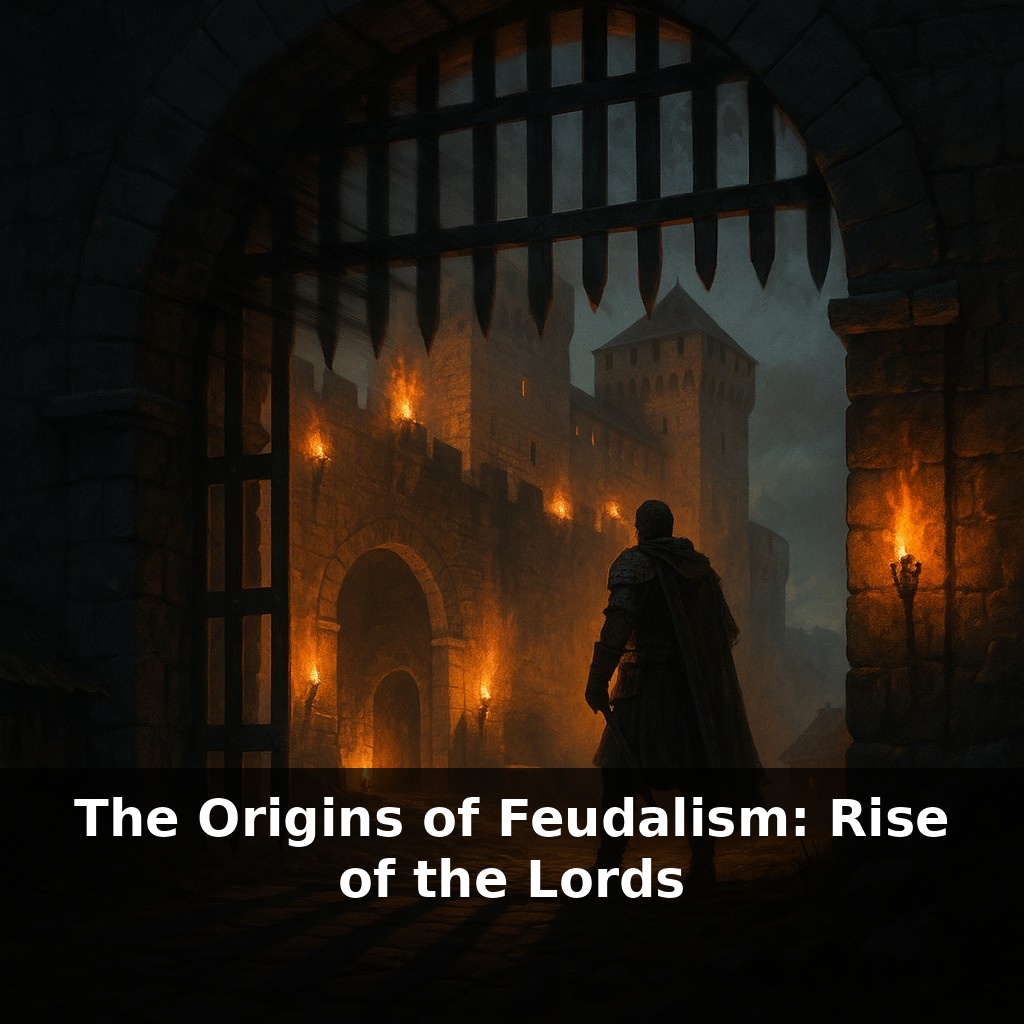
Steel gates slam shut, torches flare, and outside the castle walls the king’s law suddenly means almost nothing. Inside? One local warlord decides who eats, who fights, who lives. How did Europe shift from emperors and armies to thousands of these private little worlds of power?
Those castle walls didn’t rise overnight. Between the ruins of Roman rule and the glitter of “high” medieval chivalry stretched a long, messy experiment in survival. Roads crumbled, tax systems faltered, and distant kings became more rumor than reality. In that vacuum, muscle and land began to matter more than titles and old laws. A mounted fighter with ten loyal men and a defensible hill could suddenly shape the fate of everyone nearby, the way a lone storm front can redirect an entire week’s weather. Bit by bit, these small centers of force linked themselves together through oaths, favors, and carefully measured promises. Not yet the polished hierarchy you see in textbook diagrams—more like a patchwork of bargains, where every pledge of service or protection had to be weighed, remembered, and, when convenient, bent.
But raw muscle wasn’t enough. To last, those new power centers needed rules—however rough. Between the 5th and 10th centuries, as old imperial offices faded, people began stitching together fresh habits of loyalty and landholding. Early fealty oaths, like the mid‑7th‑century Frankish formulas, turned vague trust into spoken, witnessed commitments. At the same time, lords carved territories into manors big enough to feed fighters yet small enough to manage, each one a kind of micro‑economy. By around 1000, thousands of private castles dotted France, making this improvised order visible in stone.
On the ground, the story began with a very practical question: who could actually keep you safe this month, not in theory, but when raiders crossed the river or a rival band blocked the road to market? As old imperial offices thinned out, that answer shifted from distant officials to whoever could field armed riders fastest. Yet violence alone couldn’t fill granaries or settle quarrels over a boundary hedge. So the rising lords started turning raw control into something that looked, at least locally, like an order people could plan their lives around.
A crucial step was turning personal dependence into written and spoken formulas. The early fealty oaths we glimpse in law codes don’t read like grand manifestos; they read like scripts for awkward, high‑stakes meetings. Two men kneel, hands enclosed, words spoken before witnesses. One promises steadiness in battle, in counsel, in everyday obedience. The other promises not affection, but very specific forms of backing: defense in court, maintenance if wounded, a place at his table. Those promises could then be folded into charters, lawsuits, and later memory. If an arrangement soured, both sides could point to who had broken which phrase.
Land parcels—fiefs—made these ties durable. Not just any acreage, but income‑streams: strips of ploughland, a share in a mill, rights to collect tolls at a ford. Granting such a package to a follower solved multiple problems at once. It rewarded service, stationed an armed household in a useful spot, and delegated the headache of everyday management. Over time, these grants stacked into chains: a great magnate might hold from a king, then sub‑grant slices to several fighters, who might themselves have a few dependants hanging on below them.
The manor sat at the base of this structure. Typical estimates for its size vary by region and soil, but the core idea was consistent: concentrate enough resources to support a small military elite and their dependants, while extracting predictable labor and dues from the surrounding cultivators. Some inhabitants were legally unfree; others bargained short‑term leases or clung to older, freer statuses. The mix could shift from valley to valley, which is why historians now resist calling “feudalism” a single, uniform system. Still, the pattern had a clear logic. By tying fighting men to land, and surrounding that land with households who owed work, rent, or both, Europe’s fractured territories slowly crystallized into layered networks of obligation, visible in stone towers, parchment oaths, and the furrows of fields.
The contrast shows most sharply when feudal habits collide with older or outside systems. In regions still touched by Roman municipal traditions—parts of Italy or southern Gaul—town councils, bishops, and written law codes tried to keep decision‑making public and collective. Yet nearby, a single strong rider with a tower and a chapel could quietly draw lawsuits, tolls, and harvest shares into his own hands, case by case. In frontier zones like the Spanish March or along the Elbe, similar patterns appeared for different reasons: rulers granted unusually large estates to lure settlers and fighters into risky landscapes. There, charters might promise forests to clear, mills to build, even market rights to create, not just to control. By 1086 in England, the Domesday survey froze one moment of this long improvisation into numbers: thousands of knights’ fees recorded as if the whole arrangement were tidy and settled, even though on the ground it had grown from centuries of local bargains and shifting leverage.
By 1000, so many private strongholds dotted France that authority looked less like a single beam and more like overlapping spotlights, each with its own rules. That patchwork still haunts modern politics: fragile states often lean on strongmen who trade security for local sway, while platforms hand semi‑autonomous control to powerful users or developers. Your challenge this week: map who actually enforces rules in one online space you use—and who quietly bends them.
Feudal habits also seeped into how people imagined time and duty. Seasons became deadlines for dues, like recurring calendar alerts enforced by weather, not apps. Even prayer mixed with contracts: saints’ relics might be paraded when deals were struck, turning faith into a witness. Power wasn’t only in swords or charters; it lived in shared routines that quietly trained everyone to comply.
Before next week, ask yourself: 1) If I suddenly became a minor landholder in 9th‑century Europe, which “protection-for-service” relationships from the episode (like vassalage or homage) would I actually rely on to keep my family safe, and why? 2) Looking at my job, neighborhood, or online communities today, where do I see “lord–vassal” dynamics hiding in plain sight—who controls resources, who offers protection or stability, and what “services” are expected in return? 3) If I had to redraw my current obligations (debts, subscriptions, work expectations, favors) as a feudal map of fiefs and oaths, which “lord” would I be most uncomfortable admitting I’m bound to, and what small boundary could I set this week to loosen that tie just a bit?
From this course
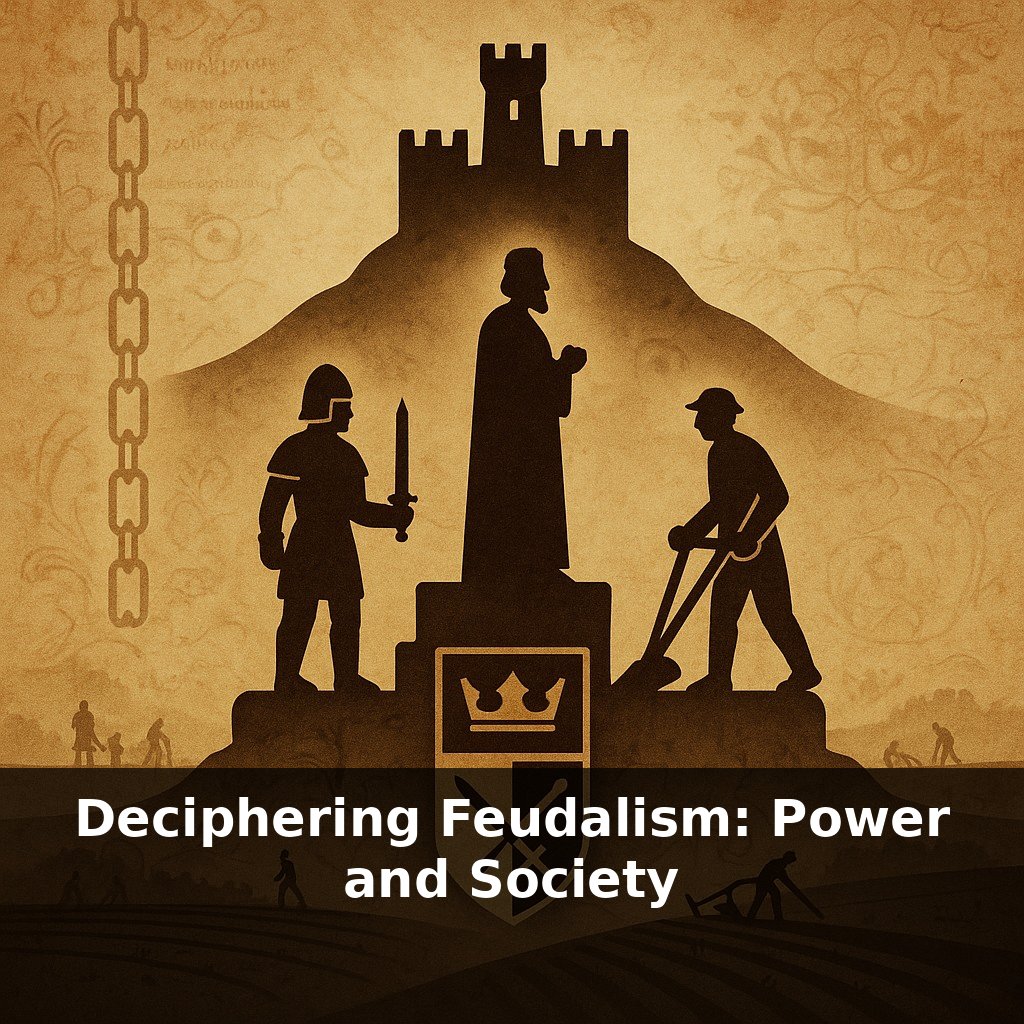
Deciphering Feudalism: Power and Society
5 episodesUnlock all episodes
Full access to 5 episodes and everything on OwlUp.
Subscribe — $1.99/monthLess than a coffee ☕ · Cancel anytime