A single plague wiped out roughly half of Europe—yet within a lifetime, surviving peasants were earning more and demanding rights unthinkable a century earlier. In this episode, we’ll step into that strange moment when disaster cracked medieval power wide open.
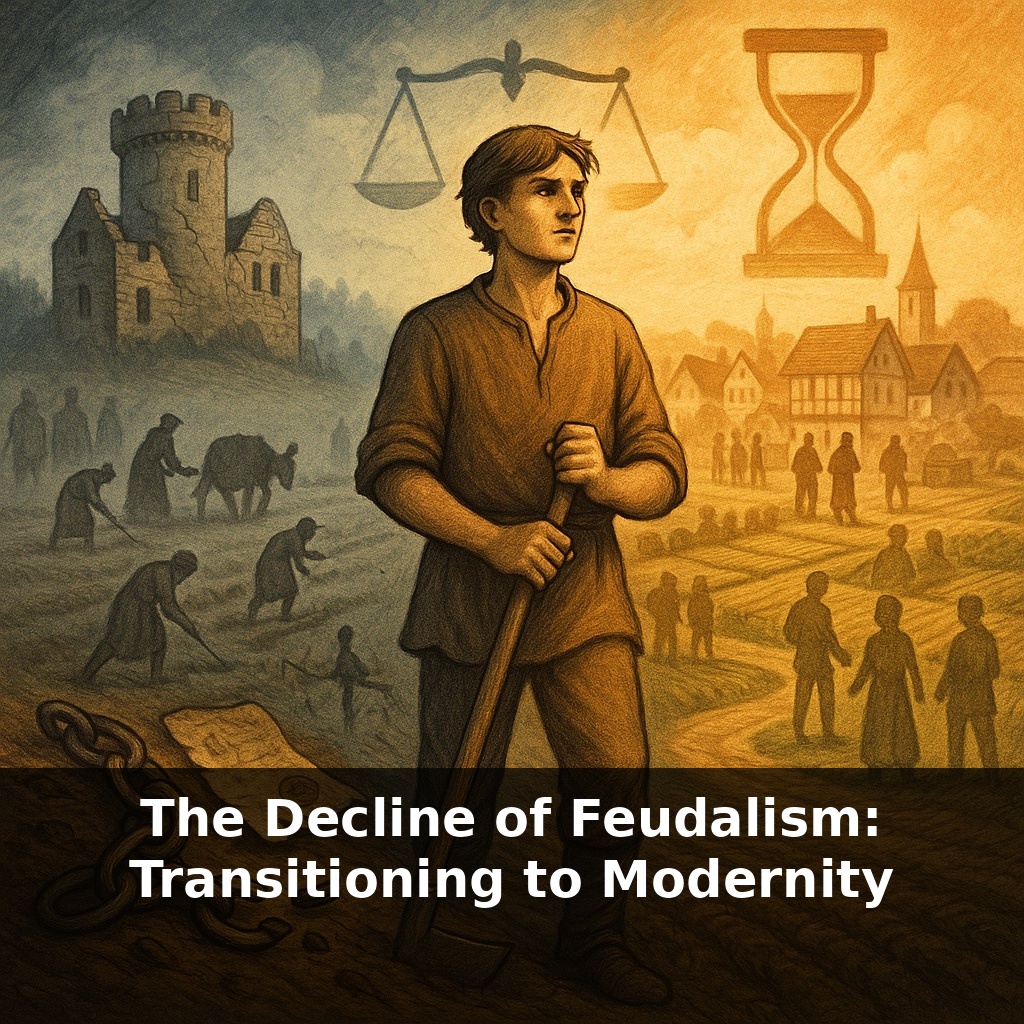
Forty percent of your neighbors vanish, and somehow your bargaining power doubles. That’s essentially what happened to many peasants between the 14th and 15th centuries: fewer hands in the fields meant each surviving worker suddenly mattered more. Lords who once could command obedience now found themselves quietly competing for tenants, offering better terms, looser controls, or even small freedoms to keep land from lying empty. At the same time, coins were circulating more widely than ever, slipping into village markets and toll booths, then flowing upward into royal treasuries. As cash seeped into daily life, old obligations began to look oddly stiff and outdated—like trying to pay for a streaming service with sacks of grain. In this episode, we’ll follow that money trail and watch how it helped shift power from scattered manor houses to increasingly confident kings.
By the 1400s, something even quieter than revolt was reshaping Europe: paperwork. Royal chanceries expanded, scribes multiplied, and records of who owed what began to matter as much as who could swing a sword. Rulers like France’s Charles VII didn’t just collect coins; they systematized them, fixing regular taxes such as the taille to fund permanent armies that answered to the crown, not to scattered nobles. Local lords who once enforced their will face‑to‑face now found instructions arriving from distant capitals, as if the weather itself had shifted from local storms to a single, slow‑moving climate front.
A knight riding across his estate in 1500 might still see fields, villages, and a familiar church spire—yet the social logic beneath that landscape had quietly warped. Instead of a web of mutual promises, relationships were hardening into contracts, receipts, and written claims that could be checked, appealed, or even challenged in court. When more people began to deal in coins instead of customary services, they also started asking new kinds of questions: “How much exactly?” “For how long?” “Who says so—and where is it written?”
Lawyers and notaries suddenly mattered. In many regions, peasant communities pooled money to hire legal experts, suing lords over excessive demands or defending long‑standing usage rights. Manorial courts, once dominated by local custom and memory, increasingly bumped into royal courts and written statutes. The same dispute over a forest path or a mill could now climb a ladder of appeals that ended not in the lord’s hall, but in a royal council chamber.
Military change pushed in the same direction. As hand‑held firearms and artillery became central to warfare, effective force required drill, logistics, and bulk purchases of gunpowder—things that favored centralized command over scattered retinues. A noble who could once turn vassals into a small mounted army now found himself outclassed by a crown‑funded infantry block drilled to act as a unit. In this world, loyalty was increasingly tied to a paymaster’s purse rather than to a personal lord.
Urban centers amplified the shift. Towns and cities, with their guilds and councils, operated on charters and bylaws that normalized thinking in terms of written rules and negotiable privileges. Their merchants lent money to rulers, supplied armies, and bargained for exemptions from older hierarchies. Each successful negotiation chipped away at the assumption that status alone determined obligation.
Like a long, slow change in climate rather than a single storm, these overlapping trends—legal specialization, military reorganization, and urban negotiation—made the older, face‑to‑face world of lord and vassal feel smaller, less decisive. By 1600, many Europeans still lived on the land and honored traditional ranks, but the real levers of power increasingly ran through cash, courts, and centralized commands.
A French village around 1450 might feel this transition most on market day. A peasant arrives not just to sell surplus grain but to negotiate a written lease with a minor clerk sent by a distant landlord. The clerk pulls out a parchment, listing fixed payments and specified rights of access to woods and pasture. No one calls this “ending feudalism,” but the villager now thinks in terms of clauses, not favors. In Florence, a wool merchant extends credit to a minor noble who needs cash to outfit his sons for service with a condottiere company. The contract sets interest, collateral, and deadlines; if unpaid, the case can travel upward through courts that care more about signatures than pedigrees. In Bohemia, a town council debates whether to fund new earthworks and hire gunners. The city’s decision depends less on a lord’s command than on projected toll revenues. Across these scenes, people increasingly plan by counting, recording, and bargaining—treating power like a budget to be allocated rather than a birthright to be obeyed.
Power rarely vanishes; it reroutes. As feudal ties thinned, people began testing how far new channels—courts, contracts, armed companies—could stretch. Rules, once like local weather, started to feel more like climate forecasts: broad patterns set from afar, yet still open to sudden storms of revolt or reform. Today’s shifts in digital authority and data control echo that uncertainty: who writes the rules when old anchors loosen, and how do ordinary people learn to navigate them?
As castles faded into backdrops, parliaments, city councils, and courts became the new arenas of contest. Voices once confined to the manor edge now seeped into petitions, local leagues, even riots. Think of power like a river delta here: no longer one deep channel, but branching streams where savvy groups could redirect the flow, if only briefly.
Before next week, ask yourself: How do I still rely on “feudal-style” security—like staying loyal to a single employer, institution, or authority figure—rather than diversifying my skills and alliances the way townspeople and merchants did as feudalism declined? Where in your life are you accepting a fixed “role” (the modern equivalent of being tied to the land, like a serf) instead of negotiating your own terms the way rising urban guilds and early capitalists did? Looking at one concrete area—your job, your community, or your finances—what would it look like to shift from obligation and inherited expectations to a more negotiated, rights-based relationship, similar to how royal charters and legal reforms gradually replaced purely personal feudal bonds?