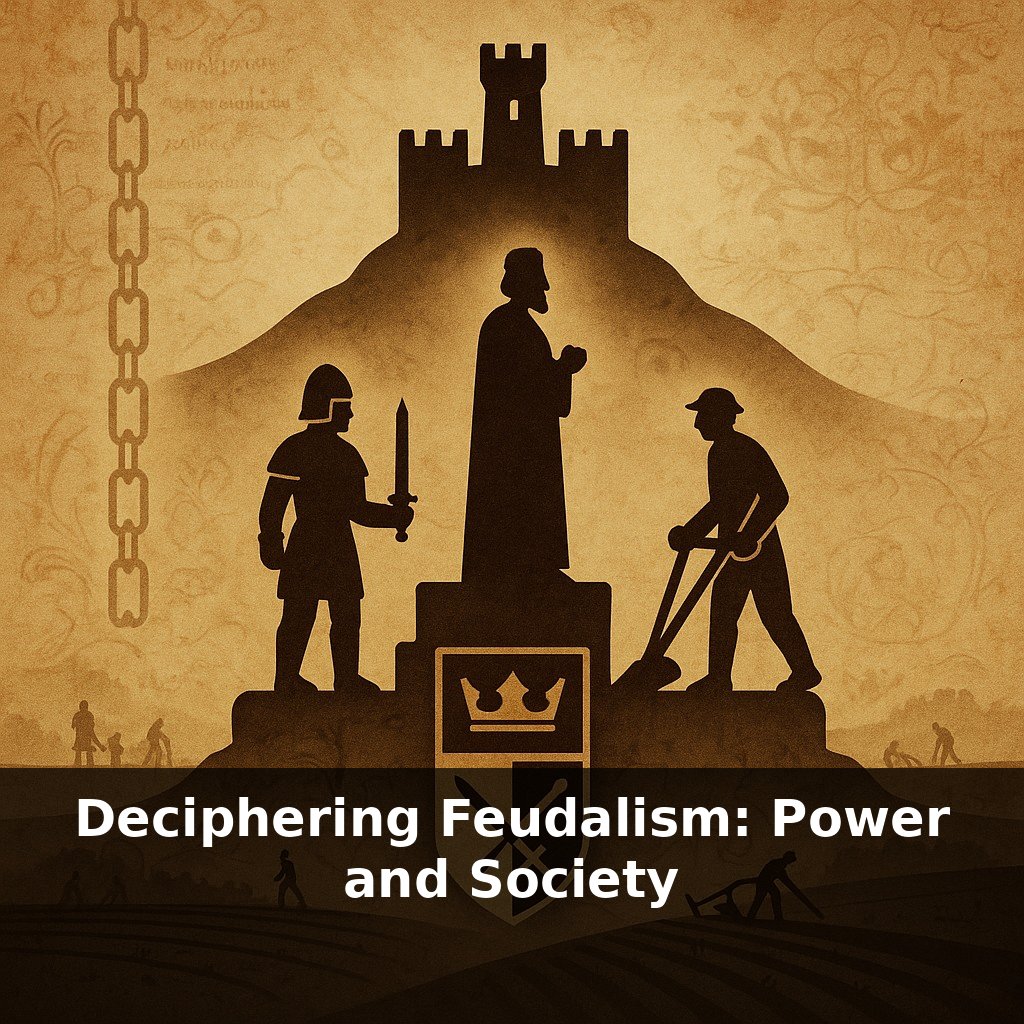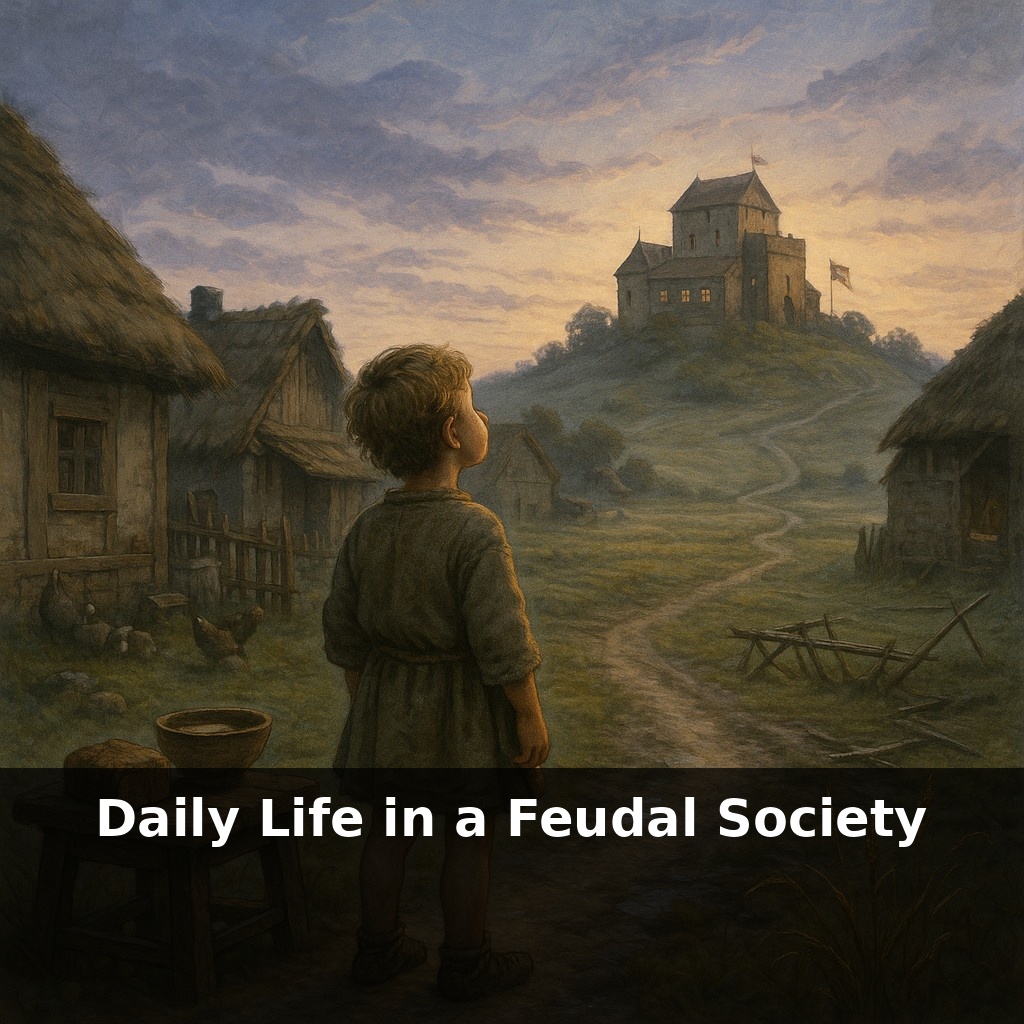
A child wakes before dawn, not to check a phone, but to check the sky—because clouds mean the lord’s fields might be too wet to plow. Here’s the twist: their entire village’s routine, fears, and small joys are all shaped by a contract they never actually signed.
By breakfast, the hierarchy is already on display. That same child might chew coarse rye bread while a few hundred meters away, in the manor hall, the lord’s table receives white wheat loaves, spiced wine, and meat from animals the villagers raised. Status determines not just what you eat, but how often you taste fat, sugar, or warmth from a hearth larger than your entire house. The day divides the community into parallel worlds: peasants lining up at the lord’s oven or mill, knights drilling in a nearby field, stewards tallying rents in a cramped chamber that smells of ink and wax. Yet their lives constantly intersect—at the church door, at the marketplace, at the lord’s court where quarrels over a stray pig or a broken fence can decide whether a family goes hungry when winter bites hardest.
By noon, the pattern of the week is already mapped out in everyone’s head. Monday might mean carting timber to repair the lord’s bridges; Wednesday, a queue at the mill that snakes like a slow river of grain sacks; Sunday, a rare pause where bells, not shouted orders, set the rhythm. Time itself feels different: no wall calendars or digital reminders, just a cycle of saints’ days, harvest deadlines, and tax collections. A bad harvest isn’t just “less income” but a chain reaction—thinner porridge, postponed marriages, more children sent to glean leftover grains at the field edges, hoping the steward looks away.
By afternoon, you can tell who belongs where just by the tools in their hands. A peasant shoulders a heavy iron-tipped plowshare for repair; a knight’s squire rubs oil into chain links; a lady’s maid carries a basket of linen to the stream. Work is identity made visible. You don’t “choose a career” so much as inherit a bundle of tasks tied to your birth, your sex, and the acres—however few—that stand between your family and hunger.
Inside the manor, the lord’s steward spreads wax tablets or parchment rolls and starts turning people into numbers. How many days of labor are still owed this month? Which tenant has defaulted on a rent of eggs or honey? Which knight has provided the agreed number of mounted men? On this desk, in cramped handwriting, the whole locality becomes an account book of obligations—some centuries old, others negotiated after the last war or marriage alliance reshaped who reports to whom.
Justice fits into the same cramped space. Manorial courts meet under a tree or in a draughty hall. The cases sound small—disputes over hedges, accusations of stealing firewood, quarrels over who has the right to graze pigs in the oak woods—but the outcomes are enormous for those involved. A fine is not an inconvenience; it might eat the margin that kept a household from selling its only cow. Yet the court is also where villagers testify, swear oaths, and sometimes win, even against someone richer.
Meanwhile, the local priest moves between worlds, reading Latin letters for the lord one moment and hearing the muttered worries of a widow the next. Clergy can be poor as any peasant or powerful enough to rival nobles, but they share a monopoly on one crucial service: interpreting salvation, sin, and the rules around marriage, inheritance, and burial. In a society with few written contracts, a spoken vow before witnesses and God can decide who counts as legitimate heir to a strip of land.
Not everyone fits the village pattern. Pedlars arrive with news and bright cloth; a wounded veteran might linger as a hired guard; a runaway serf may try to vanish into a growing town, betting that “city air makes free” after a year and a day. These edges of the system—borderlands, roads, and markets—are where feudal certainties blur. Yet by dusk, most people have returned to the roles expected of them, because breaking those expectations risks not just punishment, but the fragile cooperation that keeps the community alive.
By evening, sounds reveal as much as sights. You’d hear the dull knock of hand mills in poorer homes that can’t afford the lord’s mill fees, the sharper ring of a blacksmith finishing repairs for a knight’s stirrup, the chant of monks in a nearby priory marking hours with voices instead of clocks. A single bell could mean “gather for court,” “fire in the village,” or “strangers at the gate,” depending on its pattern; people learned to “read” those signals the way we read notifications today.
Even play reflected rank and risk. Children might toss bones or play at mock battles with sticks, while adults gambled with carved gaming pieces over who owed an evening’s ale. Feast days flipped the usual script: peasants might process in bright hooded cloaks, guilds in towns staged plays, and even the lord joined dances—though under watching eyes that never forgot who bowed first.
Like a weather system, small changes far away—an heirless king, a lost battle, a new trade route—could send pressure waves that eventually bent the course of an ordinary villager’s year, or a knight’s entire career.
Centuries later, we still build systems that quietly script daily choices: platforms set rules for drivers and couriers, rating scores replace oaths, and apps mediate access to work like gates once did to fields. Digital tools now let historians zoom from a single hearth to regional patterns, the way a weather map tracks storms. As climate shifts and rural spaces empty or are repurposed, debates over who must maintain shared “infrastructure” echo old arguments about roads, bridges, and mills.
Feudal days left quiet fossils in our own: surnames like Baker or Knight, property lines that still follow medieval strips, even parish boundaries that map forgotten lordships. Your challenge this week: trace one routine—your commute, your rent, your food—back through each layer of rule and custom, like drilling a core sample through time.