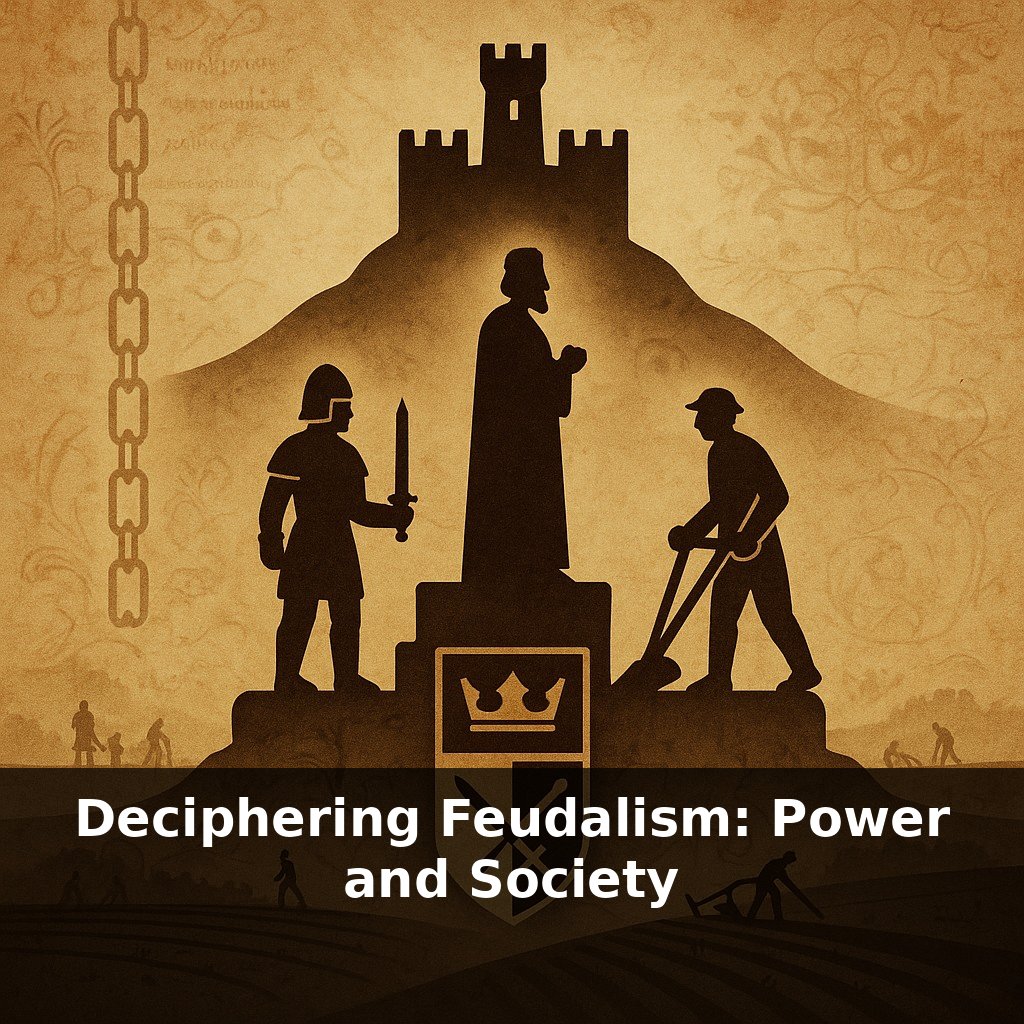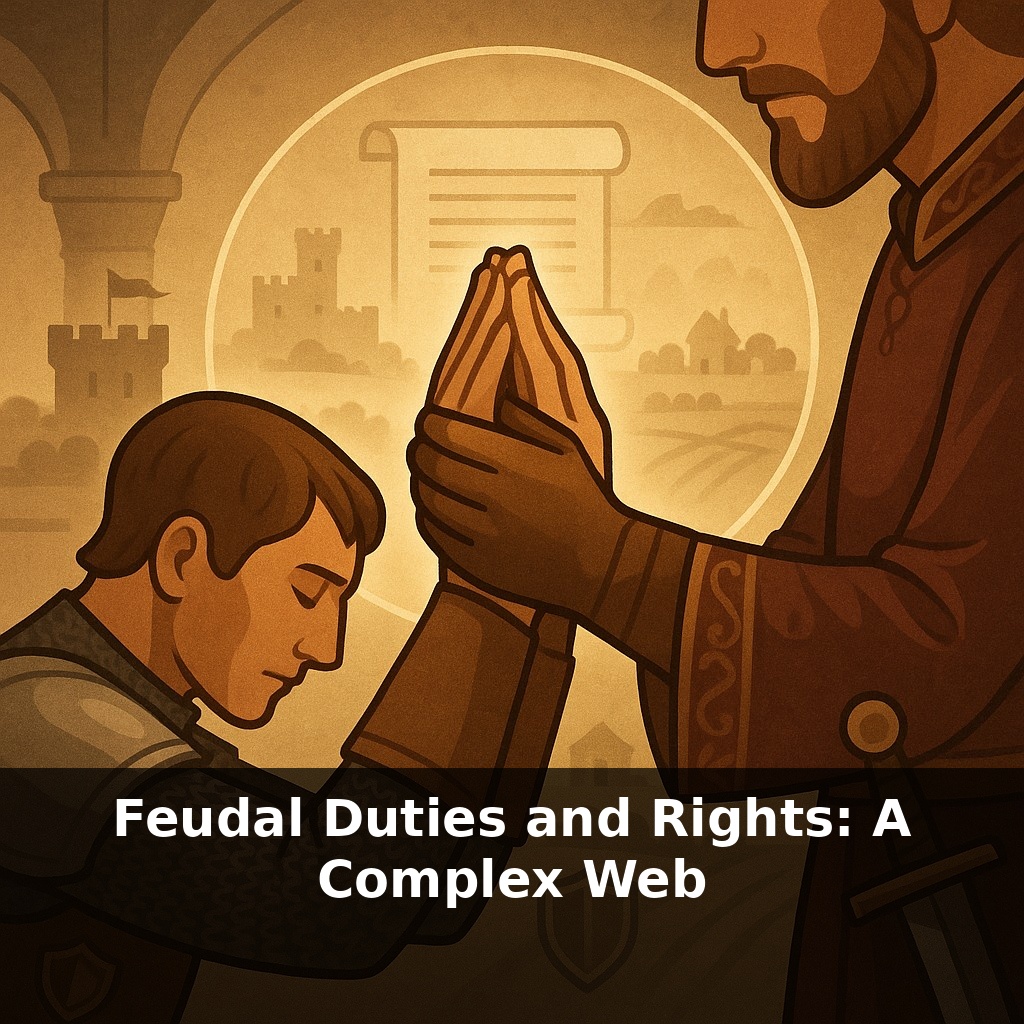
A warrior kneels, bare-headed, placing his hands inside his lord’s—then seals the deal with a kiss. In that brief, awkward moment, power and protection, money and murder, land and loyalty all get tangled. Today, we’re stepping into that handshake and pulling it apart.
Feudal duties weren’t vague “be loyal and fight when I say so” promises; they were itemized expectations, closer to a written playbook than a misty legend. A knight didn’t just show up when he felt like it—he owed a specific quota of days in the saddle, at his own expense, under his lord’s banner. That quota could be stretched, commuted into cash, or strategically ignored, and every tweak shifted the balance in that web of power and protection, money and murder, land and loyalty you’ve already seen.
Think of it like a carefully scheduled sports season: fixed games, clear roles, and penalties if you skip the field. But in this league, the “team owner” was a lord, the “contract” involved real bloodshed, and the scoreboard was your harvest. To understand feudal politics, we have to follow who owed what, to whom, and when—and how those duties could quietly be turned into cash or cleverly evaded.
On paper, those duties formed a neat checklist; in practice, they frayed at the edges. Weather ruined campaigns, heirs were underage, lords went on crusade, kings suddenly needed cash instead of spears. Every disruption forced a renegotiation. Scutage rates could spike in a tense reign, while reliefs might be quietly haggled down by a powerful family. Even rituals like homage weren’t just theater; they were occasions to add clauses, clarify exemptions, or press for favors. What emerged wasn’t a simple pyramid, but a shifting legal climate where each storm left a trace in custom and charter.
A single fief could be sliced into a surprising number of distinct rights, each with its own price tag. One noble might hold the land itself; another might hold the right to collect tolls on a bridge; a monastery might own the mills and ovens. When you “held of” someone, it wasn’t just dirt you were getting, but a bundle of claims and obligations that could be unpacked, traded, and argued over in court.
Those obligations multiplied at each rung. A baron owing his king forty knights might not personally ride with forty retainers; he might break that quota into smaller “fees,” each assigned to lesser men beneath him. They, in turn, could sub‑grant slices of their own land to newcomers, promising a fraction of their service. By the time you reach the bottom, one mounted fighter’s forty days might be assembled from several people each owing only a week.
Because so much turned on these fractions, people kept close count. Charters specify whether the vassal must appear in person, send a substitute, or contribute to castle‑guard instead of campaigning. Some specify distance limits: service only within the kingdom, or not across the sea unless extra pay sweetens the deal. Others carve out seasonal exceptions, so harvest time can’t be swallowed by a royal expedition.
Even counsel—the duty to attend a lord’s court—came with boundaries. Great men might be summoned for the “three great feasts” and for major decisions like making war or marrying off the king’s children, but they could and did argue that minor disputes weren’t worth their time. When kings tried to stretch “counsel” into constant attendance, resistance often followed.
Crucially, vassals didn’t just grumble in private; they could litigate. Manorial and feudal courts heard cases where lords were accused of withholding justice, seizing land without due process, or demanding services beyond what was owed. The record is full of heirs insisting they held for “so much per year and no more,” or that a contested duty was a recent innovation, not ancient custom.
The result resembles a complex weather system more than a static map: overlapping fronts of obligation, local microclimates of custom, and sudden pressure changes when a king pushed too hard or a coalition of nobles pushed back. Written contracts anchored expectations, but the lived reality was constant adjustment at the edges.
A baron in 13th‑century England might juggle obligations the way a modern coach manages players across a long season. He could “bench” a distant tenant by accepting cash instead of personal appearance on campaign, then “field” a closer, more trusted man in his place, all while tracking who was owed what favor in return. One surviving charter records a tenant promising to serve only if the king marched north of a particular river—cross it, and extra payment kicked in. Elsewhere, a widowed noblewoman negotiated to hold her late husband’s lands so long as she financed a single fully equipped knight, shifting expectations for her entire lineage.
Over time, families compiled mental ledgers of favors: a lord who forgave a year’s payment might later expect support in a dispute over hunting rights or jurisdiction in a village court. Monasteries, too, played this game, trading prayers and hospitality for exemptions from certain duties. In royal councils, magnates cited such past concessions as precedents, turning individual deals into broader custom.
Feudal contracts hint at how messy “distributed power” systems really are. When duties shifted from men on horseback to coins on a table, politics didn’t vanish; it changed venue. Today’s DAOs, gig platforms, or open‑source teams face similar storms: code or terms of service try to fix expectations, while real life keeps moving. Your challenge this week: trace one online service you use and map who actually owes what to whom—and when that balance could snap.
In that light, feudalism looks less like a frozen pyramid and more like a living nervous system: signals pulsing along tenuous links, misfires sparking conflict, new pathways forming after every crisis. Follow a single obligation far enough and you’ll find it fork, fade, or flare into revolt—much like a rumor mutating as it races through a crowded marketplace.
Try this experiment: For the next 24 hours, run your life like a tiny feudal manor. Pick one area of your day (for example, your workplace or your household) and clearly assign yourself the role of “lord” for one responsibility (like planning meals) and “vassal” for another (like taking out trash for someone else), spelling out the exact “duties” and “rights” attached to each role. Then, ask one other person to formally “swear homage” to you for a very specific task (e.g., “You handle all dishwashing tonight, and in return I guarantee you uninterrupted study time from 7–9 pm”) and see how that explicit exchange of obligation-for-protection changes their motivation and your sense of responsibility. At the end of the day, notice where the feudal-style clarity of mutual obligations made things smoother—and where it felt rigid or unfair.