The Evolution of Online Connections
📝 Transcript
In the time it took you to open this episode, thousands of new professional connections just formed online—most between people who have never met. One message, one click, and careers quietly change direction. But here’s the twist: the tech, not the people, often makes the first move.
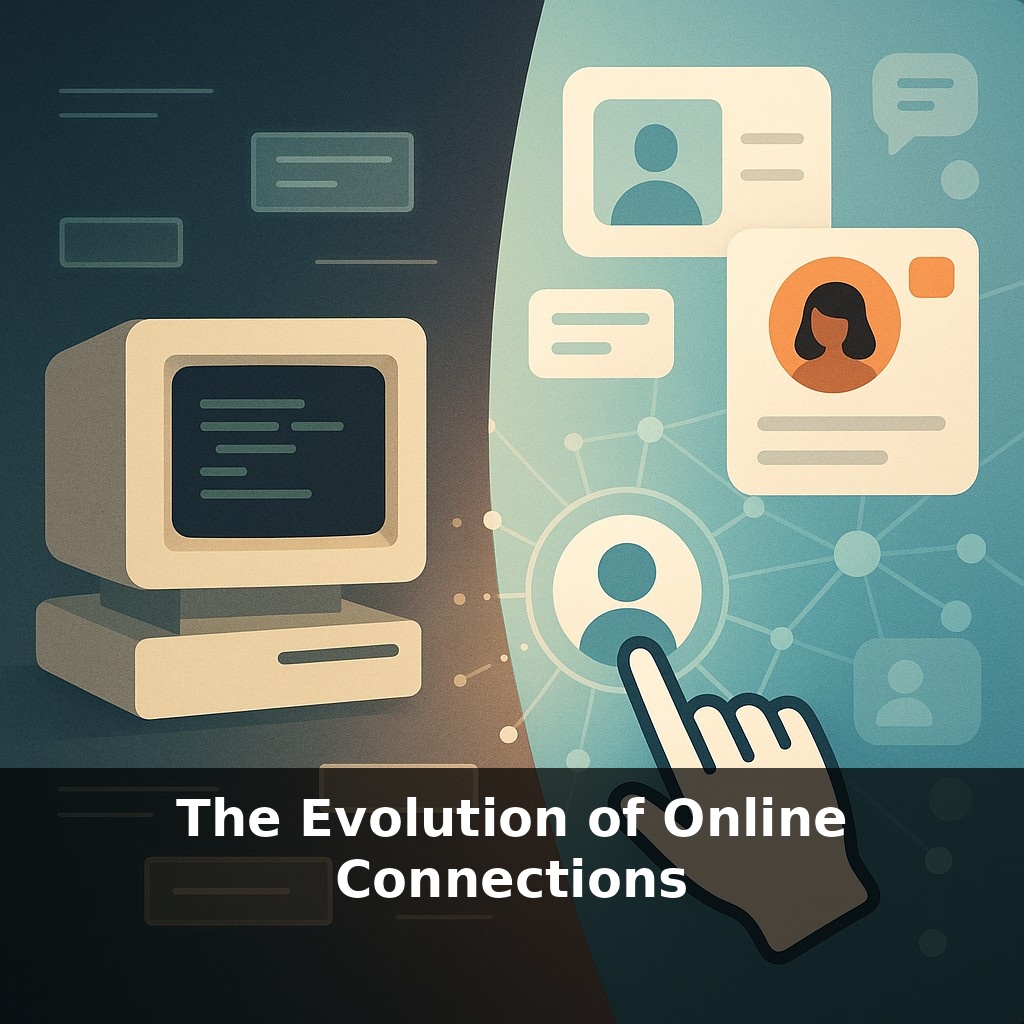
Online networking wasn’t always feeds, notifications, and instant replies. Early on, professionals logged into clunky terminals, typed plain text onto bulletin boards, and waited hours—or days—for a response. There were no profiles, no “People You May Know,” just scattered conversations stitched together by curiosity and patience. What changed wasn’t just speed or polish; it was the invisible systems deciding who sees whom, and when. As TCP/IP standardized how machines talk and the graphical web made pages visual, every layer of infrastructure quietly reshaped how people found one another. Then came broadband, mobile, and social-graph algorithms, stacking new behaviors on old foundations. Today’s AI-curated platforms and real-time tools don’t just carry your messages—they subtly choreograph who shows up in your professional life at all.
By the late ’90s, those scattered bulletin boards had morphed into early experiments in mapping who knows whom. SixDegrees.com even patented the idea of “networking individuals” before most people had home broadband. Then came platforms that treated your work history, skills, and contacts as structured data—fuel for matching engines rather than static résumés. As cloud computing scaled up, systems like LinkedIn’s recommendation engine quietly learned from billions of micro-interactions: who you click, ignore, endorse, message. The result isn’t just more connections—it’s algorithmically sculpted opportunity.
Slack, Zoom, and similar systems pushed networking into a new dimension: not just who you know, but who you work *next to* all day without sharing a physical office. When Slack doubled its daily users in a few years, it didn’t just add more chat windows; it multiplied the number of ambient, lightweight encounters—emoji reactions, side-channel comments, quick huddles—that can quietly evolve into reputation and trust. Zoom’s trillions of meeting minutes did something similar for presence: suddenly, “being in the room” meant your face, tone, and timing were part of the professional record, even if you were thousands of miles away.
This shift matters because the strongest networks tend to be “mixed-media.” Research consistently finds that people who blend digital tools with at least occasional in‑person contact enjoy more resilient, resource-rich ties. A video stand‑up, a Slack thread, and an annual conference meetup stack on each other, forming a layered sense of reliability that no single channel can easily provide.
At the same time, scale and visibility create new vulnerabilities. The 2021 scrape of hundreds of millions of public profiles showed that even “professional” spaces leak data in ways most users never anticipate. Every endorsement, every new role, and every conference badge photo becomes a shard of a mosaic that others—recruiters, competitors, automated systems—can analyze. The trade-off is subtle: greater discoverability also means a more permanent, machine-readable trail of your moves.
Another underappreciated change is how platforms rank *behavior* as heavily as credentials. Respond quickly in a community forum, and you might surface as a “top voice.” Host well-run virtual sessions, and your calendar may start filling through referrals alone. The system is less a static directory and more like a tournament that never stops, rewarding those who consistently show up, contribute, and adapt their style to the norms of each space.
Your challenge this week: pick one platform you already use and run a small experiment. For seven days, shift from passive scrolling to purposeful engagement: comment with substance on posts from people two “steps” away from you (friends-of-friends, colleagues-of-clients), join one live session or channel discussion you’d normally skip, and adjust a single privacy or notification setting you’ve never touched. At the end of the week, review your inbox, invites, and profile views. Don’t just ask “Did I get leads?” Look for quieter signals: who started treating you as part of their ongoing circle, not just a name in their history.
Think of today’s tools less as places you “are” and more as games you’re already playing, whether you meant to or not. On Slack, the “quiet expert” who drops one well-timed answer a week often becomes the unofficial go‑to, even if their title is junior. In a Zoom-heavy culture, the person who consistently summarizes decisions in the chat can become the de facto coordinator, shaping projects far beyond their role. On LinkedIn, it’s not the loudest poster but the one who adds precise, useful context under others’ posts who surfaces in DMs from operators and hiring managers. None of these people necessarily expanded the number of platforms they use; they changed *how* they used the same spaces. Treat each digital environment as having its own “house rules”: what earns trust, what signals noise, what quietly flags you as someone worth pulling into the next room—or the next opportunity.
The next shift may feel less like “logging on” and more like stepping into a layered workspace that follows you. AR headsets could pin live notes to the air in front of you, tagged to whoever’s in the room—physical or remote. Decentralized IDs might travel like a secure passport, letting you reveal only the slices of your history you choose. And AI agents could quietly broker intros, like seasoned producers pairing the right guests before the cameras roll.
You don’t have to predict the whole map; you only need to notice where the paths are shifting under your feet. Try treating each new feature—DM prompts, auto-summaries, smart contact suggestions—as a hypothesis about how you *might* connect next. Keep what sharpens your signal, mute what blurs it, and let your curiosity—not the feed—set your next move.
Start with this tiny habit: When you open a social app you already use, send a 10–second voice note or short DM to one person you only “know” online, reacting to something specific they recently posted (like their new project, meme, or life update). Keep it to one sentence—no pressure to “catch up,” just a quick, real human touchpoint. If they reply, your only job is to send one more genuine sentence back, nothing more.
From this course
Digital Networking: Beyond the Screen
6 episodesUnlock all episodes
Full access to 6 episodes and everything on OwlUp.
Subscribe — $1.99/monthLess than a coffee ☕ · Cancel anytime