Someone hits “reply all” with a single word: “Thanks.” Across your company, productivity stalls for a full minute.
Here’s the twist: online, most rudeness isn’t intentional. It’s invisible. Today, we’re stepping into that invisible space where tone, timing, and tiny choices quietly shape your reputation.
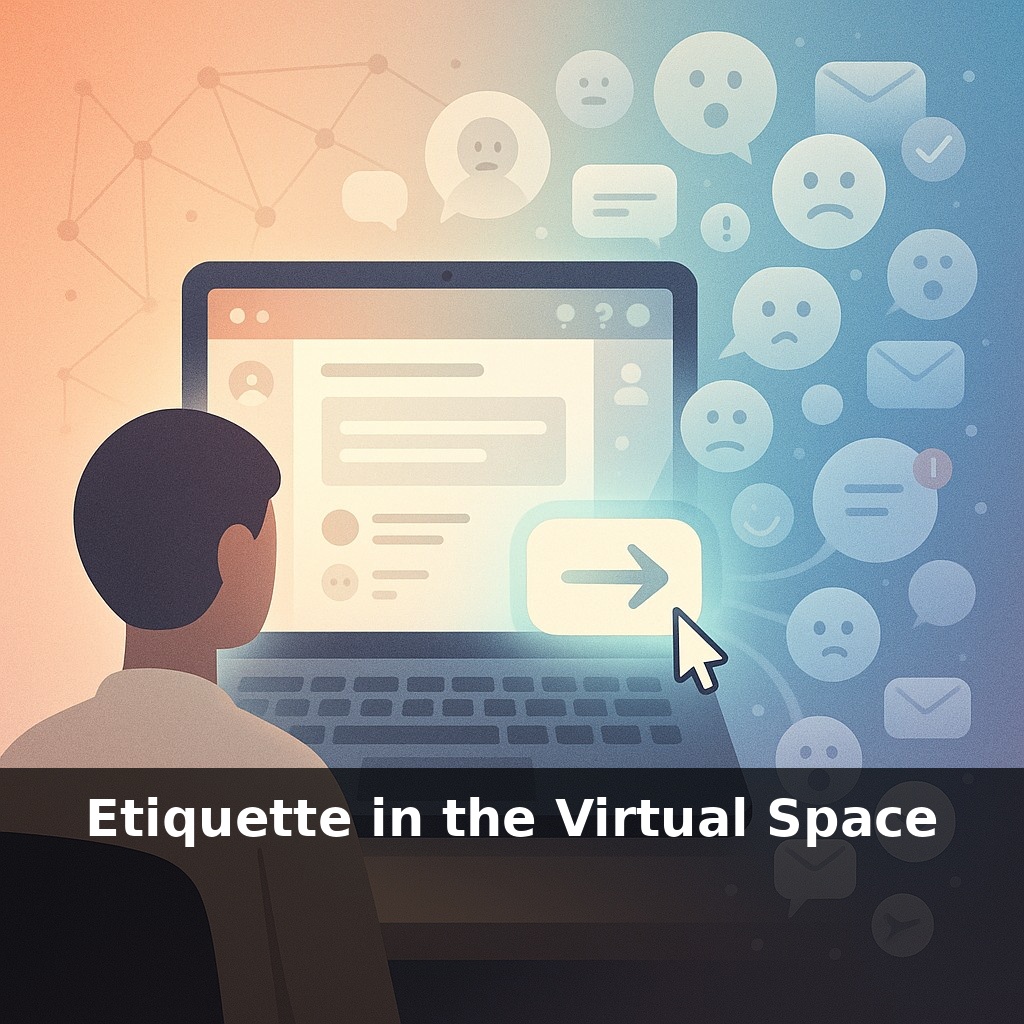
Online, the “rules of the room” don’t come printed on the wall. In a meeting room, people shift in their seats, raise eyebrows, clear throats. In a group chat, all you see is a blinking cursor and a row of initials at the top of the screen. That gap creates a quiet pressure: reply faster, write shorter, assume more.
Here’s where digital etiquette actually lives: in subject lines that tell people what’s expected, in cameras that are on when it matters and off when they’re a distraction, in mics that stay muted until you’re ready to contribute. It’s in how you choose channels—what belongs in email, what needs a call, what should never be a 27-message thread.
Think of it less as “being polite online” and more as “engineering clarity” so your work, not your misfires, gets noticed.
In virtual spaces, people aren’t just reacting to your words; they’re reacting to the *effort* your words seem to represent. A three-word reply sent in 10 seconds reads differently from the same reply sent after an hour, even if the content is identical. Add in skim-reading—remember, most of us read screens faster but absorb less—and tiny gaps start to widen. That’s why context becomes your quiet superpower: naming the purpose of a message, clarifying what you need, and signaling urgency (or lack of it) before people guess and get it wrong. Online, you’re not only communicating; you’re also constantly calibrating expectations.
Here’s where things get interesting: most “bad behavior” online isn’t dramatic; it’s microscopic. It’s the half-read message you answer anyway. The meeting invite with no agenda. The “quick question?” DM that derails someone’s focus block. Each one feels trivial, but together they form a pattern people start to recognize as “how you operate.”
The first layer is *precision*. Because people skim and comprehend less on screens, vague language is more costly. “Can you look at this?” forces the other person to hunt for context. “Can you review slide 5 for accuracy by 3 p.m.?” turns the same interaction into a clean handoff. Notice that nothing is more polite here—it’s just more *specific*, which reads as respect for their time.
Next comes *visibility*. In an office, people see you typing, in a meeting, walking between rooms. Online, silence is ambiguous. Did you miss the message? Are you thinking? Are you ignoring it? Simple micro-signals—“Got this, I’ll respond after my 2 p.m.” or “Reading now, reply in 10”—create a shared mental model of what’s happening. You’re reducing guesswork, not padding the conversation.
Then there’s *load management*. Every ping, @mention, and cc adds cognitive weight. A thoughtful move is to route communication in ways that minimize that weight for others: put decisions where they’re easy to find later, separate information from action, and avoid starting side debates in channels many people must monitor. You’re not only asking, “What do I need to say?” but also, “How hard am I making this to process?”
Inclusivity is the deeper layer. Some people rely on captions, some are in noisy homes, some are working across time zones. Virtual etiquette flexes: summarizing decisions in writing after a call, stating when you’re okay with async replies, making space for those who type slower or speak less. You’re designing an environment where different working styles can still collaborate smoothly.
One way to see all this is like maintaining a well-structured codebase: each message is a function others will have to read, reuse, or debug later. Small decisions now determine whether your team spends its energy building—or untangling.
A marketing lead drops three sentences in the team channel: “Launch moved to Thursday. Deck needs update. Thoughts?” Four people reply at once. Threads cross, decisions blur, and by the end, no one is sure who owns what. Contrast that with a message that slices the noise: “Launch moved to Thu. @Sam: update slides 3–6. @Riya: confirm pricing. Everyone else: react with ✅ if you’re aligned.” Same urgency, radically different experience.
Think of your online behavior like configuring a smart home: tiny settings shape how livable it feels. A status that says “Deep work—replying after 3” prevents pileups. Dropping key files in a dedicated channel, instead of DMs, turns “Where was that doc?” into a two-second search. Using reactions—✅, ❓, 🧵—turns a wall of text into a quick visual scan: done, unclear, needs a separate discussion.
None of this is about being more “formal.” It’s about turning vague social pressure into explicit, shared rules that everyone can play by, even when you’re never in the same room.
As tools evolve, etiquette becomes part UX design, part culture. In VR, you’ll decide not just *what* to say, but *where* to stand, how close your avatar gets, when to “knock” on a virtual office door. AI will quietly draft your chats, flag rushed replies, and suggest softer phrasing—like a spell-check for relationships. Teams that treat these norms as living “house rules,” updated as tools change, will adapt faster than those clinging to old habits.
Treat each message like a small design decision: does it reduce friction or add it? Over a week, those choices stack up like bricks in a path—either smoothing collaboration or scattering tripping hazards. Your challenge this week: tweak one habit per tool you use. Notice which tiny upgrades make work feel less like triage and more like flow.