Your dog’s brain is wired to repeat whatever earns rewards—yet most training still focuses on stopping mistakes. A few seconds of well‑timed praise can change behavior faster than a week of scolding. So why do we keep shouting “no” instead of paying for “yes”?
“Dogs trained with punishment show higher cortisol levels than those trained with rewards.” That’s not a trainer’s opinion—that’s Ziv’s 2017 meta‑analysis in the Journal of Veterinary Behavior. In other words, your training choices literally alter your dog’s stress chemistry.
So instead of asking, “How do I stop my dog from doing X?”, start asking, “What would I like them to do instead—and how can I make that behavior irresistibly rewarding?”
Think of your daily routine: the doorbell rings, your dog explodes toward the hallway; you reach for the leash, they launch into a spin; you sit on the couch, they leap into your lap. Each of these moments is a fork in the road where you can quietly “pay” for a tiny slice of the behavior you’d prefer—feet on the floor, a brief pause, a moment of eye contact—before the chaos takes over.
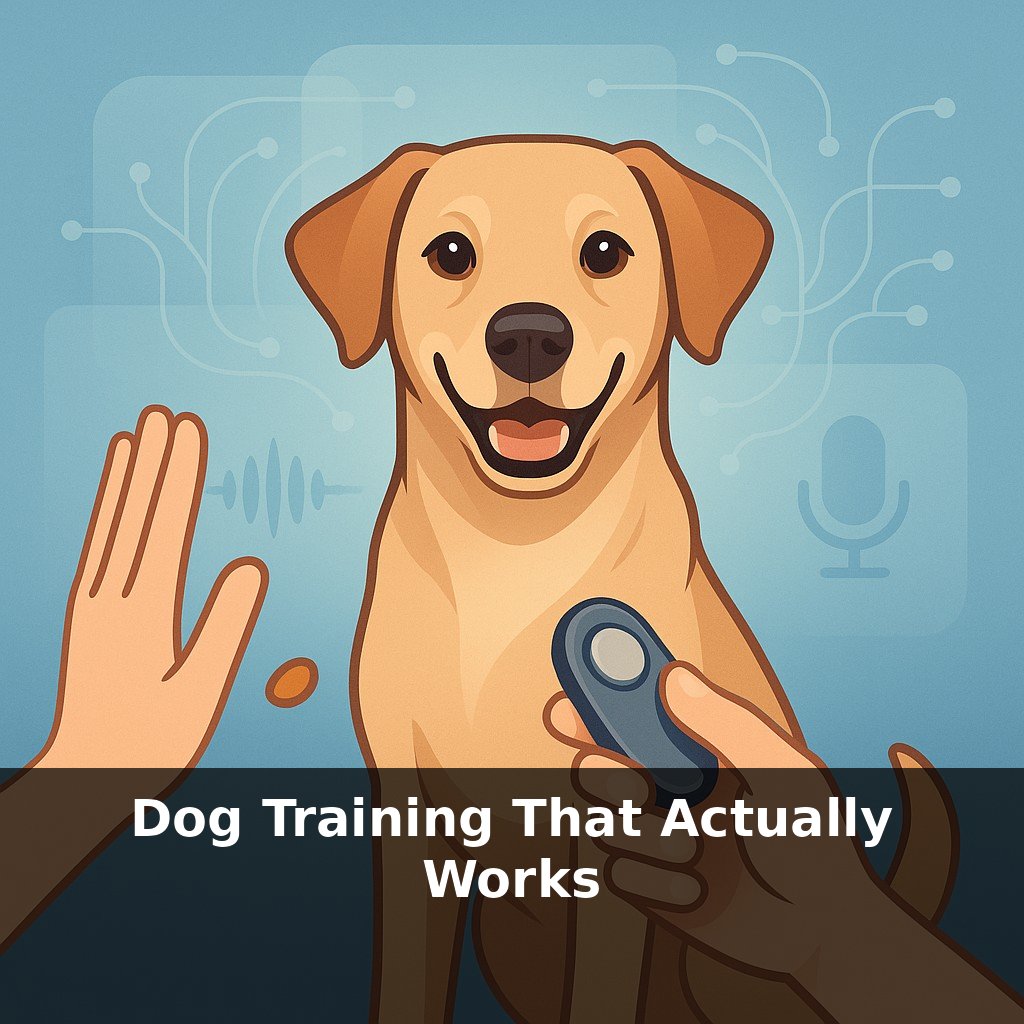
Those tiny “better choices” your dog makes? Sniffing the ground instead of lunging, glancing back at you before bolting after a squirrel, hesitating before jumping on a guest—most pass unnoticed and unpaid. Yet Hiby et al. showed that owners who consistently reward the right choices actually teach new tasks more successfully than those who react to mistakes. The catch is timing: your dog is living in half‑second snapshots. Reinforcement has to land fast and often, or the moment is gone. This is where tools like clickers and planned treat budgets turn everyday chaos into dozens of quick, precise “yes, that” moments.
There’s a second layer to reward-based training that most people miss: *what* you reinforce changes *who* your dog becomes, not just whether they sit on cue.
Reinforce only “obedience” positions and you’ll get a dog who’s careful and quiet around you. Sprinkle in rewards for curiosity—sniffing a new object, checking in after a loud noise, choosing to move away from tension—and you grow a more resilient, optimistic dog. Many behavior pros now talk about “creating optimists”: dogs who expect good things to happen when they try gentler, more thoughtful options.
That’s where “shaping” comes in. Instead of waiting for the full behavior, you mark and reward tiny, early versions: a head turn toward you becomes the seed of a recall; one paw on the mat evolves into a relaxed down‑stay. It feels like sculpting: you’re chipping away at chaos, reinforcing each small movement toward the statue you have in mind.
To make this practical, think in “training grooves” instead of “training sessions.” Short, 30–60 second bursts, woven into what you already do:
- Walking to the door? Pay for a single second of stillness before the handle turns, then let the dog go out as part of the reward. - Pouring coffee? Pay for four paws on the floor instead of counter‑surfing. - Watching TV? Pay for choosing their bed over pacing the room.
You’re not ignoring boundaries; you’re pre‑loading better habits before trouble starts. If jumping on guests is the issue, you manage the greeting (leash, baby gate) *and* heavily reinforce an incompatible behavior like sitting or staying on a mat. The unwanted behavior doesn’t get to “practice,” the alternative gets a rich history of success.
A common worry is, “Won’t my dog just mug me for food?” Only if the rules are fuzzy. Skilled trainers set clear criteria: behavior happens first, then the reward appears from a neutral spot, not the hand being pestered. If the dog dives at your pocket, you calmly pause. When they back off or offer eye contact, *then* you mark and pay.
Done well, positive reinforcement becomes less about “using treats” and more about running tiny behavioral experiments all day: “If I reward *this* micro‑choice, what grows?”
Reward-based training can also zoom in on emotions you want more of, not just behaviors. Think beyond “sit” and “down” to qualities like “brave,” “thoughtful,” or “polite.”
Say your dog hesitates at a metal vet scale. You’re not waiting for a perfect stand; you’re watching for a tiny lean forward, a paw lift, a curious sniff. Mark and reward each micro‑step toward the scale, then toward standing calmly while it beeps. Next visit, their body already “remembers” that exploring the weird platform pays.
Or take leash reactivity. Before the bark ever happens, there’s usually a pattern: spot dog → body stiffens → ears lock on → weight shifts forward. Pick the earliest, smallest piece—maybe the ear flick or the first glance—and pay for turning the head back to you or sniffing the ground instead.
Over time, the dog isn’t just “not barking”; they’re rehearsing scanning, checking in, and choosing softer options whenever the world feels loud.
In a few years, your dog’s “training plan” may look more like a fitness tracker than a notebook. Smart collars already collect heart rate and movement; next‑gen versions could flag moments of tension and ping your phone: “Great recovery—mark that calm look now.” Home hubs might auto‑dispense tiny jackpots for quiet behavior during video calls, tuning criteria the way a music app refines playlists based on what you replay, skip, or add to favorites.
Your challenge this week: turn daily “background” moments into a quiet lab. Pick one quality—braver walks, gentler greetings, calmer evenings—and spend 60 seconds, three times a day, catching tiny moves in that direction. Treat it like tuning an instrument: small, precise adjustments, repeated often, slowly change the whole song of your life together.