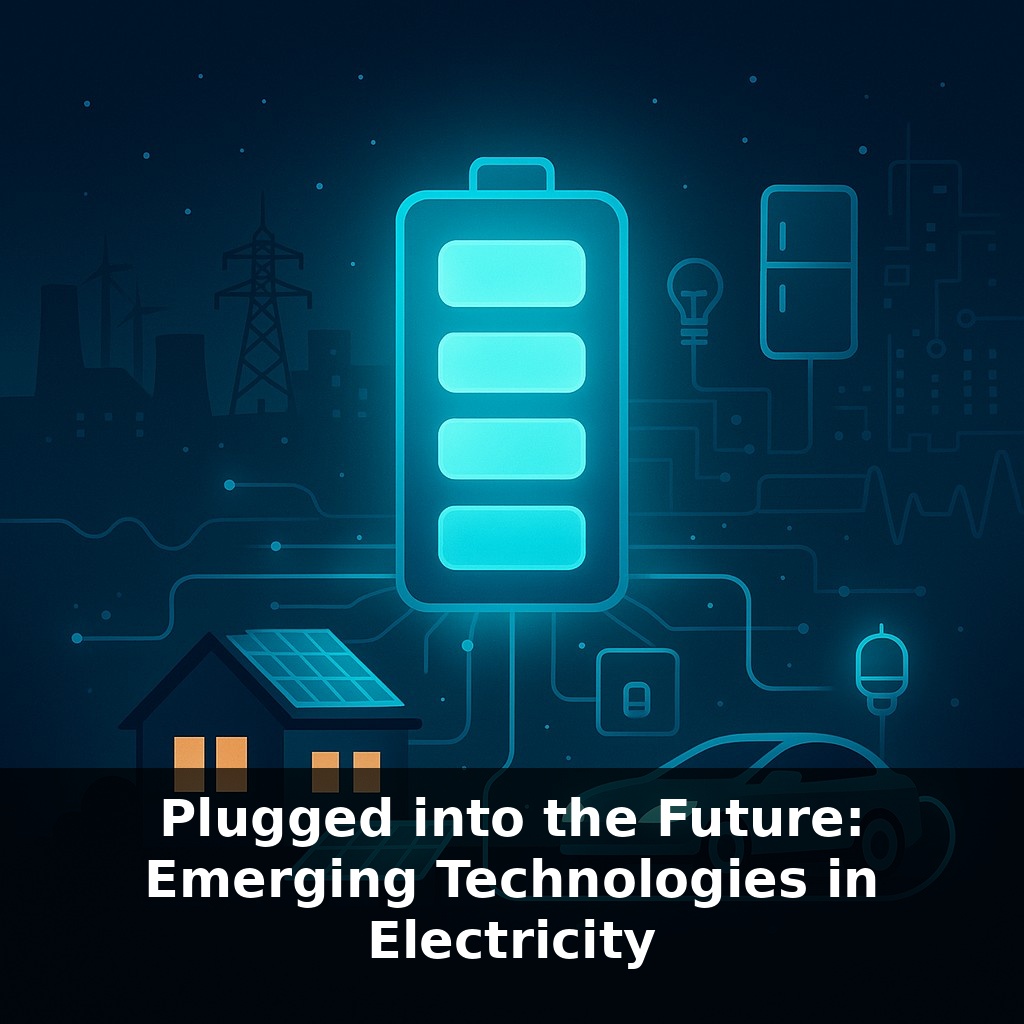
Consider this: a grid battery's reaction to a disturbance is about ten times faster than a power plant's. Imagine that speed applied to your home—your car, rooftop panels, and fridge quietly reshaping who really controls electricity.
Those split‑second reactions are only the start. Behind them sits a wave of new hardware and software quietly rewriting the rules of electricity. Batteries are getting cheaper, but also smarter: power electronics and digital controls now decide, millisecond by millisecond, whether energy should charge a car, cool a freezer, or support the neighborhood during a surge. An electric pickup in your driveway can double as emergency backup, while a row of garage EV chargers might one day stabilize the local feeder line during a heatwave. Regulations, like California’s 2035 zero‑emission sales target, are nudging millions of rolling batteries onto the roads. The real shift isn’t just more gadgets plugged in; it’s that these devices can now listen, talk, and negotiate in real time with the grid and with each other.
An 89 % drop in lithium‑ion prices didn’t just make EVs cheaper; it unlocked a new kind of flexibility in the entire system. Storage is no longer reserved for massive, distant facilities—it’s slipping into basements, office car parks, delivery depots, and fast‑charging hubs. At the same time, software that once only utilities used is moving into consumer devices: thermostats that bid in comfort versus cost, chargers that “follow” cheap and clean hours, factories that briefly pause motors when prices spike. Like a well‑drilled sports team, these pieces can switch roles mid‑game, turning passive loads into active grid contributors.
US$1,200 to US$139 per kilowatt‑hour in just over a decade isn’t a discount; it’s a regime change. When storage gets that cheap, you stop saving electricity only for emergencies and start using it as a routine tool: shifting whole neighborhoods off the evening peak, soaking up midday solar that would otherwise be wasted, or keeping a data center humming through a voltage wobble.
The chemistry is diversifying too. Lithium‑ion still dominates, but sodium‑ion prototypes are dropping lithium entirely, aiming for lower cost and better performance in cold climates. For really long storage—hours edging toward days—companies are stacking iron‑air batteries the size of shipping containers, or pumping water uphill in mines repurposed as gravity batteries. None of these need to replace lithium‑ion everywhere; they’re filling different time slots on the grid’s “bench,” from split‑second response out to multi‑day storms.
On the roads, that same price drop explains why automakers are redesigning platforms around batteries instead of treating them as a bolt‑on component. Flat “skateboard” chassis free up space and make it easier to integrate bidirectional charging. In practice, that means a city bus depot can turn its fleet into a flexible power plant overnight, or a delivery company can charge trucks when wind power is strong and sell a slice of that energy back on still mornings.
Inside buildings, power electronics are quietly blurring the line between “appliance” and “grid asset.” A commercial freezer can pre‑cool before a heatwave, then coast through the most expensive hours. Heat pumps can toggle between drawing from solar, tapping a home battery, or throttling down when the local network is stressed. Even workplace chargers can stagger sessions so fifty cars sip instead of slurp from the same transformer.
Policy and market rules are scrambling to keep up. California’s 2035 target is pushing global design choices: standardized plugs for vehicle‑to‑home power, onboard meters for accurate billing, cybersecurity baked into chargers. In Europe, “network codes” are being rewritten so that small devices can be paid, in real time, for helping keep voltage and frequency inside tight bounds.
Your challenge this week: pick one device you already own that uses electricity—a car, thermostat, washing machine, or laptop—and trace how its behavior might change in a world where it can listen to prices, talk to the grid, and get paid for being flexible. What upgrades, apps, or settings would suddenly matter?
Think about how this shows up in real places. In Japan, some Nissan Leaf owners already use their cars to ride through frequent typhoon‑related outages; the car plugs into a home gateway, and software decides how much energy to keep for driving versus lights and refrigeration. In the U.K., Octopus Energy runs “Smart Charging” programs where EVs automatically time their charging to overnight wind, often cutting costs in half. South Australia leans on a “virtual power plant” of thousands of Tesla Powerwalls in homes, coordinated to support the grid during heat spikes.
This isn’t just for cars and home batteries. Supermarkets are testing refrigerated aisles that subtly cycle cooling to dodge the most expensive 15 minutes of the day, while data centers in Scandinavia sell temporary load reductions back to the system operator. Even ski resorts in the Alps are experimenting with running lifts harder during sunny hours and slower later, tracking local solar output like a mountain goat following patches of fresh grass.
Fast‑forward a few years and “plugged in” starts to feel more like “plugged together.” Neighborhoods could pool rooftop solar and shared batteries, trading surplus like a local farmers’ market for electrons. Off‑grid clinics might lean on rugged storage and tiny microgrids to keep vaccines cold when diesel runs dry. New jobs appear at the seams—installers, software wranglers, recyclers—while standards and cybersecurity act as referees, keeping this busier, cleaner grid fair and safe.
As these pieces connect, ownership starts to shift: you’re not just a bill‑payer, you’re a tiny energy producer, trader, and backup planner. Think less “passive customer,” more “member of a loosely organized orchestra,” choosing when to play louder or softer as new tools, tariffs, and apps quietly tune your role in the wider electric symphony.
Before next week, ask yourself: How could I reduce my household’s peak-time electricity use if time-of-use pricing or real-time pricing became standard—what specific appliances (like my water heater, EV charger, or laundry) could I shift to off-peak hours using a smart plug or timer today? If my utility suddenly offered a program to sell power back to the grid from rooftop solar or a home battery, what would stop me from joining, and what’s one concrete step I could take this week to remove that barrier (e.g., checking my roof’s solar potential on a mapping tool or looking up my utility’s interconnection rules)? Looking at the rise of AI-managed grids and smart meters, what data about my energy use would I be comfortable sharing in exchange for lower bills or better reliability, and where would I personally draw the line?