Only about four in ten adults could handle a surprise bill of around one thousand dollars without borrowing. Now zoom out: not a flat tire, but a long job hunt, a cross‑country move, or caring for a parent. How do you prep for those slow, heavy waves instead of just quick storms?
Roughly 8 in 10 workers who lose a job are re‑employed within a few months—yet the unlucky 1 in 10 can be out for most of a year. That gap is where a standard emergency fund starts to feel thin. In earlier episodes we focused on surviving sharp shocks; now we’re shifting to slower, heavier stresses: career pivots, adding a child, stepping back to care for someone, or riding out a recession without dismantling everything you’ve built.
Think of this as upgrading from “don’t drown this month” to “stay afloat through a full season.” We’ll map the most likely turns your life could take over the next 3–5 years, translate them into real numbers, and then build a layered pool of safety—cash, near‑cash, and conservative investments—that can flex with you instead of forcing panic moves. The goal isn’t perfection; it’s designing a cushion that lets you make thoughtful decisions under pressure.
Now we zoom out from one-off shocks to the chain reactions they can trigger. A layoff might come right before a lease renewal. A new baby could coincide with higher insurance premiums. A downturn might hit just as your industry is restructuring. Instead of asking, “Do I have an emergency fund?” the better question becomes, “How many months of my real life could I keep running if my income or schedule changed dramatically?” A resilience fund starts with that honest look at your lifestyle, then works backward to decide how much, where, and in what order you’d tap it.
Most people set an emergency target as “3–6 months of expenses” and stop there. A resilience fund asks a sharper question: “Three to six months of *what*, exactly—and under which version of my life?”
Start by swapping vague guesses for concrete scenarios. Not disasters—probabilities. Over the next 3–5 years, what’s genuinely plausible for you?
- A voluntary job change with a pay gap - A forced job loss in a weak hiring market - Moving for work or family - Adding a child or paying for elder care - Going back to school or cutting hours
Pick two or three that feel most real. Then, instead of asking, “How much should I have?” ask, “What would my monthly budget look like *inside* that scenario?”
For each one, sketch three lines:
1. **Non‑negotiables:** housing, food, insurance premiums, minimum debt payments, critical meds. 2. **Likely add‑ons:** COBRA or marketplace health coverage, child care, extra commuting, temporary rent overlap, moving storage. 3. **Realistic trims:** restaurants, subscriptions, travel, aggressive loan prepayments.
You’re not aiming for fantasy austerity you’d hate within two weeks. You’re mapping a “could live like this for a year if I had to” version of your life.
Now put duration on it. The median unemployment stretch is about two months—but the upper tail runs close to eight. If your field is cyclical or specialized, plan toward that longer edge. For caregiving or new children, the relevant horizon may be 12–18 months of changed cash flow, not just one.
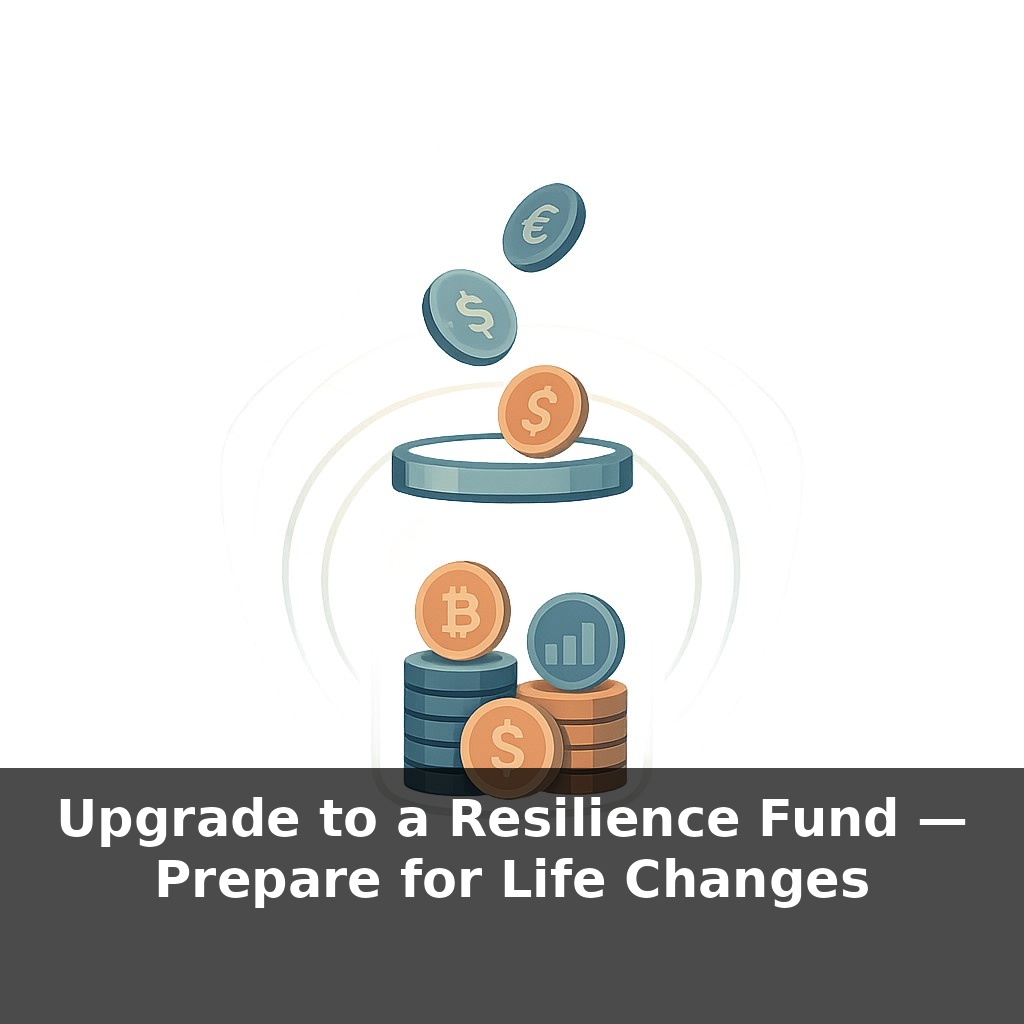
Here’s where the resilience fund diverges from a simple cash pile: you match *tiers* to *timelines*.
- Money you might need within 0–3 months of a change belongs in high‑yield cash, no questions. - Months 4–9 can sit in slightly higher‑yield, low‑volatility vehicles like short‑term Treasuries or a Treasury money market fund. - Anything reserved for month 9+ of a scenario can take modest, very conservative investment risk—knowing you’d only touch it if the transition runs long.
The aim isn’t to maximize returns; it’s to make sure that if life drifts off its current script, your next move is a thoughtful choice, not a forced sale or a high‑interest swipe.
Think of two friends, both earning the same salary. Maya works in tech at a startup; Luis is a tenured teacher. Their resilience funds *should not* look identical. Maya might tilt more to Tier‑2 and Tier‑3, because layoffs in her field can cluster during downturns and rehiring may be slower. Luis, with more stable income, could keep a slimmer Tier‑3 and instead prioritize upcoming known shifts, like a planned sabbatical.
Now layer in timing. Someone eyeing grad school in two years is less worried about sudden loss and more about a scheduled drop in income. Their tiers might be arranged backward: Tier‑3 earmarked for tuition gaps, Tier‑2 for the last semester, Tier‑1 for the first rocky months after graduation.
You can also aim by *function* instead of months: one tier for “housing security,” one for “health & caregiving,” one for “work pivots.” This way, each dollar already has a job *before* life changes.
A resilient setup today quietly shapes your options tomorrow. As work, climate, and tech shocks become less “black swan” and more seasonal storm, households with tiered reserves may be able to treat layoffs or relocations like planned detours instead of collisions. Fin‑tech tools that auto‑route paychecks into different tiers hint at a future where this becomes default. Your role shifts from scrambling in the rain to checking the forecast and choosing which coat to wear.
Your resilience fund is less a finish line and more a living blueprint. As seasons of your life shift—new city, new role, new priorities—those tiers can be redrawn like a map updated after each journey. Treat review days like cleaning out a closet: you keep what still fits, retire what doesn’t, and make space for what’s clearly on its way.
Here’s your challenge this week: Today, log into your bank or budgeting app and set up an automatic transfer of a specific dollar amount (even $25–$50) into a new account you explicitly name “Resilience Fund.” Then, make a short list of the *top three* life changes you’re most likely to face in the next 2–5 years (like job loss, cross-country move, caregiving, or going back to school) and assign each one a dollar target from that same fund. Finally, schedule one calendar reminder for 30 days from now titled “Resilience Fund Check‑In” so you actually revisit and adjust those amounts based on what changed in your life this month.