About a third of Americans would have to scramble or borrow for a few hundred dollars in surprise costs—yet most people who drain their emergency fund once manage to rebuild it in under a year. So why does refilling feel impossible right after a crisis hits your bank account?
“Most of us have more willpower than we think, but less than we ever need,” a behavioral economist once joked. That gap shows up clearly right after a financial crisis: your motivation to rebuild is sky‑high, but competing needs rush in just as fast. Groceries creep up, “I deserve this” purchases feel justified, and before long, the emergency fund refill keeps getting pushed to “next month.”
Yet the data doesn’t agree with that stuck feeling. Bankrate found that among people who actually used their emergency fund, most rebuilt it in under a year, with a median of nine months. The difference isn’t hustle or income alone; it’s structure. Researchers keep seeing the same pattern: people who choose a clear new target, lock in automatic transfers, and funnel windfalls toward that goal refill dramatically faster than those relying on good intentions and leftover cash. In this episode, we’ll turn that pattern into something you can actually run this week.
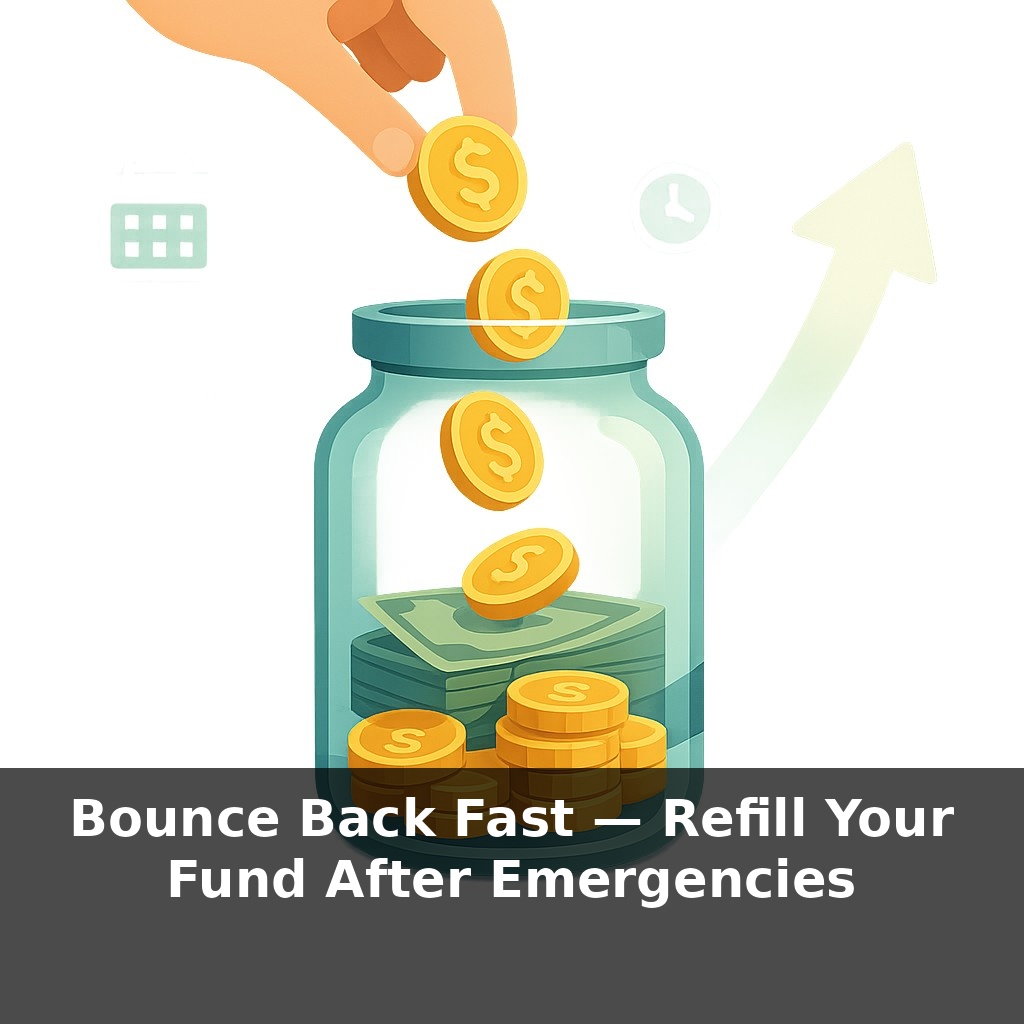
Here’s the twist: rebuilding fast isn’t about “getting back to normal” as soon as possible—it’s about living in “refill mode” on purpose for a short, focused stretch. Think of this phase like a structured rehab program after an injury: temporary limits, targeted exercises, clear milestones. You’re not just cutting back; you’re re‑routing money with intent. That’s where earmarked accounts, renamed goals, and short deadlines help. A “Back to 1 Month by December 1” savings bucket feels different than a vague “savings” line. It becomes a project with a finish line, not a punishment that drags on forever.
Most people start “refill mode” by asking, “How much can I spare?” A better question is, “What’s the fastest *sustainable* pace I can lock in without breaking everything else?” That pace usually comes from three moves working together, not one heroic cut.
First, reset the *target* in practical layers, not as an all‑or‑nothing mountain. Instead of “get back to six months,” you might set: (1) $1,000 buffer, (2) one month of core bills, (3) three months. Give each rung its own date and dollar figure. This is where the behavioral research on naming and earmarking really helps: “Back‑Up Buffer – $1,000 by May 31” feels winnable; “General Savings” does not. After each rung, you can consciously decide whether to loosen the belt or keep sprinting.
Next, make your checking account feel a little “poorer” on purpose. In earlier episodes we talked about pay‑yourself‑first; now you’re temporarily turning that dial up. One way: create a “refill skim.” Every time income hits—paycheck, side gig, even a small refund—a fixed percentage moves out the same day. Some people like round numbers ($50 from every paycheck), others prefer percentages (5–15 % of every inflow). The key is that it’s *predictable*. You’re not debating it every month; you’re just living inside the new, slightly tighter boundary.
Then, add accelerators that don’t rely on daily discipline. Map out likely lump‑sum moments over the next year: tax refund, annual bonus, vacation payout, maybe a big “extra” month if you’re paid biweekly. Before those dollars arrive, pre‑assign a share to the refill—say, 50–80 %—and write that rule down. Future you will be tempted; written rules reduce the in‑the‑moment bargaining.
To make all this less abstract, build a simple timeline. On one page or screen, list: today’s balance, your next three milestones, and which specific inflows will feed each one. You’re turning “I hope to rebuild in nine months” into, “Milestone 1 is funded by my next four paychecks plus most of my tax refund; Milestone 2 is funded by the rest of the refund and three months of side‑gig income.” The more concrete that map, the easier it is to stay in refill mode just long enough—and then *stop* pushing so hard once the reservoir is healthy again.
Think of someone in “refill mode” like a runner returning from an injury. They’re not trying to win a marathon tomorrow; they’re stacking controlled laps.
Take Maya: her account dipped to almost zero after a car repair. She set three rungs—$500, then $1,500, then $4,500—and matched each rung to a specific “lap.” Lap 1: $75 auto‑moves from every Friday paycheck for six weeks. Lap 2: 60 % of her expected tax refund plus a temporary $40 cut from dining out. Lap 3: profits from a three‑month tutoring side gig she treats as “refill only” money.
Notice what she *doesn’t* do: she doesn’t gut every pleasure category indefinitely. She time‑boxes changes: “until I hit $1,500, I’m capping takeout at $80 and skipping new clothes.” When she reaches that rung, she restores one small freedom and reassigns effort elsewhere.
Another twist: people who share their target and date with one trusted friend often stick to their own rules more. It’s less about pressure, more about having a witness to the plan you chose.
In a few years, “refill mode” may run quietly in the background, like an immune system responding to a cut. Your bank app could nudge you: “Your disaster‑relief zone just dipped; want to shift 3 % of next month’s spending to recovery?” Employers might auto‑route small slices of overtime or surge pay into a refill bucket unless you opt out. As climate shocks and job volatility rise, the real skill won’t be just saving once, but rehearsing this recovery cycle until it feels routine, not reactive.
Your challenge this week: treat your next “extra” dollar like a lab test. When any unexpected money appears—rebate, gift, cash from selling something—send the first slice to your fund *before* you decide on anything else. Notice how quickly small, early moves stack up, the way the first few brushstrokes suddenly reveal the shape of a painting.