A lie on social media can race across the world long before a careful correction gets its shoes on. You’re scrolling, half-distracted, when a shocking headline pops up—friends are sharing it, arguing about it. In that moment, whose version of reality are you stepping into?
That split second when you pause on a post—before you like, share, or rage-comment—is where the real battle starts. Not on a debate stage, not in parliament, but between your thumb and your timeline. Because today, misinformation isn’t just shaping opinions; it’s redrawing the social map of entire countries.
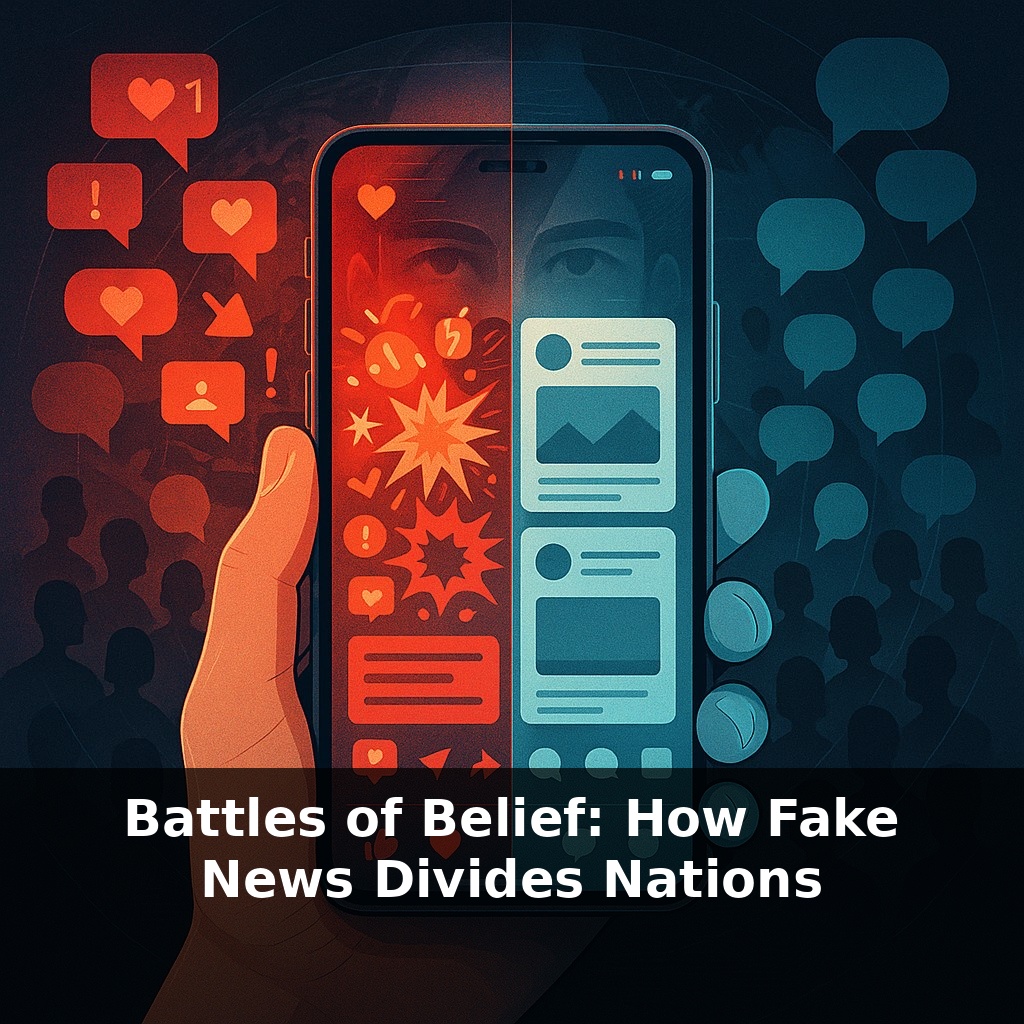
Friends quietly mute each other. Families create “no politics” zones at dinner. Neighborhoods and nations fracture into camps that read different sources, trust different leaders, and even mourn different tragedies. It’s less like a single big argument and more like traffic slowly rerouting into separate lanes that never meet again.
And in the background, recommendation systems keep nudging us—one more clip, one more post, one more nudge toward a crowd that “thinks like you.” The question is: how much of that crowd did you actually choose?
Now add one more layer: those posts aren’t just random noise. They’re backed by money, strategy, and sometimes entire industries. Political consultancies test which phrases make you angriest. Troll farms schedule posts to hijack breaking news. State-backed outlets quietly boost divisive stories in foreign languages. Even ordinary influencers can become unwitting amplifiers, chasing engagement without checking sources. Meanwhile, traditional referees—journalists, teachers, community leaders—are struggling to keep up, because the “news cycle” is now measured in minutes, not days.
Here’s what makes this moment so volatile: the platforms carrying our arguments aren’t neutral streets; they’re more like custom-built arenas where outrage sells the most tickets.
Start with speed and scale. One study of millions of tweets found that false stories were about 70% more likely to be reshared than true ones—and not just by bots, but by people. Why? Because the most viral posts tend to be short, emotional, and surprising. Nuance rarely fits in a headline, and corrections almost never feel as exciting as the initial shock.
Now add volume. In just three months of 2022, one major platform reported removing over a billion fake accounts. That’s not a few bad actors—it’s an industrial level of noise. In that noise, a small but well-crafted lie can drown out a carefully verified report, especially when it’s wrapped in moral outrage or fear.
This doesn’t just confuse individuals; it reshapes the incentives for everyone in the information chain. Politicians see which posts juice their engagement and lean harder into polarizing claims. Small websites learn that misleading thumbnails outperform sober analysis. Even some partisan media outlets drift toward the most divisive angles, because calm accuracy struggles to compete with weaponized drama.
The result is a kind of informational segregation. If your feed mostly matches your existing views, you’re more likely to see “your side” at its best and “the other side” at its worst—cherry-picked scandals, extreme quotes, out-of-context clips. Over time, disagreement stops feeling like, “We see the same world differently,” and starts feeling like, “We don’t even live in the same world.”
You can already see where this leads. Trust in courts, elections, and public health officials becomes optional, something people extend only when outcomes favor “their” tribe. In some countries, rumors spreading through encrypted chats have helped ignite real-world violence—mobs mobilized by messages that no one paused to verify.
Like software vulnerabilities that allow a small exploit to crash an entire system, these weaknesses in how we share and reward information can scale individual misjudgments into national crises. The architecture of attention has become a strategic battleground, whether we notice it or not.
A few concrete stories show how this plays out. In one U.S. election cycle, a fabricated story about a candidate running a secret criminal ring from a restaurant didn’t just trend; it ended with a man walking in with a gun, convinced he was rescuing victims. In India, viral messages on a private messaging app turned vague neighborhood suspicion into organized mob violence, costing lives before officials could even trace where the claims began. During the pandemic, coordinated false claims about cures and conspiracies didn’t just “spark debate”—they pushed some people away from vaccines, changing infection curves in entire regions.
Think of it less as “some people believe weird things” and more as rival blueprints for how society should respond to danger. One blueprint says “stay home,” another says “the danger is fake,” and a third says “the danger was manufactured by your enemies.” When each group trusts only its own blueprint, compromise starts to look like betrayal.
Elections become less like choosing a direction together and more like dueling multiplayer games, each with its own rules, scoreboards, and “final bosses.” As AI tools make forged voices, faces, and documents cheaper to produce, it will get harder to say which game is even real. Some countries are already testing defenses: labeling synthetic media, audit trails for campaign ads, and “circuit breakers” that slow viral claims during crises. The risk is that these emerge too slowly, or only for some languages and regions. That would leave entire populations effectively unshielded, turning them into soft targets in the next wave of information warfare.
So the next frontier isn’t just better fact‑checks; it’s rebuilding habits and spaces where disagreement doesn’t mean exile. Think of it like redesigning a stadium so rival fans can actually see the same scoreboard. That means transparent platforms, resilient local media, and citizens trained less as spectators and more as co‑referees of public truth.
Here’s your challenge this week: Pick one polarizing news story you’ve seen about “culture wars” or elections and trace it back to its original source by checking at least three things: who published it first, what date it appeared, and whether an independent fact-checking site (like Snopes or PolitiFact) has covered it. Then, screenshot the post and send a short voice note or message to two friends explaining what you found—without shaming them if they shared it. Finally, unfollow or mute at least three accounts that regularly share outrage-driven or obviously sensational political content, and replace them with three sources that show opposing viewpoints.