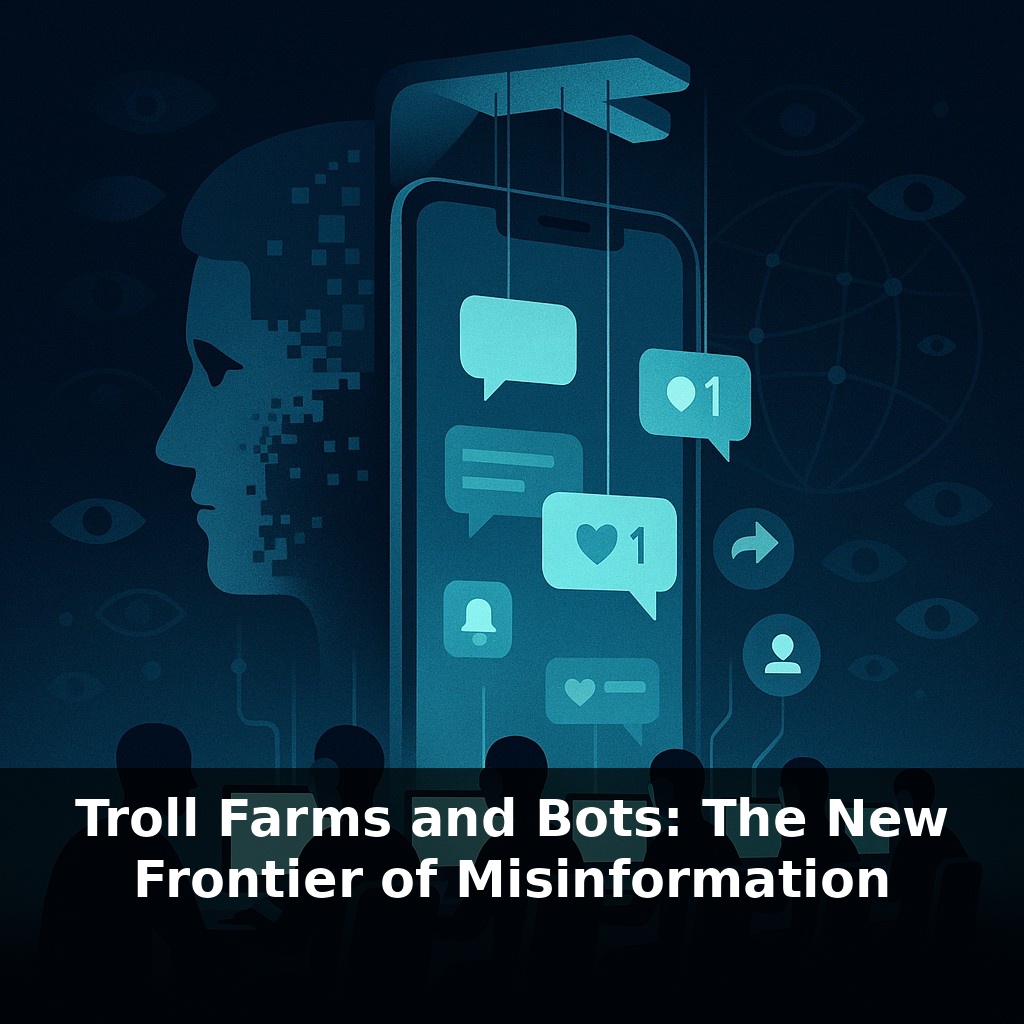
Some of the loudest “voices” on your social feeds today may not belong to humans at all. A tiny team in a rented office can now steer arguments in your country, your town, even your group chat—without you noticing anything except that everyone seems suddenly, dangerously certain.
In many countries, these operations now sit uncomfortably close to official power. Political campaigns quietly hire “digital agencies” that promise trend manipulation instead of TV ads. Intelligence services fund covert influence units the way they once funded radio stations or newspapers. PR firms bundle fake grassroots support into their marketing decks right alongside billboards and press releases. And because so much of this is outsourced or plausibly deniable, it’s hard to know where a government ends and a contractor or “patriotic volunteer” network begins. The result isn’t just noisier comment sections; it’s an information environment where public opinion can be manufactured, tested, and tweaked in real time—then fed back into strategies that increasingly treat citizens less like voters and more like data points to be optimized.
In this new ecosystem, troll farms and botnets are less a glitch in social media than a built-in feature of how attention is captured and sold. Operators study which words, images, and grievances travel furthest, then design posts like click‑optimized ads—not to sell sneakers, but to sell a feeling: outrage, fear, smug certainty. Platforms reward whatever keeps us scrolling, so coordinated campaigns test dozens of emotional “hooks” at once and rapidly scale up the ones that spike engagement, much like high-frequency traders probing markets for tiny price movements they can exploit.
Forty percent of COVID‑19 tweets in early 2020 may have come from bots, according to one widely cited study—and most people scrolling those timelines had no idea. That gap between what you think you’re seeing (“lots of different people talking”) and what you’re actually seeing (a handful of operators plus automation) is where this new kind of power lives.
At the ground level, a modern operation looks strangely ordinary. It starts with lists: target countries, wedge issues, influential accounts to imitate or attack. Operators scrape hashtags, comments, and news headlines to see which themes already have emotional charge. Then they program bots and paid accounts to enter exactly those conversations, not as obvious outsiders, but as “locals” echoing what seems plausible for that community: a nurse profile in a health group, a parent in a school forum, a day trader on finance Twitter.
These actors rarely invent a lie from nothing. They remix. A half‑true headline becomes a meme; a real side‑effect report gets exaggerated into a conspiracy thread; an old protest photo is relabeled as today’s “breaking” unrest. Each asset is tested in small bursts. If a post gets traction, automation kicks in: more bots retweet, more sock‑puppet accounts reply, more look‑alike pages cross‑share it into new groups.
Because platforms lean heavily on engagement metrics, this coordinated burst looks to the system like organic excitement. Trending lists, recommendation feeds, and search suggestions begin to tilt toward the seeded story. Human users then react to what seems popular and urgent, adding genuine emotion and personal anecdotes. Soon it’s hard to separate the planted signal from the real anger or fear it has awakened.
Think of a troll farm plus botnet like an orchestra where a few conductors cue dozens of musicians who all hit the same note together, so the algorithm “hears” a hit song and turns up the volume.
The same methods now reach beyond politics. Stock‑promotion rings hype obscure companies, then dump shares on the wave they manufactured. Celebrity feuds and brand “boycotts” are nudged into trending territory, then monetized through clicks and merch. By the time fake accounts are removed—billions each quarter—the narratives they boosted have already sunk into search results, screenshots, and memories.
A good way to spot this kind of manipulation is to watch for sudden, synchronized “surges” that don’t quite match your offline reality. A local zoning dispute, for instance, might quietly simmer for months, then overnight your feeds fill with brand‑new accounts posting identical talking points, dramatic before‑and‑after photos, and links to the same obscure blog. Neighbours aren’t mentioning it, local papers barely have a story, yet online it feels like a citywide uprising.
Something similar shows up in culture wars around movies, games, or athletes. A film no one in your circle has seen is abruptly “the most hated of the year,” with long threads recycling the same screenshots and phrases, often in awkward, copy‑paste language. Later, box‑office numbers or audience surveys reveal a more mixed, even bored, response. That gap between online frenzy and lived experience is a practical tell: you’re not just seeing conversation; you’re seeing an engineered stress‑test on what people can be pushed to feel and share.
Bot swarms won’t stay confined to politics. As AI agents learn your habits and moods, they’ll pitch risky loans, fringe treatments, or extremist ideas with the same casual tone as a friend’s DM. Synthetic influencers could “grow up” with you across platforms, adjusting their persona to your life events. Meanwhile, companies and governments may quietly run their own swarms for reputation defense, so future outrage storms could be bots arguing with bots while humans watch from the sidelines.
Your challenge this week: each time a topic suddenly dominates your feed, pause and treat it like a noisy stock tip. Ask: who benefits if I care about this right now? Check whether the same phrases, images, or links repeat like a copied homework assignment. Notice not just what’s loud, but what quietly disappears when the surge fades.