About half of people, when asked to describe their life story, accidentally predict their future without realising it. A casual choice, a throwaway job, a random friendship—later, they show up as a pattern. The mystery is: which patterns are you quietly repeating?
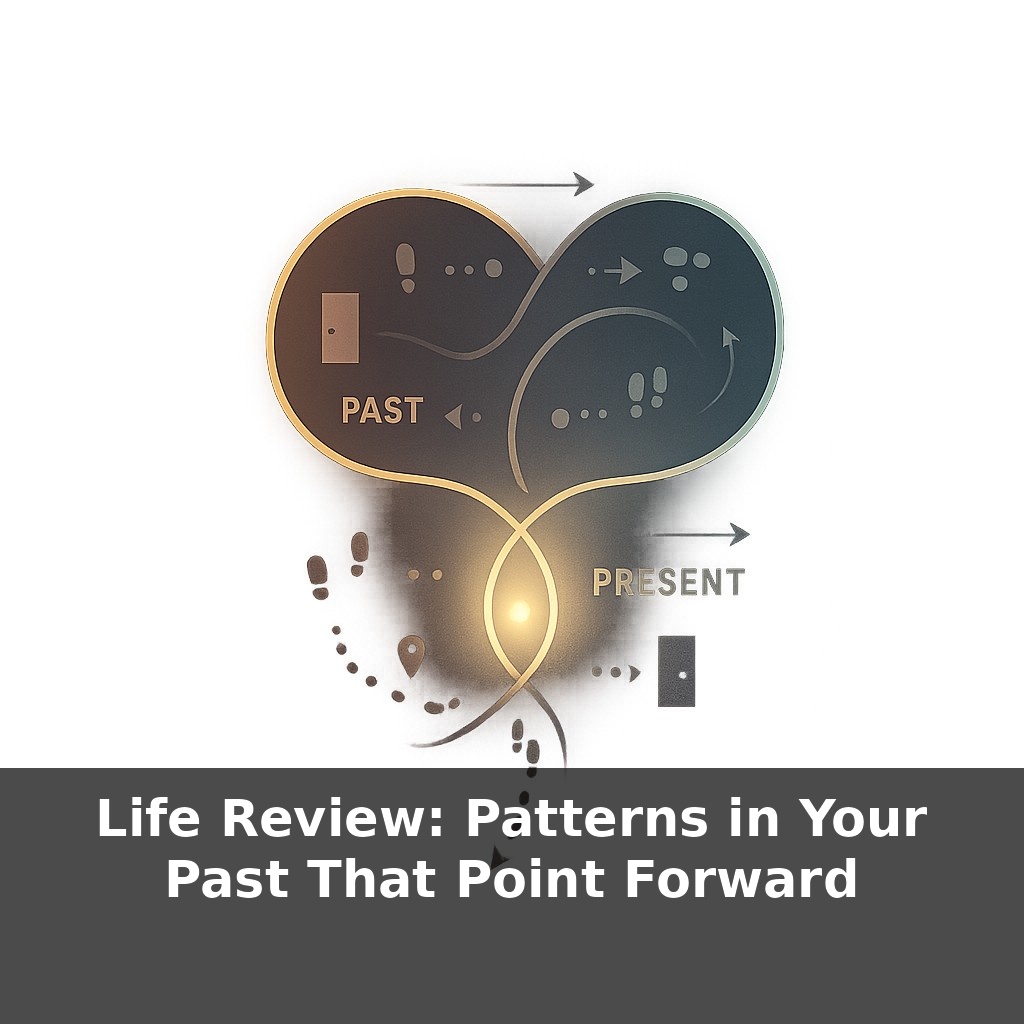
Psychologists have a quiet name for this kind of reflection: life review. Not nostalgia, not replaying regrets, but a deliberate scan of your own history to see what actually keeps showing up when no one is watching. Not what you *say* matters to you, but what your choices keep voting for.
Research across adulthood shows something striking: when people walk through their past in a structured way, their mood lifts, their sense of direction sharpens, and their story about “who I am” becomes more coherent and less accidental. It’s less about digging for one grand purpose, more about noticing which motives and satisfactions refuse to disappear.
Think of a city at night: certain streets stay lit no matter how much power you cut. Life review is like slowly dimming the grid until only the most persistent lights of your life remain—quietly pointing where to go next.
Most of us only review our lives when something breaks—a breakup, burnout, a birthday with a zero on it. Until then, the past feels like a storage unit: vaguely important, mostly ignored. But your brain hasn’t been ignoring it. For decades it’s been running a quiet experiment: “When do you feel most alive? When do you shut down?” Every job you quit, hobby you dropped, and late-night conversation you didn’t want to end is a data point. The question now isn’t “What’s my purpose?” so much as “How do I decode the evidence I’ve already been collecting?”
So how do you actually *work with* all that raw experience without drifting into fuzzy nostalgia or getting stuck in old pain?
A useful starting move is to zoom in, not out. Instead of trying to “review your life” in one sweeping pass, pick **five to ten specific episodes** that still feel oddly “charged” when you think about them: the job you couldn’t wait to get to on Monday, the side project you lost hours in, the volunteer role you kept saying yes to, the class you loved but didn’t “need,” the breakup that secretly relieved you. You’re not asking, “Was this good or bad?” but “Why does *this* memory still hum?”
For each episode, you can walk through three lenses:
1. **What pulled me in?** Not the surface label (“good boss,” “fun friends”) but the magnet underneath. Was it solving tricky problems? Being trusted with autonomy? Seeing visible impact? Teaching? Competing? Creating?
2. **What did I naturally do well?** Look for moves that felt strangely easy to you but seem hard for others: calming tense rooms, spotting patterns in messy info, breaking ideas into steps, making people feel welcome, pushing for higher standards.
3. **What quiet cost showed up?** Even in “great” times, there are frictions: boredom after the learning curve, frustration with slow decisions, feeling drained by constant socialising, resentment at vague expectations. These are clues about environments you’ll always end up resisting.
Research on autobiographical memory shows that we don’t store the past like a camera roll; we store it more like **tagged files in a database**. Emotional intensity, novelty, and unfinished business all act like high‑priority tags. When you notice which tags keep recurring across very different episodes—say, “freedom,” “craft,” “belonging,” or “recognition”—you’re moving from single snapshots to a running theme.
Two guardrails help here. First, *stay concrete*: “I loved designing the onboarding process for new hires” is more usable than “I like helping people.” Second, *separate behaviour from circumstance*: “I kept volunteering to present” matters more than whether the company itself was chaotic or well-run.
Over time, these lenses reveal an important twist: your “purpose” rarely arrives as a job title. It more often shows up as **conditions under which you repeatedly come alive** and contributions you can’t stop trying to make, even when no one asked. Once those are named, the future stops being a blank page and becomes more like constrained creativity: many options, but not any option.
A useful way to see this in action is to zoom into real lives. Think of the friend who’s hopped from barista to camp counsellor to customer support, always “just taking whatever job shows up.” When they map the moments that still feel alive, a thread emerges: de‑escalating annoyed people, reading the room fast, leaving interactions lighter than they started. That’s not “random work history”; it’s a live demo of conflict navigation and emotional triage. Suddenly, careers like user‑research, mediation, or community management stop seeming far‑fetched.
Or the engineer who keeps “accidentally” turning projects into teaching gigs—writing docs, mentoring interns, presenting at meetups. On paper, their role is technical; in practice, their days light up when they turn complexity into clarity for others. That doesn’t mean they must become a teacher, but it suggests any future path that combines building with explaining will fit them better than one that keeps them silently coding in a corner.
Like setting up filters in an email client, the goal isn’t to read every message from your past—just to notice what consistently lands in the important folder.
A decade from now, your “life dashboard” might ping you the way a budgeting app does: *“You gain energy after mentoring; you consistently crash after competitive meetings.”* Schools could treat this as a core skill, like literacy: students curating highlight reels of projects, conflicts, and recoveries, then using them to choose courses and careers. In elder care, group review circles might function like communal campfires, trading isolated rumination for shared pattern-spotting and late‑life redesign.
Over time, those threads you’ve been tracing can turn into quiet design rules for your next choices: which projects to accept, which relationships to water, which ambitions to retire. You’re not hunting for a single grand purpose, just tuning your internal GPS, like updating a map so the side streets you truly care about finally show up in sharp detail.
Start with this tiny habit: When you catch yourself replaying an old memory (like that job you quit, the class you loved, or the relationship that felt “off”), simply whisper to yourself, “Pattern?” and name *one* thing you were always doing or feeling in those moments (for example: “I was always teaching,” “I felt trapped,” “I was energized by helping”). Then, when you brush your teeth at night, take 10 seconds to recall just *one* of those moments from today and label it with a simple tag like “freedom,” “creativity,” or “connection.” Over a few days, you’ll start seeing which tags keep repeating—that’s your life review pointing forward.