Right now, someone is changing their entire neighborhood—not with money or power, but with a quietly stubborn sense of purpose. Here’s the twist: research shows people who aim beyond their own success feel more satisfied *and* pull the people around them upward too.
A strange thing happens when your goals stop at your own front door: progress starts to feel oddly flat. You hit targets, collect achievements, maybe even “win” by conventional standards—yet something in you stays underused, like a muscle that never quite gets to lift its full weight.
Research calls that missing piece “self‑transcendence,” but you’ve probably felt it as those moments when helping someone else energizes you more than crossing off a personal to‑do. What’s easy to miss is how practical this is. Orienting your efforts toward something beyond you isn’t just noble; it’s wildly efficient. It sharpens your decisions, protects you from burnout, and quietly upgrades the people and systems you touch.
In this episode, we’ll explore how to aim your purpose outward in ways that fit your real life—no sainthood required.
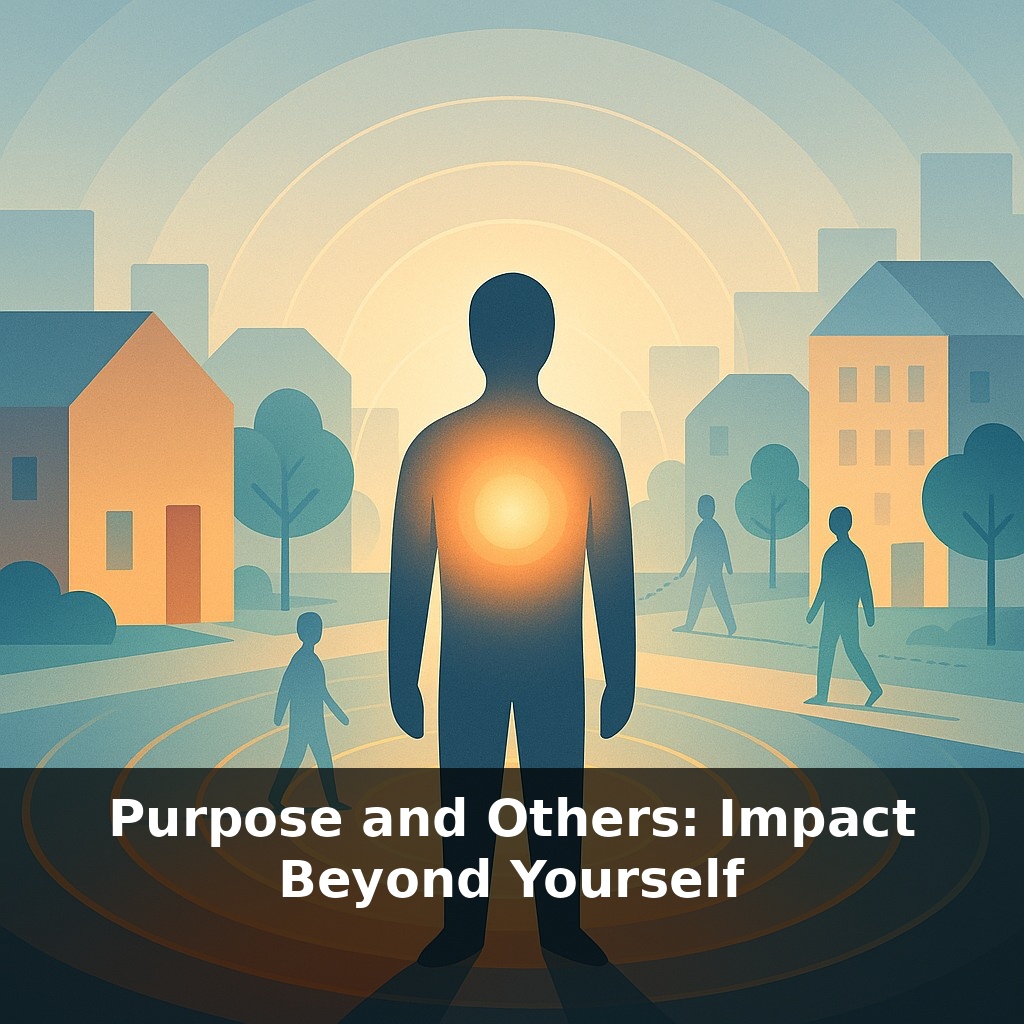
You’ve probably noticed this in small, ordinary ways. Someone in your team quietly mentors newcomers, and suddenly the whole group feels less tense. A friend starts volunteering, and without any speeches, a couple of people around them rethink how they spend their weekends. Researchers call this the “ripple effect”: one person’s shift in priorities subtly rewires what feels normal in a group. It’s less about grand gestures, more about what you choose to optimize for—status, comfort, or contribution—when no one is grading you, and how that choice quietly sets the curve for everyone watching.
Most people underestimate how *visible* their inner compass is. You think your priorities live in your head, but everyone around you is quietly tracking what you praise, what you tolerate, where you spend effort when no one’s keeping score. That’s where purpose aimed beyond yourself stops being a private philosophy and turns into infrastructure for others.
Look at the research trail. Students nudged to connect their schoolwork to something that matters beyond grades don’t just feel better; their performance jumps. Workers who believe their job contributes to a bigger “why” are less likely to quit after setbacks, which stabilizes teams. When companies tie their strategy to a social goal—and actually follow through—they don’t just look good in annual reports; they tend to outperform their peers over years, not quarters.
What’s going on underneath is surprisingly simple: people copy what looks both *meaningful* and *doable*. If you stay late only for your own bonus, that broadcasts one kind of normal. If you stay late to help a colleague hit a deadline they’re drowning under, that broadcasts another. Same action, different story, different ripple.
Crucially, this doesn’t require heroics. The most powerful ripples often come from small, repeatable moves:
– In a meeting, you redirect credit to the quiet person whose idea was ignored. – At home, you choose curiosity over sarcasm when someone messes up. – Online, you share one thoughtful resource instead of one more outrage clip.
Each act is a tiny “policy decision” about what your micro‑community is for.
Think of it like updating the default settings in a piece of software. Most people will keep whatever defaults they’re handed. When you change yours toward service or contribution, you’re silently offering everyone around you a new template: *This is an option too.*
And because purpose isn’t frozen in time, these defaults can evolve. They can start narrow—supporting one teammate, one neighbor, one cause—and widen as your capacity grows. The key is not the size of your impact today, but the direction your choices consistently point, and the way that direction gives other people permission to aim a little higher themselves.
The funny thing about these ripples is how ordinary their starting points look. Think about a line cook who quietly decides their “real” job is training the newer hires so no one has to panic during rush hour. They’re still flipping burgers, but over a few months, the whole kitchen feels calmer, people stick around longer, and the manager starts trusting the team with more complex menus. No speech, no title change—just a different “why” behind the same tasks.
Or consider a mid‑level engineer who adopts a simple rule: every week, unblock one colleague. They review a tricky pull request, sketch an architecture idea, or write a clear doc someone else can reuse. After a quarter, those coworkers start doing the same for others. Suddenly, the team’s culture quietly tilts from “protect my bandwidth” to “optimize the system.”
Your version might be checking on one overwhelmed parent at school pickup, or making it normal in your friend group to talk about money honestly so everyone can make better choices. In each case, you’re not adding a grand mission on top of life; you’re tweaking the purpose baked into what you already do.
Whole systems start to bend when enough people quietly aim their choices outward. Policies shift, funding follows new metrics, and “success” gets redefined in job descriptions, school rubrics, even dating profiles. Think about a city where loyalty points come not from purchases, but from mentoring, recycling, or caregiving—with dashboards that make these contributions visible. As those numbers start to matter for loans, hiring, or elections, private values harden into public infrastructure.
So the open question isn’t “Do I matter?” so much as “Where do I want my influence to quietly accumulate?” Tiny, outward‑facing choices compound like automatic deposits in a shared savings account—over time, they fund possibilities none of us could “buy” alone. You don’t have to see the whole return to keep investing; you just have to keep aiming wider.
Here’s your challenge this week: Invite one person in your life (a coworker, friend, or family member) to a 20-minute “impact conversation” where you only ask them questions about what they care about, what they’re struggling with, and what would make their week meaningfully better—and you’re not allowed to talk about yourself for the first 15 minutes. Before the conversation, pick ONE resource you’re willing to offer (an introduction, a specific skill you can share, a concrete favor you can do this week) and go into the call ready to give it. Within 24 hours, follow through on exactly one promise you made in that conversation, no matter how small, and send them a short message explaining why their purpose or struggle matters to you.