Right now, somewhere in the world, a stranger’s playlist could boost your dopamine by nearly ten percent—without you even liking their taste in music. The twist? Your brain isn’t loyal to genres. It’s loyal to patterns. Today, we’re going hunting for the patterns that move you.
That boost in your brain chemistry is only half the story. The other half is timing. The same track that lights you up on a run might completely derail you while you’re drafting an email. Context quietly rewrites what a song means to you. A breakup anthem becomes a power song at the gym; a lullaby-level indie track turns into deep-focus fuel at midnight before a deadline.
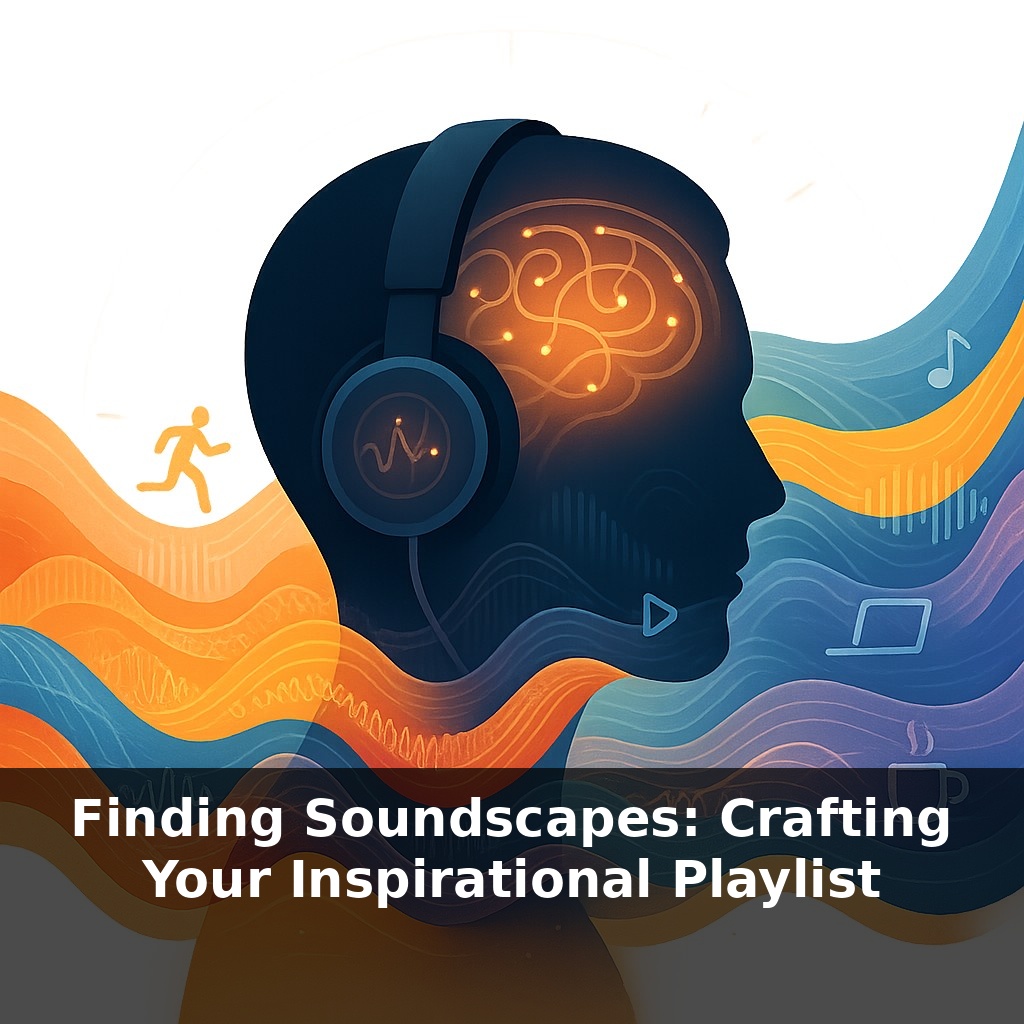
And then there’s sequence. Put three intense songs back-to-back and your mind can feel crowded; weave in one spacious, almost-empty track and suddenly there’s room to think. Streaming platforms shuffle endlessly, but your creative life isn’t random. When you start pairing specific moments—mornings, commutes, brainstorming sessions—with intentionally chosen sound, you’re not just “listening to music” anymore. You’re building a responsive environment that you can step into on demand.
Think of this as upgrading from “background noise” to a custom control panel for your mind. The research is blunt: volume, tempo, and even whether a song has lyrics can tilt your ability to focus, brainstorm, or reflect. Too loud, and abstract thinking drops; the wrong words at the wrong time, and your working memory gets crowded. Meanwhile, your history with a song—where you first heard it, who it reminds you of—can quietly override any genre rules. The goal isn’t to find “perfect music,” but to map which sounds reliably unlock which version of you.
Here’s where things get interesting: not all “inspirational” playlists are doing the same job. Some are rocket-fuel. Some are scaffolding. Some are a soft landing. The research suggests that your brain responds differently depending on *what* you’re trying to do and *how* the music is built.
Start with tempo. Faster isn’t always better. Around 120–140 BPM often feels energizing, but if you’re piecing together a tricky idea, that same pace can start to feel like someone tapping your shoulder every few seconds. For focused work, mid-tempo tracks with a steady pulse tend to support sustained attention; when you’re stuck in procrastination mode, a slightly faster first track can act like a starter motor that then eases into something calmer.
Mode comes next. Major keys are often tagged as “happy,” minor as “sad,” but that’s too simple. A minor-key track with a strong rhythmic drive can feel determined rather than melancholic. This is where personal associations quietly override theory: the triumphant movie-score song you first heard during a difficult time might always carry a note of grit for you, no matter what key it’s in.
Lyrics are their own lever. When your task involves language—writing, reading, coding with lots of comments—vocals can sneak in and compete with your verbal processing. Instrumental, ambient, or tracks with vocals in a language you don’t understand often work better there. When you need emotional courage—a tough conversation, a big pitch—lyrics that match the emotion you’re aiming for can help you “rehearse” that state before you walk in.
Then there’s structure *within* a short playlist. Those 4–6 tracks that shift your mood can each play a specific role: one to match where you are right now, one to begin turning the dial, one or two in the target zone, and a final “stabilizer” that feels familiar and safe. Think of it less as a greatest-hits compilation and more like a well-designed app interface: every element has a clear job, and the transitions matter as much as the individual buttons.
The most overlooked ingredient is contrast. If every song hits the same emotional and sonic intensity, your attention plateaus. Alternating dense, beat-heavy tracks with sparser, more spacious ones creates micro-breathing room where new ideas can surface—without breaking your overall momentum.
You might think you need a giant playlist for every mood, but research says a tiny “micro-score” can be enough. Try building three different 5-track sets, each with a specific role in your day. For deep thinking, you might start with a familiar, mid-tempo song that feels safe, then move into gradually more harmonically rich instrumentals—piano, strings, or electronic textures that evolve slowly. For momentum, flip it: begin with something slightly more intense than your current state, then level out to tracks that keep a steady groove without huge drops or breakdowns.
One useful lens is to think like a UX designer. Each playlist is a mini interface for a mental mode: the first track is the “onboarding screen,” the middle tracks are your main workspace, the final one is the “save and exit” button that helps you transition back to silence or a new task without whiplash. Notice how certain intros act like loading bars, giving your attention a few seconds to switch gears before the full arrangement arrives.
Algorithms already study your skips and replays; soon, they’ll track how you type, move a mouse, even how long you stare at a blank page. Your playlist might quietly shift the moment your focus wobbles, like a good coach subbing players mid-game, not between matches. Expect “creative OS” dashboards where you can set sliders—braver, calmer, looser—and your soundscape adapts across devices, from headphones to car to workspace, blurring the line between listening and collaborating.
Treat each playlist as a living draft, not a finished product. Let it evolve with your projects: retire songs that now feel like old uniforms, add tracks that fit who you’re becoming. Over time, these soundscapes turn into a kind of emotional shorthand—like color-coding your calendar—so one tap can quietly say, “it’s time to make something new.”
Before next week, ask yourself: 1) “When during my day (commute, deep work, unwinding, creative brainstorming) do I most need a ‘designed’ soundscape, and what exact playlist or mix will I experiment with in that slot tomorrow?” 2) “Which 3 songs or ambient tracks from today actually changed my mood or focus, and what was I doing at that exact moment that made them work so well?” 3) “If I curated one ‘signature’ playlist that perfectly matches my ideal creative state, what 10 tracks would I put on it tonight, and how will I test it in a real task this week?”