More than a third of employees say they don’t trust their boss—but here’s the twist: those same teams often rate their leaders as “high performing.” So how does a leader hit their targets yet still feel fake to their people? Today, we walk right into that tension.
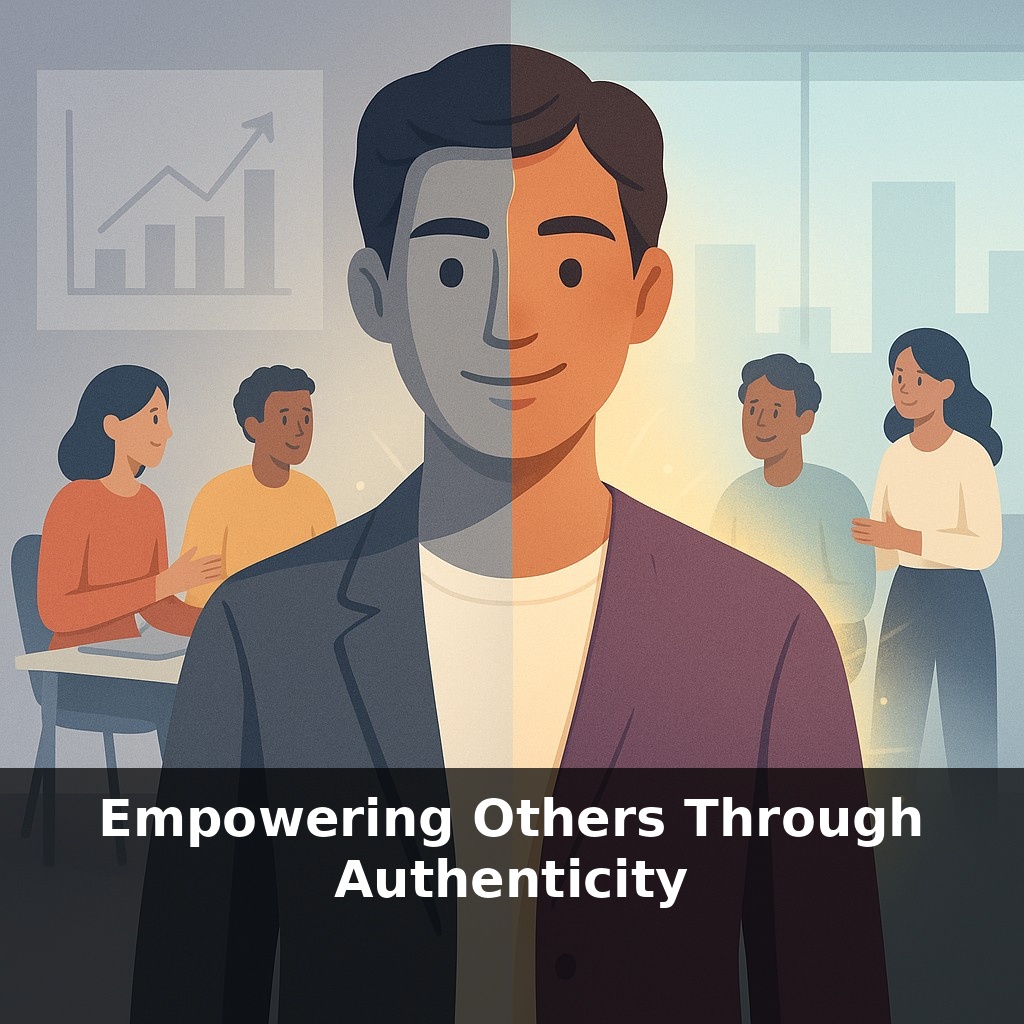
Seventy percent of variance in team engagement can be traced back to just one factor: the manager. Not the strategy deck, not the market, not the perks—the human being in charge. And here’s where authenticity stops being a “nice-to-have” and becomes performance-critical. When you lead in a way that contradicts your real values, people feel it like background noise that never turns off: meetings drag, ideas get filtered, and initiative quietly dies. When you lead in alignment with your values, your behavior becomes a kind of “source code” your team can read and rely on. They start to test, stretch, and take smart risks because they’re no longer burning mental energy guessing who will show up today—you or your mask.
Here’s where it gets interesting: authenticity isn’t about “sharing everything” or turning one-on-ones into therapy sessions. It’s closer to a well-run product roadmap. You’re clear on what the product (you) can and cannot do, you publish the priorities (your values and purpose), and you communicate trade-offs openly so people can plan around them. Research shows that when leaders talk plainly about both strengths and limits, teams stop over-indexing on guessing and start investing in solving. That shift—from decoding you to building with you—is where performance quietly accelerates.
Here’s where the research gets uncomfortably practical. When leaders consistently act in line with what they say matters, teams stop treating “leadership mood” as a risk factor and start treating it as a stable resource. In multiple organizational behavior studies, that stability shows up as more initiative, more peer-to-peer coaching, and a noticeable drop in “defensive work” (sugar-coated updates, CYA emails, and meetings designed to manage optics instead of outcomes).
One pattern stands out: leaders who are explicit about three things—strengths, limits, and purpose—create conditions where people feel permitted to grow in public. Instead of hiding rough drafts or pretending to know more than they do, team members are likelier to ask for help early, surface partial ideas, and volunteer for stretch roles. Psychological safety isn’t just a feeling; it becomes visible in calendars (more working sessions, fewer status meetings) and in artifacts (more prototypes, fewer polished-but-empty decks).
Authentic leadership also changes how authority works. Rather than hoarding decisions, these leaders are clear about which calls are non-negotiable and where others can experiment. That clarity shrinks the gray zone where fear usually lives. People know which risks are career-ending and which are expected learning costs.
Concrete examples keep showing up in case studies. Satya Nadella’s shift at Microsoft from “know-it-all” to “learn-it-all” didn’t just sound good; employees began reporting more cross-team collaboration and faster problem-solving because it became acceptable to say, “I don’t know—yet.” In innovation-focused teams, authenticity predicts which groups actually test new ideas versus endlessly analyzing them. When the leader can say, “Here’s what I’m good at, here’s where I rely on you,” expertise stops being a status symbol and becomes a shared asset.
Think of it like refactoring old software: you’re not rewriting yourself from scratch; you’re cleaning up the parts of your leadership code that cause bugs for everyone else. Each time you align a behavior with a stated value—especially when it costs you something—your team updates its internal model of what’s truly rewarded, and they adjust their own risk-taking accordingly.
A useful way to spot authentic leadership in action is to watch what happens at the edges of someone’s competence. For instance, a VP in a biotech firm began weekly “learning lab” meetings where she brought one decision she was unsure about and walked the team through her thinking, then explicitly asked for challenge. Within a quarter, junior scientists started sharing half-finished experiments and caught a potential multi-million-dollar error before it scaled. In another company, a director quietly changed hiring panels so candidates met future peers first. He shared that inclusion—not speed—would drive long-term results, then stuck with longer hiring cycles even under pressure. Turnover on his team dropped while promotions from within rose. In a remote startup, the founder recorded short loom videos explaining not just what decisions were made, but why they aligned with stated principles. Over time, teammates began attaching their own “why this way” notes to pull requests and project plans, normalizing principled transparency across the org.
As AI quietly takes over the “busywork,” your real leverage shifts to how real you’re willing to be in the moments that matter. Investors already scan earnings calls less like balance sheets and more like lie detectors, listening for consistency over quarters. Inside companies, promotion slates are starting to weigh “trusted by peers” as heavily as KPIs. Think of your career less as a ladder and more as a reputation graph that updates with every hard conversation you handle without hiding.
Real empowerment starts small: admitting you don’t know in front of your team, giving someone else the big presentation, naming a hard truth before it leaks out sideways. Over time, those choices create a climate where people stop armoring up and start leaning in. Your challenge this week: choose one meeting and show up 10% more honest than usual.