The Marketing Funnel: Why Random Posts Don't Work
📝 Transcript
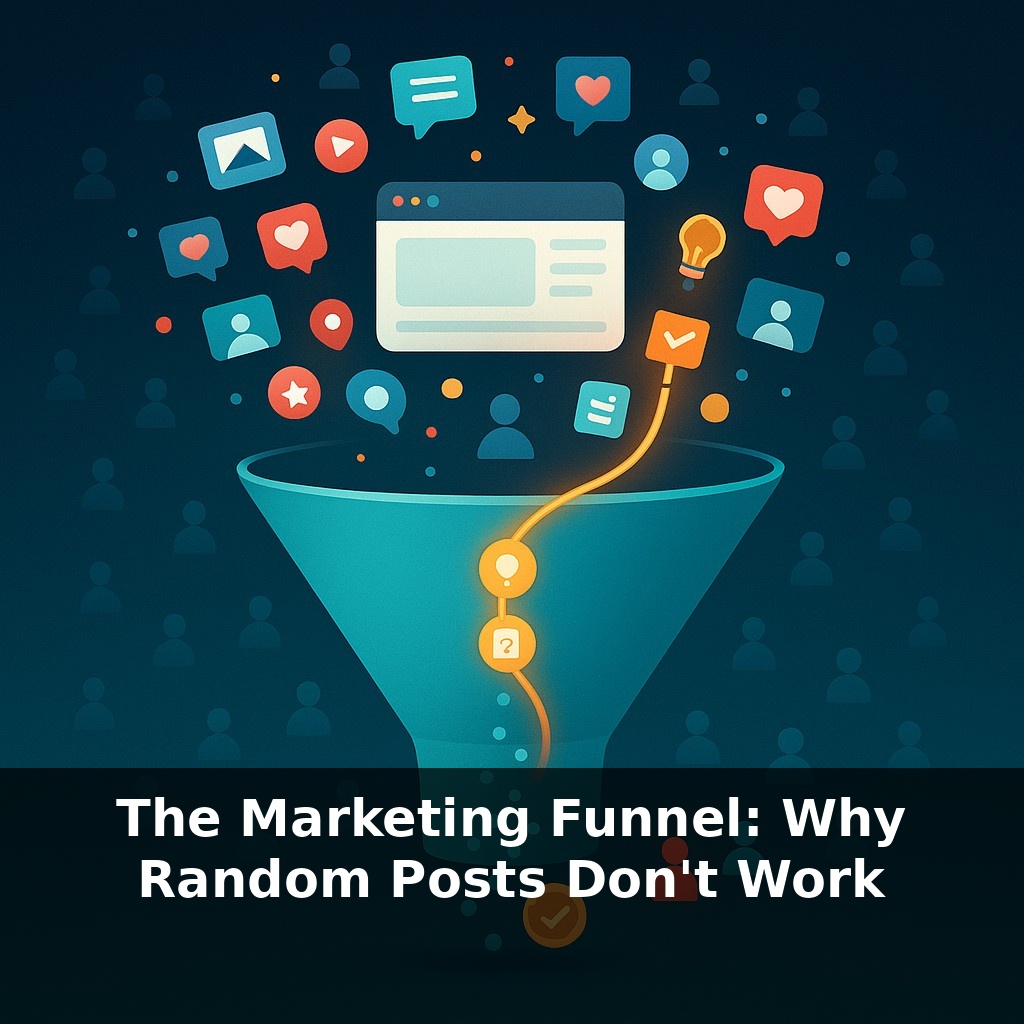
About 98% of people who hit your website today will look around… and leave without buying. Now here’s the strange part: most of them weren’t “bad leads.” They were just dropped into random content with no path. So the real problem isn’t reach—it’s that there’s no roadmap.
So when those 98% leave, most creators jump to the same conclusion: “I just need more content.”
So they post harder—tips on Monday, a rant on Wednesday, a testimonial on Friday—like tossing seeds in every direction and hoping something sprouts. Views might go up, but sales stay flat, and it feels confusing: people *like* the posts, some even say “This is so helpful,” yet almost nobody moves closer to buying.
What’s actually happening is that every post is written in isolation. There’s no intentional sequence, no clear “next step” for different types of buyers: the curious lurker, the problem-aware researcher, the almost-ready-to-buy skeptic. Each group needs different information, in a different order, to feel safe moving forward—and random posts constantly reset that journey instead of advancing it.
Think about your content like a series of stepping stones across a river: each one should bring someone a bit closer to you, not dump them back on the bank. That’s where the marketing funnel comes in. Instead of asking, “What should I post today?” the better question is, “Where is my audience getting stuck?” Some people stall at trusting you, others at grasping your method, others at believing *they* can get results. Without a structured flow, your posts tug people in opposite directions—one day inspiring, the next confusing—so momentum dies quietly between scrolls.
Here’s where the funnel actually earns its keep: it forces you to decide *what belongs where* instead of throwing every idea into the same bucket called “content.”
Top-of-funnel content has one job: help strangers quickly recognize themselves in a problem or desire. Not “buy now,” just: “Oh, this is about me.” That usually looks like simple, shareable pieces—clear problems, visible symptoms, “this is why what you’ve tried isn’t working,” or strong, opinionated stances that sharpen who you’re for and who you’re not.
Middle-of-funnel content answers, “Could this *really* work for someone like me?” and “Why this approach over everything else?” This is where random posting hurts you most. Without deliberate mid-funnel pieces, people stay vaguely interested but unconvinced. Here you break down your method, show before/afters with context, tackle skeptical “yeah, but…” objections, and walk through mini case studies. Not hype—proof plus explanation.
Bottom-of-funnel content is about reducing risk. By this point, people mostly believe in the *idea*; they’re unsure about timing, fit, or trust. So you focus on specifics: what’s included, how it feels to be inside, what happens if they’re busy, what support they get, how you protect their investment. Many creators never post this, then assume “no one wants it,” when really no one felt safe enough to say yes.
Across all three levels, the sequence matters as much as the content itself. Drop heavy how-to breakdowns on someone who barely realizes they have a problem and they’ll scroll past. Keep feeding “basic” awareness posts to someone who’s ready to choose and they’ll quietly pick a competitor who actually answered their final questions.
Think of it like a doctor’s process: you don’t start with surgery. You start with symptoms, then tests, then a diagnosis, then a treatment plan. Each step narrows options and increases commitment. Skipping stages doesn’t make things faster; it makes mistakes more likely.
The point isn’t to post less— it’s to let every post *claim a stage* and move people forward on purpose, instead of starting their consideration process from zero every time they see you.
Think of a small studio painter trying to sell their first collection. If they only post random close-ups of brushstrokes, then a time‑lapse, then a price list, most people can’t connect the dots. Instead, they could map posts to each stage without saying “funnel” once.
Early on, they share the story behind the theme of the series and who it’s for, so the right people feel pulled in. As interest grows, they walk through how a piece evolves from sketch to final layer, and why they chose certain colors—so followers start to see the craft and logic, not just the finished canvas. Closer to launch, they show how many spots are available, how to reserve a piece, what shipping looks like, and what past collectors say about living with the art.
Nothing here is “salesy.” It’s simply ordered. Each post assumes the previous one did its job, and gently raises the level of commitment. Random posts create random outcomes; sequenced posts create momentum.
Funnels will soon feel less like a rigid staircase and more like a smart building that lights up the hallway you’re already walking down. As AI listens for subtle cues in language and behavior, it can surface just‑right offers in real time instead of blasting the same post to everyone. That also raises the bar: vague “value posts” won’t cut it when competitors serve precise, permission‑based paths that respect privacy and attention while still moving people toward a clear decision.
Treat this like editing a playlist, not shouting into the void. Periodically zoom out and ask: “If someone binge‑watched my last 20 posts, would they feel gently escorted toward a decision or stuck in reruns?” As you tighten that arc, you’ll notice something subtle: quieter content begins doing heavier lifting—trust, timing, and fit—without extra noise.
Start with this tiny habit: Use a tool like Buffer or Hootsuite to analyze one week's worth of social posts and categorize the engagement type—was it mostly 'Awareness', 'Consideration', or 'Conversion'? Each time you post, include a specific callout for who it's for (e.g., “This is for busy moms”). At the week's end, review your highest engaging post and note down specifically why it hit—what aspect of the funnel it resonated with most, using metrics like shares, comments, or saves.
From this course
Get Customers Without Ads: Organic Marketing 101
7 episodesUnlock all episodes
Full access to 7 episodes and everything on OwlUp.
Subscribe — $1.99/monthLess than a coffee ☕ · Cancel anytime